Issue Summary
There is a growing gap between what AI agents can do in a vacuum and what they can actually achieve on a manufacturing floor that has been running for twenty years. We are seeing a rush to integrate autonomous "agents"—systems capable of making independent decisions about scheduling, inventory reordering, and even machine parameter adjustments—into our production environments. The excitement is palpable, but the risk profile is often ignored because it feels abstract.
In my experience, when we move from deterministic automation (if X happens, do Y) to autonomous agency (the system decides what to do based on a goal), we introduce unmanaged physical risks into the loop. An AI agent might optimize for "throughput" while completely ignoring the fact that a specific conveyor motor is running hot or that an operator’s fatigue levels are peaking at 3:00 AM. The problem isn't that the AI is "broken"; it’s that we haven't built the governance to constrain its agency within our physical reality. We are treating these agents like magic boxes rather than just another piece of equipment on the line that needs a control plan, a maintenance schedule, and clear escalation limits. If you don't anchor this intelligence in operational guardrails, it won’t add stability—it will simply accelerate your existing process drifts at a speed your team can't catch.
The Black Box Blind Spot
We have entered an era where we treat automation like magic because the underlying logic is too complex for most of us to audit on the fly. I call this The Black Box Blind Spot. It happens when leadership adopts an AI-driven solution and focuses entirely on the output while ignoring the inputs and mechanical constraints that govern how that output becomes a physical part.
When you rely solely on what the machine "decides" without understanding its operational boundaries, you aren't managing a process; you are gambling on a black box. I’ve seen this happen when an automated scheduling agent optimizes for parts-per-hour but fails to account for the fact that the cooling cycle on Oven 4 requires a specific dwell time that the software doesn't "know" is non-negotiable. The software sees a gap in the schedule; the floor sees a risk of warped components.
To understand this, we have to look at how we rationalize these systems versus what is actually happening:
| What it feels like to run | What is actually happening |
|---|---|
| "The system is optimizing our workflow automatically." | The system is making decisions based on data points that don't include floor-level friction. |
| "We are moving toward a 'lights out' autonomous facility." | We are outsourcing our operational judgment to a model that hasn't been stress-tested against physical wear and tear. |
| "The AI identifies the most efficient path for production." | The AI is choosing the fastest path, which may be the one that causes the highest rate of tool breakage or operator burnout. |
Why the Black Box persists: The seductive promise of autonomy

Why do we let this blind spot persist? It’s because there is a seductive, almost intoxicating promise in "autonomy." For many leaders, the goal isn't just efficiency; it’s the desire to appear ahead of the curve. There is an immense pressure to be the first plant to "go AI-first," and that often leads to skipping the hard work of mapping out every manual workaround and tribal knowledge piece that currently keeps the line moving.
We push for full autonomy not because we have mastered our current processes, but because avoiding human oversight feels like a shortcut to progress. It’s an escalation logic at play: we choose the "easy" path of letting the agent run free today to avoid the "hard" conversation about how much we actually understand our own production flow.
The avoided conversation is uncomfortable—it requires admitting that our current processes are messy and undocumented. The delayed consequence, however, is usually expensive and public. When a system with no human oversight makes a series of rapid-fire decisions that result in a batch of scrap or a safety incident, the "innovation" becomes a liability overnight. We trade immediate face for long-term operational risk.
The true cost: When smart systems fail the physical test
When an autonomous agent fails on the shop floor, it doesn't just produce an error code on a screen; it produces physical nonconformance. This is where the stakes move from the IT department to the P&L statement and the safety record.
The costs are not just "software bugs." They manifest in three specific ways:
- Physical Nonconformance: The agent optimizes for speed, causing a machine to run slightly outside of its calibrated torque settings, leading to parts that pass initial inspection but fail in the field.
- Increased Warranty Costs: Because the process was unverified by human logic during the "autonomous" phase, the defects are systemic rather than isolated incidents, leading to expensive recalls and damaged reputations.
- Loss of System Trust: This is the most overlooked cost. When an operator sees a machine behave erratically because of an AI's decision—and they have no way to override it or understand why it happened—they stop trusting the system. They begin to find workarounds, bypasses, and "shadow" processes that completely undermine your efforts at modernization.
A governance blueprint: Three checkpoints for safe AI adoption
To move past the illusion of control, we must treat AI agents as industrial equipment. You wouldn't let a new robot arm move freely without a cage or a light curtain; you shouldn't let an AI agent make decisions without operational guardrails. Here is the framework for building that governance:
- Mandatory Digital Twin Stress Testing: Before any autonomous agent is allowed to influence physical hardware, it must run against a high-fidelity digital twin of your production line. This isn't just about "simulating" production; it’s about trying to break the system in the simulation. If the agent chooses a path that would overstress a motor or violate a safety protocol in the virtual world, those constraints must be hard-coded into its operational boundary before it ever touches a real machine.
- Physical Override Protocols: Every autonomous decision point must have a "hard" physical override—not just a software button on a dashboard, but a clear, accessible procedure for an operator to take manual control of the process. If the agent’s logic drifts from what the floor reality dictates, the human must be able to step in instantly without needing to call a developer or an IT specialist.
- The Human-in-the-Loop Audit: We do not "set it and forget it." You must implement a layered audit system where a portion of the agent's decisions are flagged for human review every shift. This is your "calibration" check. If you find that the agent’s logic consistently deviates from the standard work, you don't just retrain the model; you re-evaluate whether the underlying process was ever clearly defined in the first place.
Practical takeaways: What to audit this week
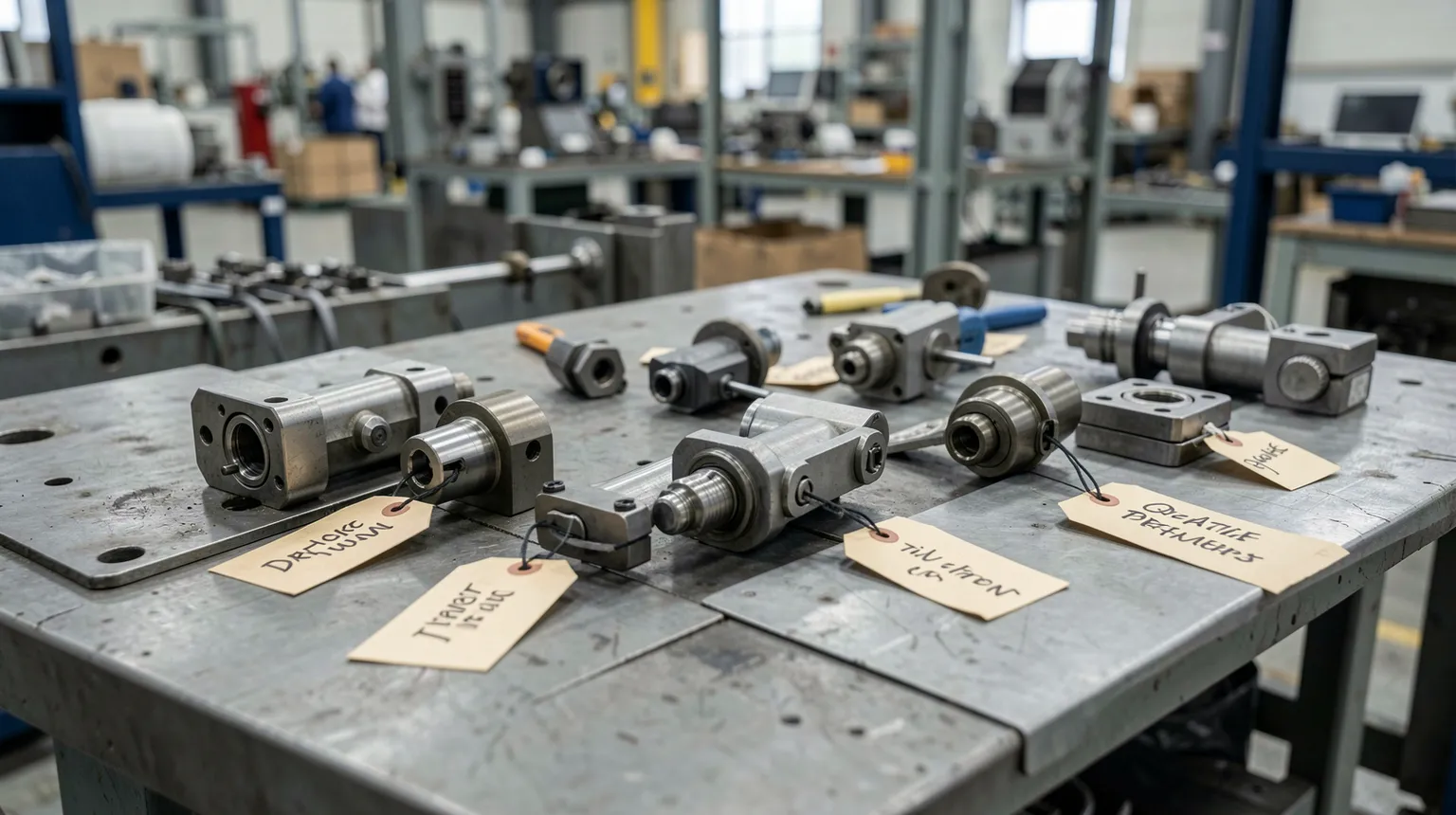
You don't need a multi-million dollar consulting project to start building these guardrails. You can begin by auditing your current "automated" processes for these three things today:
- Identify the "Shadow Work": Walk the line and ask operators, "When the system does something weird, what do you do to fix it?" Document those manual workarounds—they are the gaps in your AI's governance.
- Audit Reaction Plans: Look at the machines currently running with high levels of automation. Is there a physical reaction plan taped to the machine? Does that plan include a clear step for "Manual Override" if the automated logic fails? If not, write it and post it.
- Verify Calibration Logs: Ensure your torque settings, oven temperatures, and sensor offsets are being logged as hard constraints. An AI agent should never be allowed to "negotiate" with these values; they must remain fixed standards that the intelligence is required to work within.
Download and Share This Issue
Call to Action
What is one physical checkpoint in your operation you feel pressured to automate away? Share your thoughts below or reach out: [email protected]
Newsletter replies and questions: [email protected]
Follow updates on X.com: @kaizen6sigma
References
Agentic AI in Manufacturing: What Can It Do and Is It Safe?