Issue Summary: The Biggest Mistake in the AI Race

I have spent enough time on factory floors and in quality offices to know how we handle new technology. We see a shiny tool—a faster press, a more precise sensor, or now, a generative AI "Copilot"—and our first instinct is to point at it as the solution to our problems. But here is the hard truth: treating an advanced AI tool as the objective rather than a means to an end is the single greatest operational risk we face today.
The mistake isn't in adopting the technology; it’s in the order of operations. We are trying to automate "messy" processes that haven't been stabilized or even clearly defined yet. If you take a disorganized, manual workflow and plug an AI into it without redesigning the underlying work, you don't get a more efficient process—you just get a faster version of your current chaos. The goal isn't to have a "smart" tool; the goal is to have a mastery over the process that the tool eventually serves. We must stop racing to deploy and start working to redesign.
The Tool Dependency Trap: Why Access Isn't Capability
I want to name this failure clearly: The Copilot Crutch.
When leadership focuses on "tool access" metrics—how many licenses were sold, how many employees logged into the platform, or how many prompts were sent—they are measuring activity, not capability. In any manufacturing environment, I can tell you that a machine is only as capable as its setup and calibration allow it to be. AI is no different.
An AI model requires structured inputs: clean data, clear constraints, and a defined sequence of steps. If your front-line operators are using a Copilot to navigate a process that lacks standard work, the tool will produce inconsistent results every time. You aren't building capability; you are just outsourcing your confusion to a black box. Access to the tool gives you the opportunity to do something faster, but it does not give you the skill to do it correctly. We must shift our focus from "Who has a login?" to "What specific process step is being mastered by this interaction?"
The Governance Gap: What Is Actually Happening When We Buy ‘Intelligence’

There is a massive gap between what the C-suite says they are doing with AI and what actually happens on the shop floor. Too often, we treat AI governance as an IT problem—passwords, data privacy, and software permissions. But in a high-performing organization, AI governance is a domain expert's problem.
When we buy "intelligence," we aren't just buying a piece of software; we are attempting to codify human expertise into a workflow. If the person who actually knows how to manufacture the part isn't involved in defining how the AI interacts with that process, the tool will eventually drift away from reality.
| What We Say (The Rationalization) | What Is Actually Happening (The Reality) |
|---|---|
| "We are empowering employees with AI tools." | Employees are using a tool to work around a broken manual process. |
| "We have implemented an AI governance framework." | IT has approved the software, but no one has defined the logic of the output. |
| "AI will drive our productivity gains." | We've added a layer of complexity without removing any underlying waste. |
| "The tool is 'hallucinating'." | The input data and process steps provided to the tool were never verified for accuracy. |
What Does It Cost? The True Price of AI Feature Bloat
When we skip the redesign phase, the costs aren't just theoretical; they show up in your daily operations. I’ve seen this play out: a team spends three months "implementing" an AI solution to help with documentation or reporting, only to find that the operators still don't trust the output. Why? Because the underlying data foundation is shaky and the process remains a headache for them to navigate.
The costs of skipping the redesign are three-fold:
- Wasted Labor on Low-Value Features: Your team spends hours toggling through "cool" features that have nothing to do with their actual job, while the core problem—like an inefficient data entry step or a convoluted approval chain—remains untouched.
- The Erosion of Trust: When an AI provides a wrong answer because it was fed a messy process, the operator loses faith in the tool. Once you lose that trust on the floor, the technology becomes "shelfware."
- Invisible ROI: You can't measure the return on investment if you haven't established what the baseline for a good process looks like. If you automate a 10-step mess into an 8-step mess, your production speed might go up slightly, but your quality risk hasn't moved.
The Three Pillars of Operationalizing AI Value (People, Process, Platform)
To get this right, we have to move away from the "buy and deploy" mentality and toward a disciplined framework. We need to treat AI implementation like a Kaizen event: you don't just buy a new machine; you study the work first.
1. Domain-Led Problem Identification
The person who knows where the "pain" is must be the one to define the AI’s objective. This isn't an IT project led by engineers in a back room. It starts with the operator who feels the friction of the current process every day. What specific, repeatable pain point are we solving? If you can't describe the problem in plain language without mentioning the software, you aren't ready to solve it with AI.
2. Unified Data Foundation Buildout
AI is only as good as its "fuel." Before you deploy a Copilot, you must ensure that the data it pulls from—the torque specs, the inventory counts, the cycle times—is accurate and accessible. This means cleaning up your spreadsheets, standardizing your naming conventions, and ensuring that the truth is documented in one place.
3. Iterative Process Redesign
This is the most critical step. Before you automate a process with AI, you must first optimize it as if the AI didn't exist. Strip out the unnecessary steps. Simplify the logic. Create standard work. Only once the manual process is lean and stable should you look at how an AI tool can accelerate that specific path.
Three Things to Do on Your Next Gemba Walk
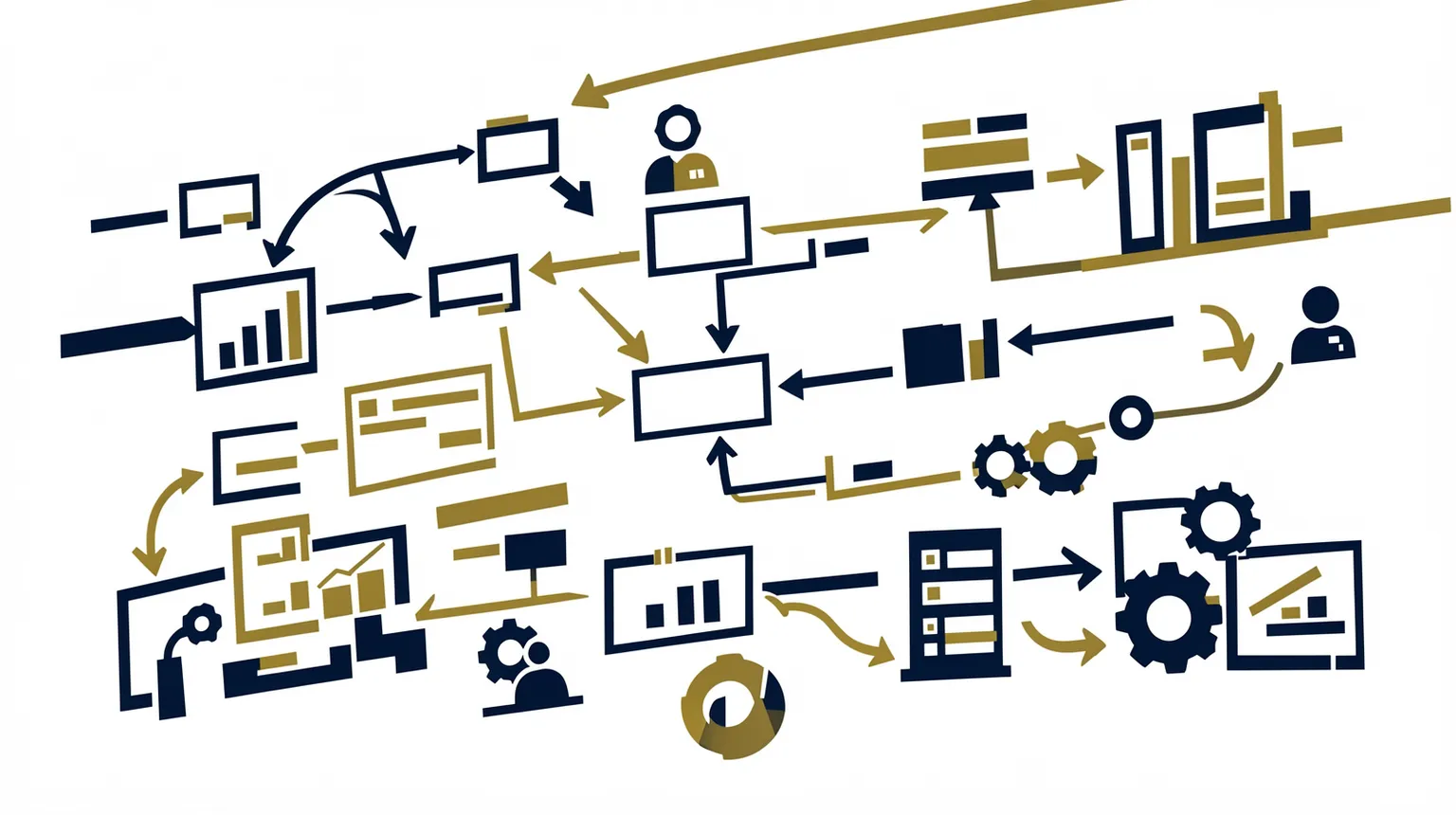
Don’t go looking for "AI" on your next walk. Go looking for the friction that AI should be solving. Use these three prompts:
- Identify the Manual Workarounds: Ask an operator, "Show me a part of your job where you have to 'fight' the system or do something extra because the current process is too hard." These are your primary candidates for redesign—not just AI.
- Map the Current State (No Exceptions): Have them walk you through exactly how they handle a specific task today, including every "cheat" and shortcut they use. If you don't understand their shortcuts, you can't build an automated process that actually works for them.
- Demand a Baseline Metric: Ask the team to define what success looks like today without any new tools. Is it time saved? Error reduction? Clarity of information? You cannot measure the value of AI if you don't have a clear, qualitative baseline of the current struggle.
Call to Action & Conclusion
The rush to adopt AI is understandable—the fear of being left behind is real. But in manufacturing and quality, we know that speed without discipline is just an invitation for failure. We must stop asking "What tool can we buy?" and start asking "What specific operational problem are we going to solve this quarter?"
Your goal isn't to have a workforce powered by AI; your goal is to have a high-performing operation where the process is so well-designed that technology becomes its greatest accelerant, not its primary crutch. Go back to the floor. Find the friction. Fix the process first. The tool will follow.
Download and Share This Issue
Next Issue Preview
In Part 2 of Series 3, we will tackle 'The Illusion of Automated Compliance,' examining the difference between checking boxes and embedding quality into the machine's DNA.
Call to Action
What is the single biggest operational process your team currently relies on that feels more like habit than documented standard? Share your thoughts at [email protected], or share this with another leader who needs a reality check.
Newsletter replies and questions: [email protected]
Follow updates on X.com: @kaizen6sigma
References
Volkswagen’s Copilot Rollout: ‘AI Is Not the Objective’ (Source material)