
The Gap Between the Screen and the Shop Floor
You can walk into a manufacturing facility today and see two different worlds existing in the same physical space. In one world, there is a high-resolution dashboard—a Digital Twin or an AI-driven predictive model—showing a perfectly smooth production flow. Every data point is green. The "twin" suggests that everything is running at peak efficiency because the inputs it receives are clean and consistent.
In the other world, just ten feet away, there is a machine vibrating slightly out of spec, a sensor covered in a thin layer of oil mist, and an operator who has learned to bypass a certain check because the software interface "freezes" every time they hit a specific sequence.
The gap between these two worlds is where most modern manufacturing initiatives go to die. A digital model is not a substitute for physical reality; it is a representation of what we think happens on the floor based on the data we choose to collect. When that data collection ignores the "friction" of the shop floor—the manual workarounds, the environmental degradation of sensors, or the human fatigue factor—the model becomes a fiction. It isn't just an inaccurate tool; it becomes a dangerous one because it gives leadership a false sense of certainty while the actual process is drifting toward failure.
Naming the Failure: The Simulation Fallacy
We need to call this what it is: The Simulation Fallacy. This occurs when we mistake the integrity of our digital models for the competence of our physical processes.
A Digital Twin is not a magic crystal ball; it is a mathematical model based on specific inputs. If those inputs are "sanitized"—meaning they only reflect what happens when things go perfectly—the model will always tell you everything is fine until the moment something breaks in reality. The Simulation Fallacy leads leaders to believe that because the software predicts a successful run, the floor is ready for scale. In reality, the software simply doesn't know about the loose bolt on the assembly jig or the fact that the night shift has a different way of interpreting the "warning" light.
To understand why this happens, we have to look at what is being ignored by the algorithm:
| The Digital Assumption | The Shop Floor Reality |
|---|---|
| Sensors provide constant, clean data. | Sensors drift, clog, and fail in high-heat environments. |
| Operators follow every step of the digital "recipe." | Operators find workarounds to bypass poorly designed UI steps. |
| Material behavior is consistent. | Humidity, scrap quality, and tool wear create variance. |
| The model accounts for all constraints. | The model ignores human fatigue and manual handling limits. |
Why Does This Keep Happening? It's Not Just Tech Debt.

It is tempting to blame this on "bad data" or poor software engineering. Those are technical problems, but the root cause of the Simulation Fallacy is a cultural one: we are prioritizing the modeling of complexity over the validation of simplicity.
When an organization decides to implement AI or Digital Twins, they often move straight to the high-level integration without first anchoring the technology in the raw physics of the floor. They want the "smart" factory before they have mastered the "stable" shop floor. This results in a situation where we spend millions on software that assumes perfect conditions because it is easier to program than it is to account for every nuance of human and mechanical variability.
We see this when a new AI-driven scheduling tool fails within three months because it didn't account for the 15 minutes it takes to swap a physical die between machines—a "non-productive" time that the software assumed was negligible. We aren't just dealing with technical debt; we are dealing with an imagination gap. We are trying to build sophisticated digital structures on top of unverified, "dirty" floor processes. If you don't know exactly how a human interacts with a machine when it malfunctions, your AI won't know either.
What Costs You When the Digital Model Lies?
When we allow the Simulation Fallacy to take hold, the costs aren't just measured in software bugs; they are paid in scrap, broken equipment, and lost trust.
Because the digital model "says" everything is fine, you won't see the warning signs until a failure becomes public and expensive. A model that fails to account for tool wear will result in catastrophic part failures that aren't caught by internal QC because they fall within the "acceptable" range of the flawed software parameters.
Furthermore, there is a significant cost to your culture. When an operator tells you that their reality doesn't match what the dashboard says, and leadership responds with "the system says it’s fine," you are actively eroding the credibility of your frontline team. You aren't just losing production; you are losing the ability to hear truth from the people who actually run the machines.
The costs of a disconnected model include:
- Unplanned Downtime: Failures that "shouldn't" happen according to the simulation but occur because physical wear wasn't tracked.
- Hidden Scrap: Producing parts that are technically within digital spec but fail in the field due to unmodeled variables like heat cycles or material impurities.
- Erosion of Authority: When management relies on a "lying" model, they lose the ability to lead based on real-time observations during Gemba walks.
The Operational Integration Checklist: 3 Ways to Ground AI in Reality
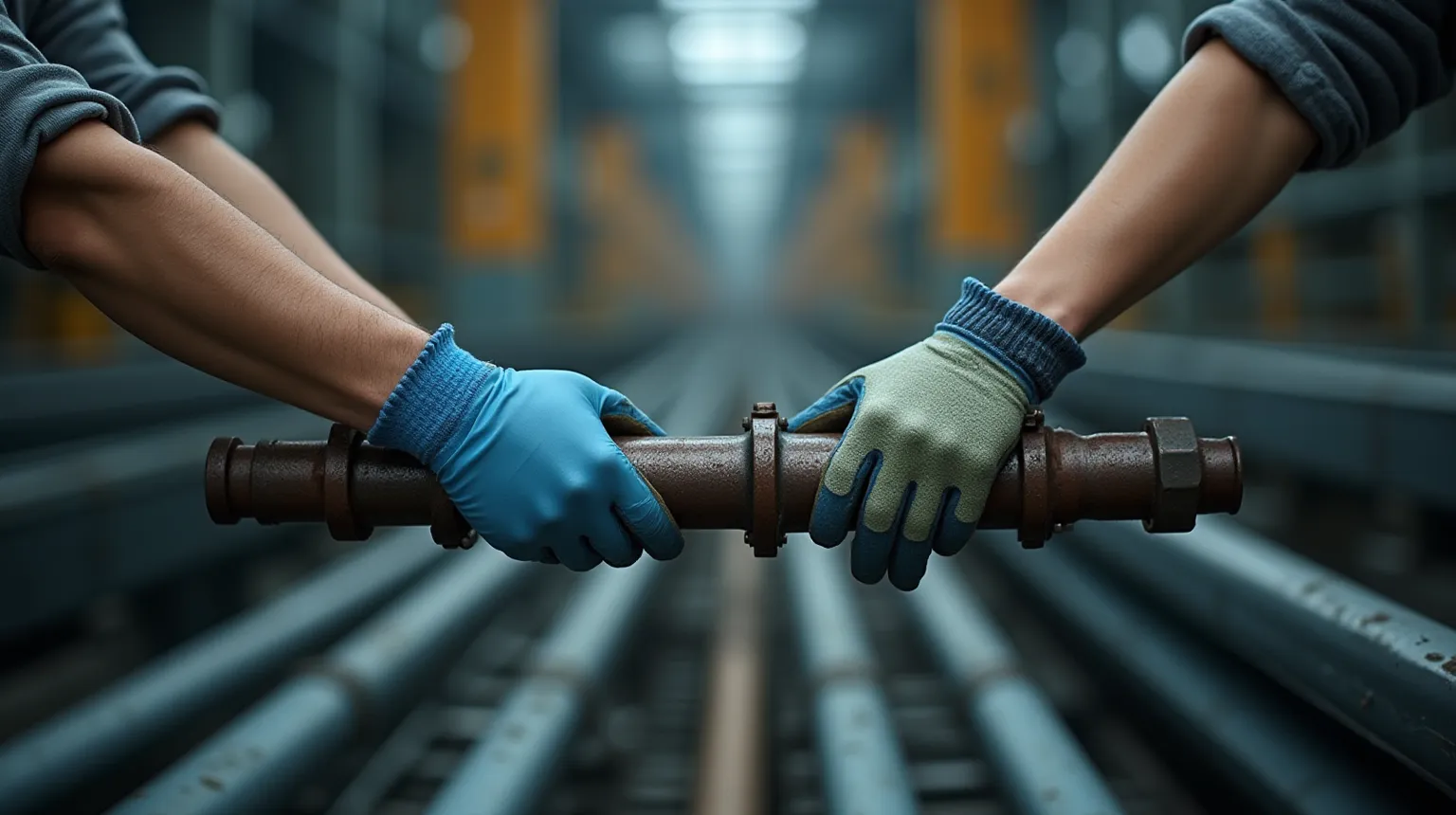
To bridge the gap, you must force your digital tools to confront physical reality before they are allowed to influence any high-level decision. Don't let a "clean" model make decisions for a "messy" floor. Use these three steps:
1. Perform a "Stress Test" of Data Inputs
Don't just look at the data on your screen; go find the source of that data. If a sensor is feeding an AI, have someone physically inspect that sensor every week for months. Does it get covered in dust? Does it vibrate loose? If you cannot guarantee the physical integrity of the input, you cannot trust the output of the model.
2. Map the "Human Workaround"
For every automated step in your digital twin, identify where a human has to intervene. Create a "Reality Delta" log: list everything that happens on the floor but is not captured by the software (e.g., manual adjustments for material thickness, verbal hand-offs between shifts). If it isn't in the system, you must have a manual process to track and report it.
3. Implement "Ground Truth" Verification
Establish a mandatory cadence where digital outputs are compared against physical samples at three distinct points: once an hour (for high-speed lines), once per shift, or during every changeover. This is not just about checking the part; it’s about verifying that the digital model and the physical reality still occupy the same space. If they drift apart for more than a set amount of time, the system must flag a "Reality Gap" alert.
Operational Takeaways for This Week
You don't need to overhaul your IT infrastructure today. You do, however, need to start looking closer at where the screen ends and the floor begins.
- The Walk-Through: On your next Gemba walk, pick one "green" metric on a dashboard. Then, find the physical point of that data collection on the line. Ask the operator: "Does this number actually tell you what's happening right now?"
- Identify One Workaround: Find one instance where an operator has to "cheat" the system or bypass a software step because it’s cumbersome. Document it as a failure of the tool, not a lapse in their discipline.
- Audit the Inputs: Choose one piece of equipment that feeds your AI/Twin and physically inspect its sensors for environmental wear (dirt, heat, vibration). Determine if the "clean" data you see on your desk is actually a result of clean inputs or just a lack of visibility into the degradation.
- Define Your Thresholds: Decide exactly how much "drift" between the digital model and physical reality you are willing to tolerate before an intervention is required. If you don't define it, someone else will decide for you—usually when something breaks.
Download and Share This Issue
Call to Action
Where in your operation is a sophisticated model predicting success while ignoring basic reality? Share your biggest tech-failure story with us, or share this newsletter with an engineer who needs a gut check on hype. [email protected] | @kaizen_6sigma
Newsletter replies and questions: [email protected]
Follow updates on X.com: @kaizen_6sigma