
Issue Summary
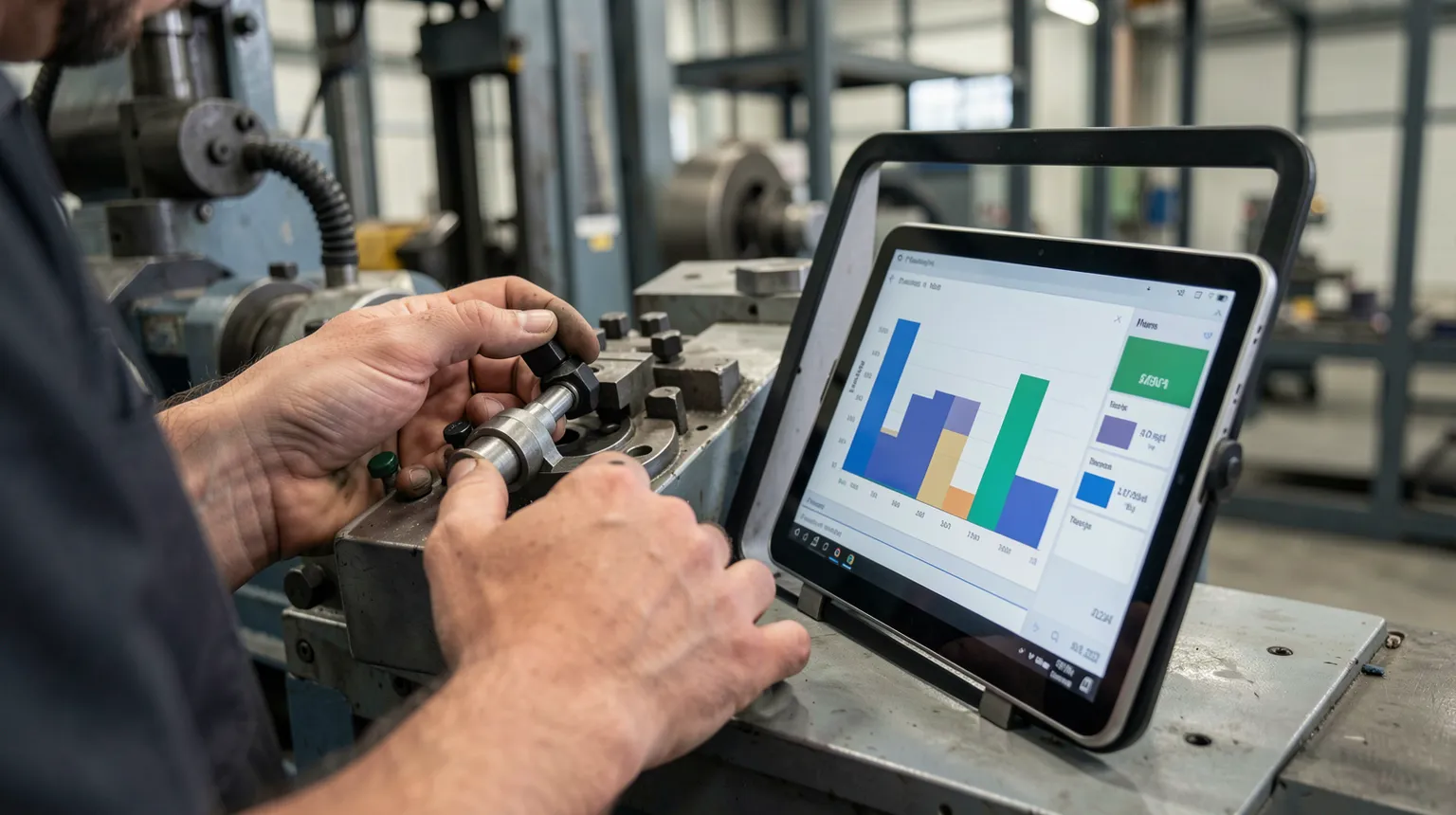
I’ve watched dozens of bright, capable graduates walk onto a manufacturing floor for the first time and look completely lost—not because they lack intelligence, but because their education was built in a vacuum. They can explain the theory of "Industry 4.0" or describe how a digital twin functions in a clean, controlled classroom setting. But when they stand in front of a vibrating CNC machine that’s throwing out inconsistent tolerances or look at a sensor array providing noisy, real-world data, they freeze.
The core problem is a fundamental decoupling: we are teaching the software (the theory) while completely isolating it from the hardware (the practice). We treat "smart manufacturing" as a digital overlay rather than an integrated physical reality. This produces a workforce that knows about the technology but lacks the hands-on intuition to execute it when things go sideways on the line. We are graduating experts in simulation who lack the "muscle memory" of the shop floor, creating a massive gap between what they know and what they can actually do with their hands and tools.
The Sandbox Fallacy and The Capability Gap
We have fallen into The Sandbox Fallacy. This is the belief that if someone can navigate a perfectly tuned simulation or pass a multiple-choice exam on data analytics, they are prepared to manage a modern production line. It isn't true. A simulation doesn't account for the loose wiring on the third shift, the way humidity affects sensor accuracy, or the fact that an operator might bypass a digital check because of a physical bottleneck in the flow.
The result is The Capability Gap. This is the distance between "knowing" and "doing." When we keep learning environments sanitized, we fail to teach students how to handle variability—the dirty, noisy reality of manufacturing. In a simulation, every input leads to a predictable output. On the floor, an input might be corrupted by a failing bearing or a slight misalignment in a fixture. If you haven't practiced troubleshooting these physical "glitches" while simultaneously managing the digital data they produce, you aren't ready for the job. We need to stop teaching people how to operate a perfect system and start teaching them how to repair an imperfect one.
Why We Still Default to Textbooks and Whiteboards
It is easy to understand why many L&D departments and universities stick to the "whiteboard" method of instruction. It’s safe, it's scalable, and it’s cheap. From a management perspective, theory is much easier to standardize than physical practice. You can grade an exam on data visualization without worrying about whether someone accidentally crashed a $500,000 piece of equipment because they didn't understand the mechanical limits of the machine.
However, this safety creates a false sense of progress. We prioritize "measurable" learning over "functional" competence.
| The Comfortable Rationalization | The Underlying Reality |
|---|---|
| "We need to standardize the curriculum for all students." | It is easier to teach a theory that fits everyone than to teach a skill that requires specific, varied physical experience. |
| "The equipment isn't available/ready for student use yet." | We are delaying the most important part of the training because we fear the messiness of live production. |
| "Students need to master the software before they touch the machines." | Students learn nothing about manufacturing by looking at a screen; they only learn how the machine behaves when it fails. |
| "Simulations provide a risk-free environment for learning." | Simulations remove the very variables—friction, heat, and human error—that define real-world manufacturing. |
The Real Cost of Knowing vs. Doing
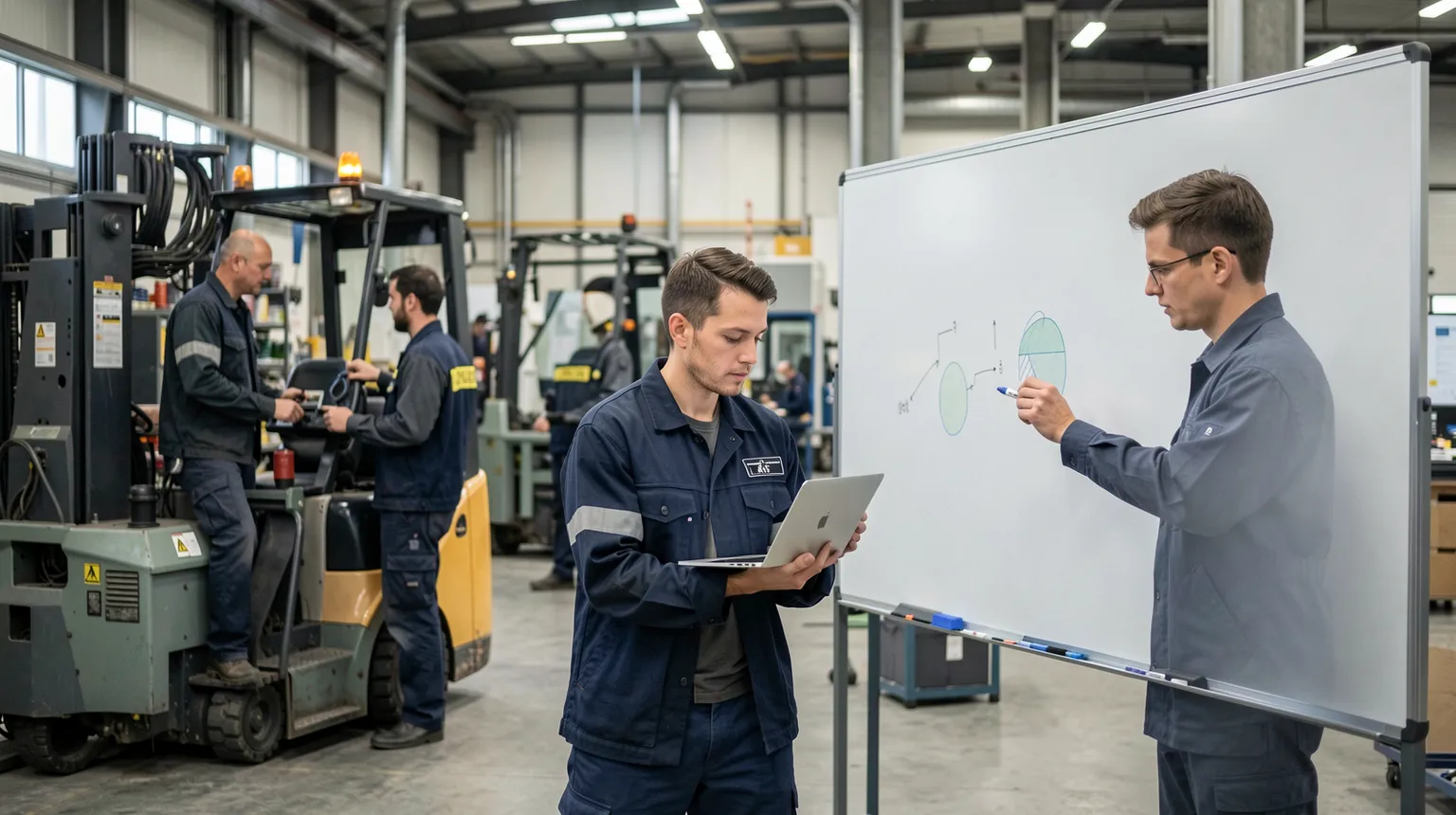
When we continue to produce graduates who have only seen the factory through a screen, the organization pays a heavy price in three specific areas:
- The Friction of Adoption: New hires take months longer to become productive because they have to "unlearn" the idealized version of the process they were taught and reconcile it with the reality of the floor.
- The Cost of High-Stakes Mistakes: Because these individuals haven't practiced in an environment where they can safely "break stuff," their first real mistakes happen on live production runs. This leads to scrapped parts, damaged tooling, and expensive downtime.
- Workforce Frustration and Erosion of Trust: Experienced operators see the new arrivals struggle with basic physical tasks because they were only taught the digital side. This creates a cultural rift where the "experts" feel ignored by the system, and the "new talent" feels incompetent despite their high credentials.
The avoided conversation in the classroom is uncomfortable for the instructor, but the delayed consequence on the shop floor is usually expensive, public, and much harder to recover from.
Building a Learning Factory: The Loop-Based Approach
We need to move away from discrete skill blocks—where you learn "Data Analytics" in week one and "Machine Operation" in week four. Instead, we must build The Integrated Loop. This is an educational model where the student cannot progress through the digital curriculum without solving a physical problem on the floor.
Here are the three stages of the loop:
- Physical Interaction: The student begins by performing a manual task—setting a fixture or running a cycle. They must feel the weight, hear the noise, and see the output.
- Data Extraction & Analysis: Once the physical task is done, they move to the digital layer. They look at the sensor data, the torque logs, or the heat maps produced by that specific run.
- The Feedback Correction: The student must then use those data insights to make a physical adjustment (e.g., "the data shows we are over-torquing on the left side; go back and adjust the bracket").
This is not about teaching them how to use a dashboard. It’s about using the dashboard as a tool to diagnose a mechanical reality. If they can't bridge that gap—using the digital information to make a physical correction—then they haven't learned anything useful for your production line. The goal is "Physical-Digital Fluency," where the data and the machine are seen as one single system, not two separate subjects.
Practical Takeaways for Your L&D Department
You don’t need to build a multi-million dollar "learning factory" overnight to start shifting this needle. You can begin by modifying your existing training pathways with these three actions:
- Audit the "Theory-Only" Modules: Identify any training session that happens exclusively in a conference room or on a laptop. Ask: "What physical machine does this data represent?" If they can't answer, move that module to a Gemba walk where they can see the actual equipment.
- Implement "Break-Fix" Exercises: Instead of asking students to show you how a process works, give them a machine (or a simulated component) that is intentionally out of spec. Ask them to find the drift and fix it using only their provided tools and data logs.
- Shift Resource Allocation, Not Budget: You don't necessarily need new machines; you need better access to existing ones during low-production windows. Work with your plant managers to carve out "Learning Windows" where students can interact with the physical assets without the pressure of a production quota.
Stop asking them to describe the process. Start asking them to run it, break it, and fix it. Only then will they be ready for the floor.
Download and Share This Issue
Call to Action
What is one process on your floor right now that requires more 'doing' than teaching? Share your biggest challenge in developing practical skills with a colleague, or send us an idea to [email protected].
Newsletter replies and questions: [email protected]
Follow updates on X.com: @kaizen6sigma
References
Bringing the Factory to the Learner (Advanced Manufacturing)