The problem: When 'Awareness' means nothing more than an attendance log

I have spent enough time walking manufacturing floors to know the difference between a compliant plant and a disciplined one. You can see it immediately in how people interact with their documentation. In many facilities, "awareness" has become a bureaucratic shield—a way for management to check a box so they can sleep better at night while the actual floor culture remains brittle and reactive.
I call this The Sign-In Sheet Proxy. It is the administrative ritual where you collect signatures on a training log or an SOP acknowledgement sheet, and then declare the job done. You have "proof" that everyone was informed. But if you walk out to the line six months later, you’ll find that those same operators are working around the rules because the rules don't actually help them do their jobs better.
A signature is not evidence of understanding; it is merely a record of presence. When we rely on these proxies, we create a false sense of security. We believe we have built a culture of quality because our folders are full of signed papers. In reality, we haven't built a culture at all—we’ve just built an archive of intentions. The truth is that awareness isn't something you give to an operator via a handout; it is a capability they must demonstrate under the pressure of a production deadline. If your quality plan relies on people promising to follow instructions rather than having the tools and habits to actually do so, then your plan is just paperwork. It’s a proxy for a discipline that hasn't been embedded into the daily work.
What really happens on the floor (and why nobody talks about it)
There is a massive gap between what the "official" manual says and what actually happens when the supervisor isn't looking or when the line is running behind schedule. We don't talk about these workarounds because admitting they exist feels like admitting failure. But if you want to know the health of your quality system, stop looking at the binders and start looking for the "unofficial" ways people get things done.
When a process is poorly designed or an SOP is too cumbersome, the floor will find a way to bypass it to keep the line moving. This isn't usually about malice; it’s about survival. Operators want to hit their numbers, and if the official process makes that harder than it needs to be, they will create "shadow processes."
| Stated Policy | Real-World Workaround / Tacit Failure |
|---|---|
| "Follow the Standard Operating Procedure (SOP) exactly for every cycle." | Sticky notes taped to the machine with "tricks" to bypass a software bug that slows down the start. |
| "Report all nonconformances immediately to the supervisor." | Waiting until the end of the shift to report three small defects because nobody wants to trigger an escalation during peak production. |
| "Use only calibrated and verified tools for every measurement." | Using a specific, well-worn wrench from the back of the cabinet because it "feels right" and is faster than walking to the tool crib. |
| "Ensure 100% visual inspection at each station." | Only checking the first three parts of a run and then "assuming" the rest are good to save time on fatigue-heavy tasks. |
These workarounds are symptoms of a deeper issue: the formal system is failing to provide the necessary support or clarity for the actual work being performed. When the "official" way is too hard, the "unofficial" way becomes the only way people know how to survive the shift.
The cost of pretending you know better than your people
The danger of relying on a Sign-In Sheet Proxy isn't just that it looks bad during an audit; it’s that it creates a vacuum where accountability should be. When we pretend that "training" equals "competence," we are effectively gambling with our first-pass yield and our reputation for quality.
The cost of this pretending is three-fold:
First, you face the cycle of repeat defects. If an operator was "trained" but didn't actually internalize the critical control points, they will continue to make the same mistake every week. You’ll find yourself fixing the same issue over and over because the root cause—a lack of true operational discipline—was never addressed in that initial training session.
Second, you suffer from delayed reaction plans. When people are afraid of being "wrong" or they don't understand the why behind a rule, they hide problems. They wait until a defect is caught by the customer or at final inspection before it’s reported. By then, the cost of the fix has ballooned. You aren't just fixing a part; you're fighting a fire that could have been extinguished at the source.
Third, and perhaps most importantly, you lose internal trust. When leadership insists on "paperwork compliance" while ignoring the fact that the floor is struggling with broken processes, it creates a culture of cynicism. Operators see through the charade. They know the leaders don't actually care about the quality of the part—they only care about the thickness of the folder. This leads to finger-pointing when things go wrong: "I did what the sheet said" becomes the standard defense for a failed product.
The avoided conversation with your team about why they are using workarounds is uncomfortable. The delayed consequence of that silence—a public failure or an expensive recall—is usually much harder to recover from.
How to audit for real understanding—the 3-step behavioral test
If you want to move beyond the proxy, you have to change how you verify competence. You need to stop asking "Did they attend the training?" and start asking "Can they do it correctly under pressure?" This requires a shift from administrative auditing to behavioral observation. During your next Gemba walk or shift handover, use this three-step test:
1. The 'Show Me' Observation
Don't ask an operator if they know how to perform a specific check; watch them do it. Pick a random moment and ask them to demonstrate the most critical step of their process—the one that directly impacts quality. If they hesitate, look for external cues like "cheat sheets" or unofficial markings on the machine. A person who truly understands the discipline doesn't need a note telling them what to do; they have the habit embedded in their movements.
2. The 'Why' Drill
Once they perform the action, ask them why that step is necessary. Most operators can tell you what to do because it’s on the sheet. Very few can tell you what happens to the product if that specific step is skipped or performed incorrectly. If they can only give you a "because I was told so" answer, then your training hasn't reached the level of awareness required for true ownership. They need to understand the link between their action and the final quality of the part.
3. The Handover Verification
Watch the change of shift. This is where the truth usually comes out because it’s a moment of transition and potential chaos. Observe how information is passed from the outgoing operator to the incoming one. Is it a formal, disciplined handoff that includes known issues and specific machine behaviors? Or is it a hurried, vague "everything's fine" while they walk away? The quality of the handover tells you everything you need to know about whether your discipline is sustained or if it’s just an individual effort that dies when a shift ends.
The immediate actions: Building discipline into the daily routine
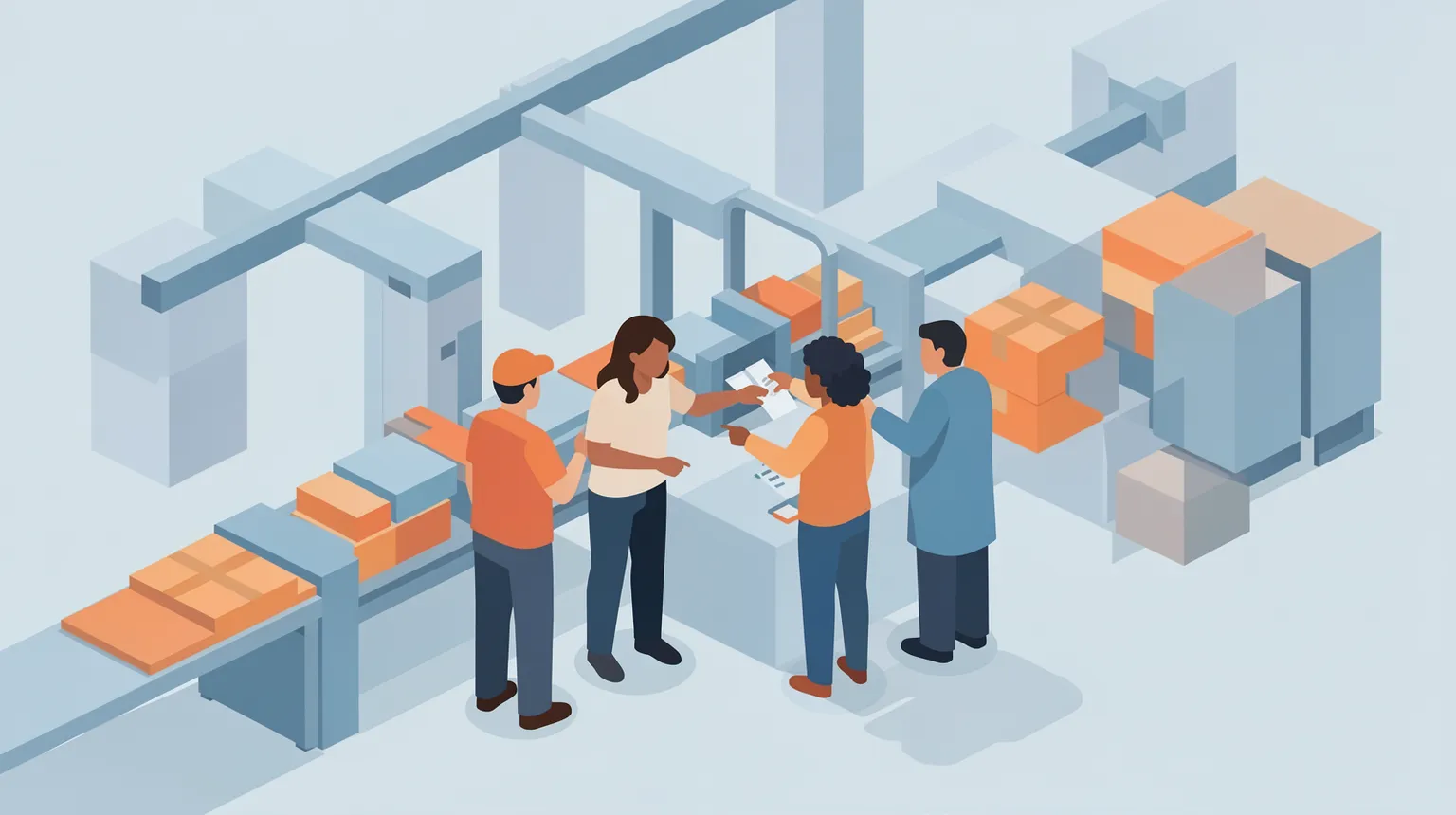
Moving from paperwork to practice doesn't require a massive overhaul of your entire Quality Management System overnight. It starts with small, high-frequency adjustments that force people to engage with the work rather than the documentation. You want to make "doing it right" the path of least resistance for the operator.
Implement these three changes this week:
The 5-Minute Process Review: At every shift start, do not just have a safety huddle. Spend five minutes having one operator explain one specific quality control point to their peers. This moves "awareness" from a monthly training event to a daily, lived reality. It forces them to articulate the "why" and reinforces it for everyone else on the line.
Remove the 'Shadow' Aids: Walk the line and find every sticky note, unofficial cheat sheet, and taped-up "fix." Don’t just throw them away—take them back to an engineering station. If a piece of paper is there, it means your official SOP is either too complicated or doesn't provide enough information. Rewrite that section of the manual so that the "official" way becomes the easiest way.
The 'No-Blame' Observation Log: Create a simple log (or a physical board) where operators can flag "process friction"—moments where they felt they had to choose between following the SOP and hitting their production target. This isn't an incident report for a defect; it’s a report on the failure of the system to support them. Use this data to identify exactly where your quality plan is failing as a practical tool, rather than just a piece of paper in a binder.
Quality is not a paperwork exercise. It is a series of small, disciplined choices made by people who understand why those choices matter. Stop looking for signatures and start looking for the habits that keep the line running right.
Download and Share This Issue
Next Issue Preview
Next up: The danger of 'process ownership' being defined by the job title rather than true accountability for outcomes.
Call to Action
What is one process in your facility that requires more than a signature to prove competence? Share your thoughts, failures, or fixes with us at [email protected] and tag @kaizen6sigma.
Newsletter replies and questions: [email protected]
Follow updates on X.com: @kaizen6sigma
References
ISO 9001:2026 Clause 7.3 (Awareness); Cost of Poor Quality (COPQ)