
Summary: The Gap Between Seeing and Knowing
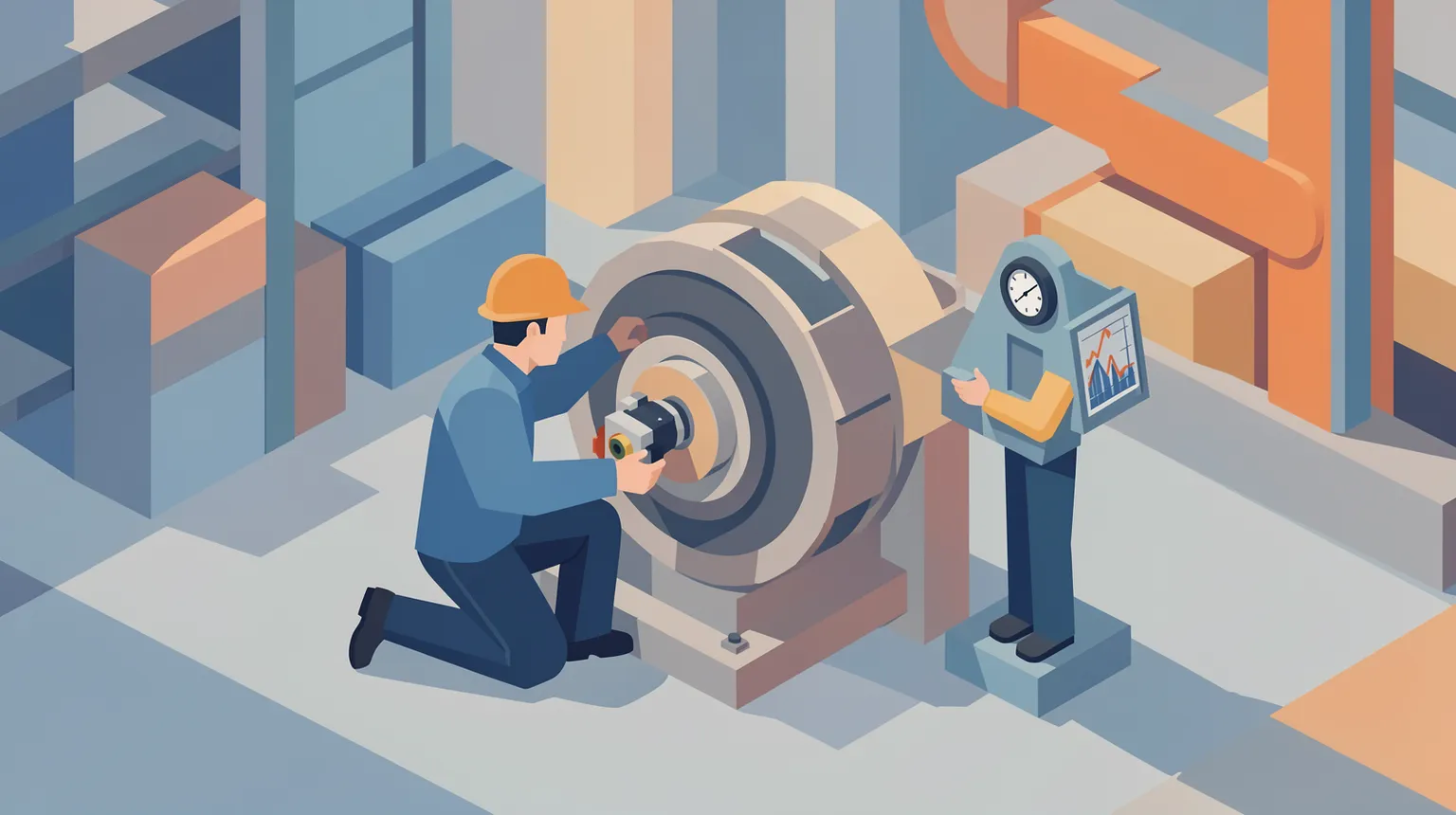
In most manufacturing environments, we define "working" by what we can see. If the drone is in the air, if the robotic arm completes its cycle, or if the conveyor moves from point A to point B without a hard stop, we call it functional. But there is a massive gap between an asset being operational and an asset being reliable.
The problem with current inspection protocols—especially for autonomous systems like drones and mobile robots—is that they are almost entirely reactive based on visual cues. We wait for the cracked housing, the frayed cable, or the smoking motor before we call it a failure. By then, the damage is done, production has stopped, and you’re already paying the price of downtime.
We need to shift our focus from "Did it break?" to "Is it beginning to fail?" This means moving beyond what the naked eye can see and starting to listen for the latent mechanical stress that precedes a catastrophic event. It is about identifying the microscopic friction in a bearing or the subtle harmonic distortion in a motor before they manifest as a visible defect. Real reliability isn't found in a clean surface; it’s found in the integrity of the internal mechanics. We have to start listening for failure before the machine tells us it has already failed.
The Illusion of Visibility: Why Sight Checks Fail Us
I have spent enough time on production floors to know that "it looks fine" is one of the most dangerous phrases a technician can utter. It’s what I call The Visual Fallacy.
When we rely on manual visual checks, we are only auditing the surface layer of reality. You walk up to a drone used for warehouse inventory and see a clean chassis. That tells you nothing about the state of the internal gear train or the heat-soak levels in the primary drive motor. You can have a perfectly polished exterior while the internals are undergoing terminal degradation.
The reason we fall into this trap is that sight is easy. It’s what we’re trained to do. We take a clipboard, walk the line, and check off boxes. But visual inspection provides a false sense of security because it doesn't account for internal physics. Acoustic monitoring changes the game by providing a window into those internals. Every mechanical component—every gear, every motor, every rotating joint—has an acoustic signature. When that signature drifts, it’s telling you something about the friction, the lubrication state, or the structural integrity of the part.
We aren't just looking for broken parts; we are listening for the "cry" of a component under stress. If you can hear the difference between a smooth rotation and a grinding whine, you have a lead time that your eyes will never give you. We need to stop trusting our eyes as the final word on machine health and start using sound as an early-warning system.
Why We Still Trust Our Eyes (And What That Costs)
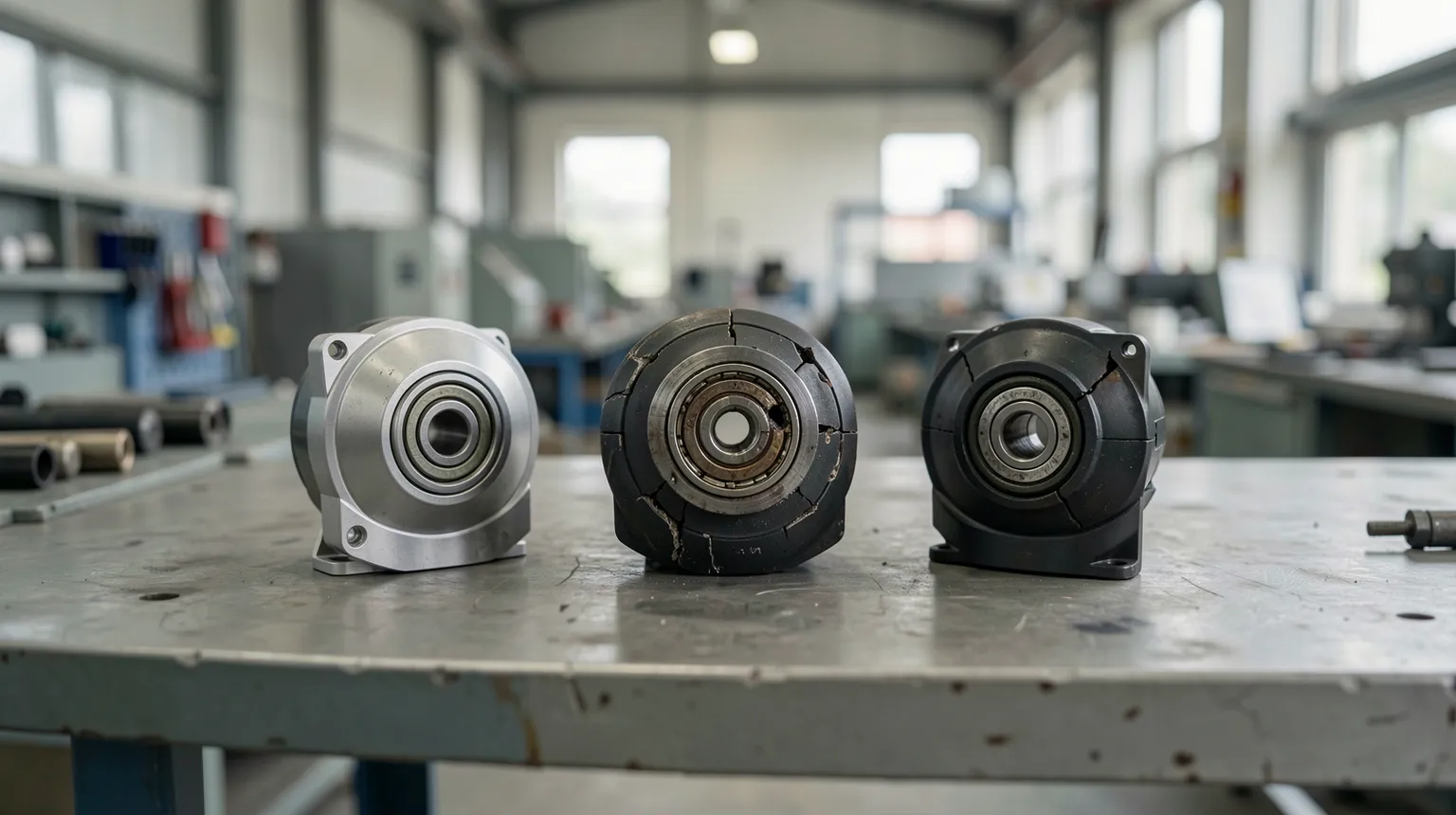
The reason most plants haven't moved toward predictive acoustics isn't a lack of technical ability; it’s a preference for the comfortable over the complex. It is easier to train a human to look at a robot than it is to deploy, calibrate, and interpret acoustic sensors across an entire fleet. There is a psychological inertia here: if we can't see it with our own eyes, we find it harder to believe it’s a problem worth spending money on today.
But this "comfortable" path has a hidden price tag that shows up in your maintenance budget and your unplanned downtime logs. We choose the ease of visual checks because they require less immediate investment in infrastructure, but we pay for that choice with every "sudden" failure that takes out a production line.
| The Comfortable Rationalization | The Underlying Reality |
|---|---|
| "The drone looks clean; it's ready for the next shift." | Internal bearings are overheating and losing tolerance, leading to an inevitable mid-shift seizure. |
| "Manual inspections are cheaper because they don't require sensors." | One unplanned drone crash in a high-traffic area costs more than a year of acoustic monitoring. |
| "We don't need complex data; we just need to know if it works now." | By the time you see the failure, the window for preventative maintenance has already closed. |
| "Acoustic alerts will be too noisy/complex to manage." | A single, targeted alert on a critical motor prevents three days of production stoppage. |
We are choosing to ignore the "noise" of impending failure because it’s harder to manage than the "signal" of an existing break. That is a strategic error in any high-stakes manufacturing environment.
The Three Pillars of Acoustic Reliability

To move from visual fallacies to predictive reality, you need a framework that treats sound as data, not just noise. You cannot simply strap a microphone to every machine and hope for the best; that creates more problems than it solves. You need a disciplined approach to acoustic monitoring built on three pillars:
1. Strategic Sensor Deployment
You don't need to hear everything at once. You need to hear what matters. This means identifying high-criticality moving parts—the motors, the gearboxes, and the primary drive shafts of your autonomous systems. Placement is everything. A sensor placed too far from a bearing won't catch the frequency drift; it needs to be positioned where the mechanical stress translates into vibration and sound waves most clearly. Think about the torque settings and the load paths on your equipment. Place your "ears" where the work is actually happening.
2. Data Filtering and Analysis Protocols
A factory floor is loud. If you want to hear a failing bearing, you have to know how to ignore the hum of the HVAC system or the roar of a nearby press. This requires establishing baseline signatures for every machine in your fleet when they are in a "known good" state. You aren't looking for any sound; you are looking for deviations from that baseline. Your protocol must define what is normal so that the abnormal stands out like a flare in the dark.
3. Quantifiable Alert Thresholds
This is where most projects fail—they lack a "when to stop" rule. You need hard numbers, not "gut feelings." What decibel level or frequency shift triggers an automatic maintenance ticket? When does a drone get pulled from the floor for a teardown? These thresholds must be established during the pilot phase and refined as you gather more data. If it doesn't have a clear trigger, it’s just another dashboard that people will eventually stop looking at.
Immediate Takeaways for Your Next Gemba Walk
You don't need to overhaul your entire maintenance department by Monday. Start with these three actions during your next walk through the facility:
- Identify the "Blind Spots": Walk the line and identify every autonomous machine or robot where a failure would be catastrophic but wouldn't be visible until it happened (e.g., internal motor windings, hidden gear assemblies).
- Audit Current Inspection Methods: Ask your lead technicians: "How do you know this part is healthy right now?" If the answer is "it looks fine," mark that as a high-risk area for acoustic pilot testing.
- Define One Critical Asset: Don't try to monitor everything at once. Pick one drone or robot that has had an unexpected failure in the last six months. This is your candidate for a predictive acoustics test.
- Evaluate Sensor Feasibility: Look at that specific asset and ask: "Where could we physically mount a sensor to hear the primary drive train?" Talk to your engineering team about what it would take to get one "ear" on that machine by next month.
Stop looking for the broken pieces of yesterday's failures and start listening for the warnings of tomorrow's problems.
Download and Share This Issue
Call to Action
What single point of equipment failure does your operation currently rely on manual inspection for? Share this article with a colleague who needs to rethink their audit checklists, or send us an example challenge at [email protected].
Newsletter replies and questions: [email protected]
Follow updates on X.com: @kaizen6sigma
References
interestingengineering.com/innovation/us-engineers-sound-drone-failures; Principles of Vibration and Acoustic Analysis in Mechanical Systems