
The headline we are all chasing: Bigger is better
In the world of 3PL and freight brokerage, there is a pervasive belief that scale is the ultimate shield. The logic seems airtight to an outsider: if you own more assets, have more trucks in your fleet, and manage a higher volume of lanes, you possess more leverage. You become "too big to fail."
But I’ve spent enough time on the floor to know that size is not the same thing as capability.
Scaling by simply acquiring assets—more trucks, more yards, more warehouses—is often just an exercise in accumulating complexity without increasing control. It is a common trap where leaders mistake growth for maturity. You can buy ten thousand extra shipments per month, but if your communication flow between the dispatcher and the driver remains broken, you haven't grown; you’ve just made your problems larger and harder to manage.
We need to stop viewing "size" as our competitive edge. Size is a multiplier of whatever processes you already have in place. If your process for tracking cargo is manual and prone to error, then growing that volume only means you will experience those errors at a much higher frequency.
Growth isn't the goal; operational maturity is. A large company with poor internal visibility is just a large organization struggling to manage its own chaos. We need to move away from the "more is better" mantra and toward a focus on how well we actually know what our operations are doing at any given second.
The Scale Illusion: When volume masks operational fragility
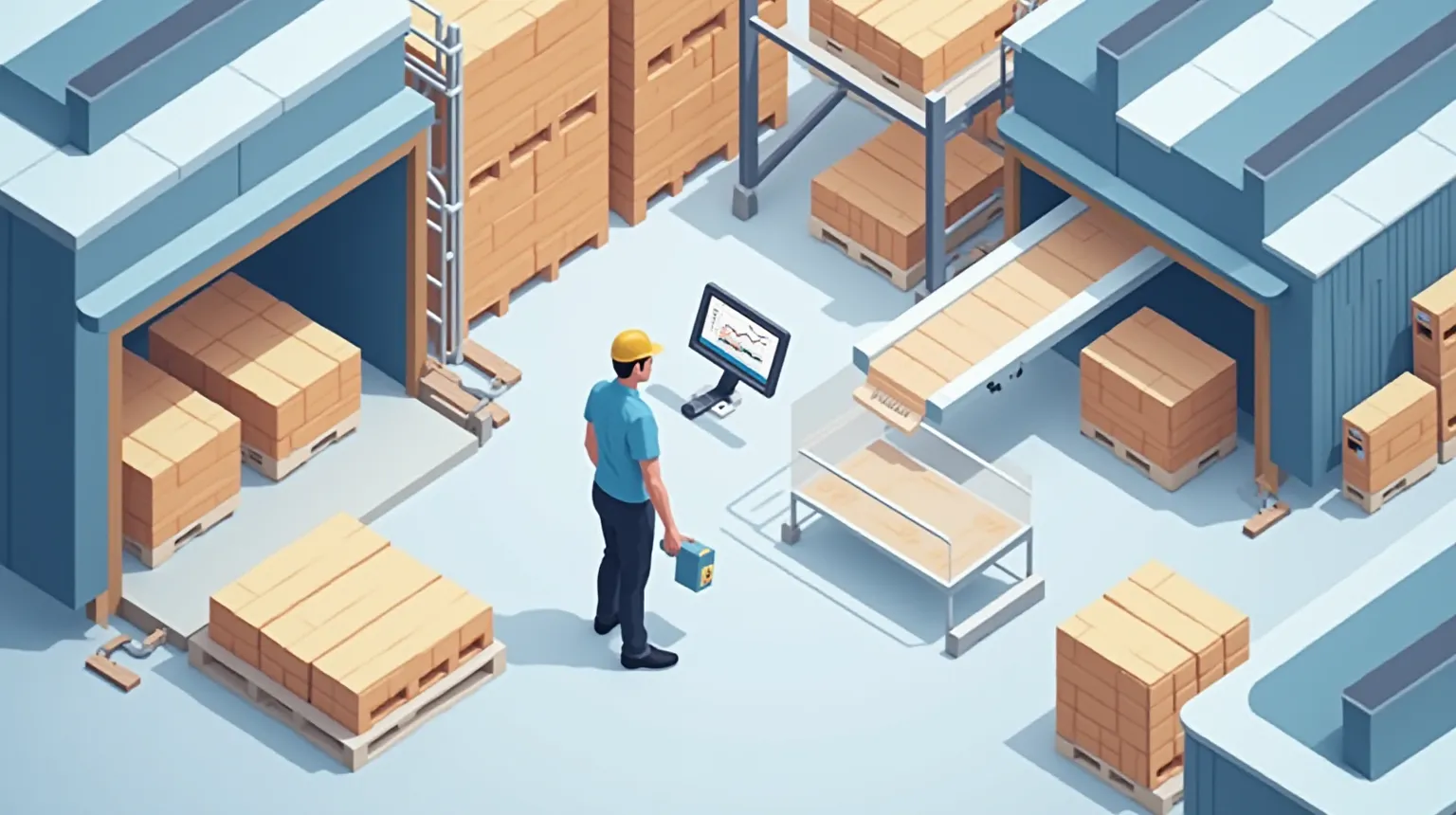
There is a specific failure point that occurs during rapid expansion, which I call The Volume Trap. This happens when an organization assumes that because they have "all the data" from their various acquisitions or expanded routes, they actually possess "intelligence."
They don't. They just have a larger pile of raw numbers.
There is a critical distinction between data aggregation and data density.
Aggregation is simply collecting information into one bucket—merging databases after an acquisition so that everyone can see the same screen. It feels like progress because it looks organized on a spreadsheet in a head office. However, if those data points aren't tied to specific, actionable triggers on the floor, they are useless.
Data density is different. Density means every piece of information collected serves a direct purpose in the execution of work. It means that when a truck hits a delay at a cross-dock, the system doesn't just record "delayed"; it identifies why (e.g., missing paperwork, gate congestion, mechanical failure) and automatically triggers the necessary response.
When volume masks fragility, you have a high-growth company where managers are constantly "firefighting." They are reacting to problems only after they happen because their data is sparse—they see that something went wrong, but they don't see it coming until it’s too late to pivot.
Why does this happen? The physics of information decay.
Information doesn't stay pure as it moves from the floor to the office and back again. In many logistics firms, data "decays" because it is captured in a way that isn't tied to the physical reality of the operation.
When we merge systems or scale up, we often just copy-paste old habits into new software. A dispatcher might enter a status update into a portal, but if they are doing so based on a phone call from a driver who is already three miles away from their destination, that data is "stale." It’s an entry made to satisfy the system, not to inform the next step of the process.
To stop this decay, we have to move toward structured, cross-functional mapping. This means every piece of data must be a reflection of a physical action on the ground. If you want high density, your software shouldn't just ask for "Status"; it should require specific inputs that reflect real constraints—like gate numbers, specific load IDs, or actual GPS coordinates.
| The Common Approach (Low Density) | The Operational Standard (High Density) |
|---|---|
| Data Aggregation: Collecting every signal into one dashboard without filtering for actionable triggers. | Data Density: Only capturing data that informs a specific decision point in the workflow. |
| Reactive Reporting: Seeing a "Late" status and calling to find out why. | Proactive Alerting: The system identifies a bottleneck at a specific yard before the truck arrives. |
| Manual Entry: Dispatchers typing notes into fields to satisfy software requirements. | Automated Feedback: IoT, GPS, and gate sensors feed real-time data directly into the flow. |
What’s actually at stake: From slow decisions to systemic collapse
When we settle for "volume" instead of "density," the costs aren't just theoretical; they are visible in every delayed shipment and every frustrated customer.
The most immediate cost is Decision Lag. In a low-density environment, if a problem occurs on the floor—a broken pallet, a missed turn, a late driver—the information has to travel up the chain of command before it can be acted upon. By the time a manager sees the "red" flag on their screen and makes a decision, the opportunity to fix the issue quickly is gone. The customer is already calling to complain.
The deeper risk is Systemic Collapse. This happens when your organization grows so large that you can no longer manage it through human effort alone. If your team has to manually "stitch" together information from three different systems just to give a customer an update, you aren't running a high-tech logistics firm; you are running a manual labor operation disguised as one.
The cost of poor data density is:
- Lost Trust: When you can't tell a customer where their goods are until they ask.
- Increased Overhead: Hiring more people just to "manage the noise" created by bad data.
- Wasted Capacity: Trucks sitting idle or moving empty because of poor coordination at transit points.
The Three Tests for Operational Intelligence (A Framework)
To move from simply being large to being smart, we must test our operations against three specific standards of intelligence:
1. Cross-Modal Visibility
Can you see the entire lifecycle of a shipment without manual intervention? If your system "loses" the load when it moves from one carrier to another or enters a new warehouse zone, you have a gap in visibility. True intelligence means the data follows the cargo regardless of who is handling it at that moment.
2. The AI-to-SOP Feedback Loop
If you are using automation or AI tools, they must be anchored to your Standard Operating Procedures (SOP). A common failure is letting a "smart" system suggest an action that contradicts your established safety or quality protocols. Use technology to enforce the SOP, not to bypass it for the sake of speed.
3. Transactional Granularity
This is the ultimate test of data density. When a status change occurs—for example, a truck arriving at a gate—does the system capture enough detail to be useful? "Arrived" is low-density; "Arrived at Gate 4 with verified paperwork and a clear load for Dock 12" is high-density. High granularity means you never have to call someone just to find out what happened next.
Making it work tomorrow: Three actions for your next Gemba walk
Don't start by looking at your software dashboards in the office. Go to where the work happens—the dispatch desks, the loading docks, and the yards. Look for these three things:
1. Identify "Shadow Systems." Look for the pieces of paper taped to monitors or the unofficial spreadsheets that drivers and dispatchers use because the official system is too hard to update or doesn't give them what they need. These are symptoms of low data density. If a worker has to write it down twice, your process is broken.
2. Audit the "Why" of Data Entry. Ask an operator: "What information did you just type into the system?" If their answer is "I don't know, I just have to do it so the screen turns green," you are dealing with data decay. They aren't providing information; they are performing a ritual to satisfy a machine. You need to simplify the input so that only high-value, actionable data is required.
3. Map the Information Hand-offs. Pick one specific lane or shipment and trace exactly how many people have to touch it—not physically move it, but inform someone else about its status. Every time a human has to repeat information they already told someone else, you have identified a point of failure where data density is low and manual effort is high. Fix the hand-off, and you reduce your costs immediately.
Download and Share This Issue
Call to Action
What is your company treating as 'data infrastructure' today—is it merely IT integration or genuine operational capability transfer? Share this with a peer who needs to think past capacity planning.
Newsletter replies and questions: [email protected]
Follow updates on X.com: @kaizen_6sigma
References
C.H. Robinson’s RXO Acquisition: Scale, Density, and AI Reshape Freight Brokerage (Logistics Viewpoints)