
Issue Summary
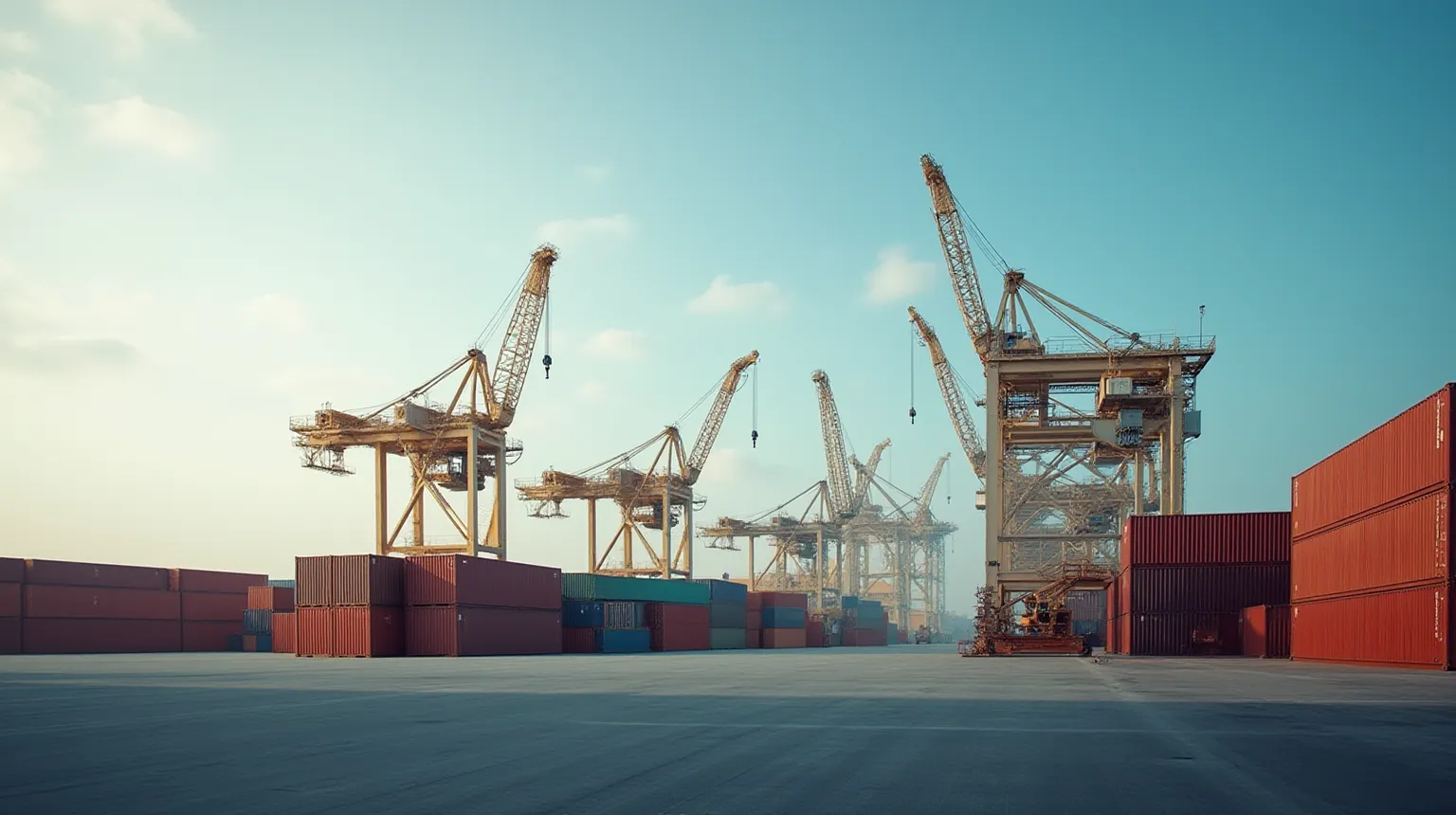
When we talk about geopolitical risk and trade tariffs, most people in the boardroom treat it as a macro-level accounting problem—a percentage point added to the Cost of Goods Sold (COGS) that gets adjusted on an invoice months after the fact. This is a mistake.
In reality, when trade policy shifts, its impact manifests at the micro level: it becomes a physical constraint on your operations. A tariff isn't just a number on a spreadsheet; it is a friction point in your supply chain. It changes how many containers you can fit on a rail car, how long a truck sits at a port because of customs scrutiny, and which warehouse locations become viable for specific SKUs. If you treat trade policy as something that happens "out there" in the capital, while your team treats logistics as a steady flow, you have a gap where your operations will eventually break. We need to stop looking at tariffs as a political hurdle and start treating them as a variable of physics and geography.
The False Separation: When Policy Becomes Physics
The primary failure in modern supply chain management regarding trade is what I call Macro-Policy Blindness. This occurs when an organization treats policy (the law) and logistics (the movement of goods) as two separate silos that only meet at the point of payment.
In this model, the executive team decides on a sourcing country based on "risk tolerance," while the operations team manages the flow of parts regardless of those risks until they hit a physical wall. This separation is dangerous because it ignores how policy dictates movement. When a new tariff is enacted or a trade route becomes volatile, the reality isn't just an increase in cost; it is a change in the "physics" of your supply chain.
A tariff creates friction. Friction slows down throughput. If you don’t account for that friction in your routing logic, you end up with "paper plans"—plans that look perfect on a spreadsheet but fail the moment they hit a port where customs officers are scrutinizing every manifest because of new regulations. We must bridge this gap: a policy change is not an accounting update; it is a rerouting requirement.
Why We Fail to Model Trade Risk Operationally
We often fail here because our tools and our habits are built for "peace-time" logistics. Most companies use cost accounting to manage trade risk, but they need network modeling to survive it.
Cost accounting looks at the end of a journey: “It costs X more to bring this from Port A.” Network modeling looks at every step of the journey: “How does moving this item through Port B change our truck turn times and yard capacity?”
When we only use cost accounting, we miss the operational nuances. For example, if a trade policy makes a direct route more "expensive" due to tariffs, the logical response is often just to pay the tax. However, that fails to account for the fact that certain routes might become physically congested as other companies make the same "just pay it" decision.
We fail because we don't ask how trade risks impact:
- Flow Rates: Does a specific port have the staffing to handle increased scrutiny?
- Buffer Requirements: Do we need more safety stock at local hubs because of potential delays at customs?
- Alternative Routing: If Route A becomes high-risk, does Route B have the rail capacity to absorb our volume?
If you don't model these as operational variables, your "cost" isn't just a higher invoice; it’s a stalled production line because of an unexpected bottleneck.
The Tangible Cost: What Tariffs Really Do to Your Yard
When we ignore the physical reality of trade policy, the costs move from the accounting office to the warehouse floor. When tariffs or trade restrictions hit, they don't just manifest as fees; they manifest as "clutter" in your system.
Specifically, look at these three areas where a lack of operational planning leads to failure:
- Increased Terminal Dwell Time: If policy uncertainty creates a bottleneck at the port, your containers sit longer. This isn't just a delay for one shipment; it’s a loss of "turns" in your logistics cycle. Every day a container sits on a pier is a day that truck and chassis are tied up elsewhere.
- Changes in Intermodal Volume Allocation: When certain routes become high-risk or expensive, volume shifts suddenly to others. If you haven't modeled this shift, your "backup" rail lines may not have the capacity to handle your primary flow when things get complicated. You end up with a choice between paying for premium freight or letting parts sit in a yard.
- Pressure on Local Capacity: When trade barriers make just-in-time delivery from overseas harder, companies often over-compensate by "hoarding" inventory locally to create a buffer. This puts immediate pressure on your warehouse footprint and specialized storage (like cold storage or high-density racking).
| The Common Reasoning | The Underlying Reality |
|---|---|
| "We just need to pay the tariff." | You are sacrificing yard space for safety stock because you can't trust the flow. |
| "The port is a bit slow today." | The port is overwhelmed by others who also failed to plan for trade friction. |
| "It’s just an administrative hurdle." | It is a physical bottleneck that reduces your total available throughput. |
The Network Math Fix: From Country-Level Sourcing to SKU Flow

The solution is to stop making sourcing decisions based on countries and start making them based on SKU Flow. We need to treat tariffs as a variable input into our network flow planning, not just a line item in the procurement office.
Instead of asking "Is this product from a high-risk country?" we should be asking: "What is the cost-to-serve for this specific SKU moving through these specific geographic nodes when trade variables are applied?"
This means your routing logic must account for the cost at every segment. If a tariff makes Port A expensive, the calculation shouldn't just be "Port A + Tariff." It should be:
- Segment Cost: The base transport from factory to port.
- Risk Premium: The added cost of potential delays or administrative holds.
- Node Capacity: The availability of trucks and rail at the next jump.
By treating a tariff as a "variable" in your network model, you can see where it makes sense to change the route entirely rather than just paying more for the same path. You move from a reactive stance—where you only notice the problem when the truck stops moving—to a proactive stance where the flow of goods is optimized based on both the cost and the physical reality of the lane.
Practical Takeaways for Tomorrow's Planning Meeting
If you want to start integrating these considerations into your operations immediately, take these steps in your next planning meeting:
- Map Your High-Risk SKUs: Identify which products have the highest exposure to trade policy changes. Don't just look at their origin; identify the specific ports and rail segments they touch.
- Audit "Hidden" Buffer Costs: Calculate how much warehouse space you are currently using as a "buffer" against supply chain uncertainty. Is that cost justified by your current lead-time requirements?
- Perform a "Stress Test" on Alternative Routes: Pick three of your most common lanes and map out the nearest alternative if a specific port or border point becomes non-viable due to policy shifts. Do you have the contracts in place to move volume there instantly?
- Integrate Tariff Data into Routing Software: Work with your IT/Logistics team to ensure that tariff costs are entered as "dynamic variables." If the cost of a specific route spikes, the system should be able to flag it for manual review or automatically suggest an alternative path based on pre-defined logic.
- Define "Red Zone" Thresholds: Establish clear triggers for when a trade risk becomes so high that you switch from your primary shipping lane to a secondary one. Don't wait for the goods to get stuck; have the trigger point defined in advance.
Download and Share This Issue
Call to Action
When was the last time you modeled tariffs not just on cost-of-goods, but as a direct input into your rail/port allocation plan? Share this with a colleague who still thinks risk management is purely qualitative. [email protected]
Newsletter replies and questions: [email protected]
Follow updates on X.com: @kaizen_6sigma
References
Source Article: US-China Tariff Relief Changes the Logistics Math, Not the Supply Chain Strategy (Logistics Viewpoints)