
Issue Summary: When the Process Breaks Down
Most manufacturing leaders think their ERP system is the backbone of their operation. In many ways, it is—provided every transaction follows the "happy path." If the purchase order matches the invoice, if the quantity received equals the quantity shipped, and if the price point stays within the pre-approved bracket, the system hums along beautifully. But we don't live in a world of perfect transactions.
The real work happens in the cracks—the exceptions. It’s the invoice that arrives with a $50 discrepancy on a high-volume fastener. It’s the supplier who sends a substitute part because their primary line went down, but didn't update the digital record. In these moments, the "system" stops working for the human being on the floor or at the desk. The process breaks down not because of a software bug, but because the system wasn't designed to handle the messy reality of industrial supply chains.
When these exceptions occur, they don't just disappear into a digital void; they manifest as manual toil. Someone has to pick up the phone, someone has to hunt through an email chain, and someone has to manually override a block in the system. This isn't "business as usual." It is a friction point that slows down procurement, delays production schedules, and drains the cognitive energy of your best people on tasks that should be invisible. We need to move past simply "managing" these exceptions and start resolving them autonomously.
The Exception Paralysis: Where Fragmentation Meets Failure
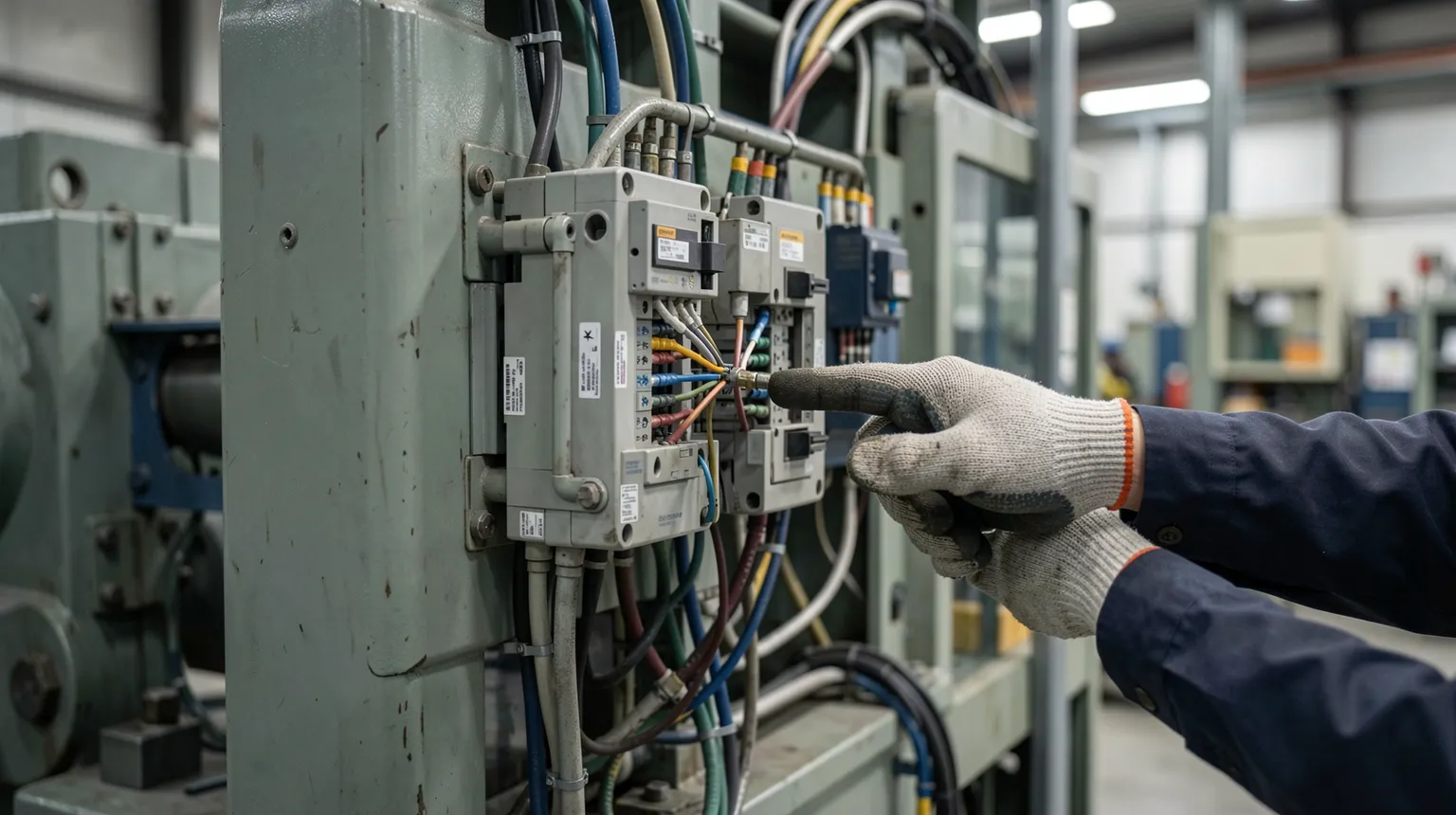
I have seen this play out in dozens of plants: a production line sits idle because a critical component is stuck in "pending status." Why? Because the supplier sent a different SKU than what was ordered, and now the procurement clerk is playing detective to figure out if the part is acceptable. This is The Exception Paralysis.
It happens when your systems are fragmented—where the data in your ERP doesn't talk to the reality of the warehouse floor or the nuances of the supplier’s capabilities. When a deviation occurs, the system hits a wall and waits for a human to provide the "key." If that human is busy, tired, or out of the office, the entire flow grinds to a halt.
The paradox is that as our core systems become more sophisticated, these manual bottlenecks become more glaring. We have world-class software handling millions of dollars in automated transactions, yet we still rely on "heroic effort" to solve a $200 discrepancy. This isn't just an administrative nuisance; it’s a systemic failure where the complexity of the deviation exceeds the capability of the process. When you rely on human intervention as your primary way to handle deviations, you aren't running a scalable operation—you are running a series of manual workarounds held together by willpower.
Why We Still Need Spreadsheets and Email Chains to Fix System Problems
Why do we still see "shadow systems" like Excel sheets and endless email threads used to manage these procurement gaps? It is tempting to blame the software, but that’s rarely the truth. The reality is usually a choice of path of least resistance over long-term discipline.
We use spreadsheets because they are easy to build in an afternoon. We use emails because they provide a paper trail for "who said what." These tools allow us to bypass the hard work of defining exactly how we want the system to behave when things go wrong. It is much easier to let Marcus manually type into a cell than it is to sit down with IT and properly map out the logic for every possible supplier deviation.
| The Comfortable Rationalization | The Underlying Reality |
|---|---|
| "The process is too complex to automate." | We haven't actually defined the rules of the process yet. |
| "We need a human touch to make this decision." | We are using 'human touch' as a substitute for clear escalation limits. |
| "A spreadsheet is faster than changing the ERP config." | The spreadsheet creates a data silo that hides the true cost of the error. |
| "The supplier keeps changing their mind." | Our system lacks the flexibility to accommodate known, recurring variations. |
We have mistaken activity for progress. Every time an employee opens a new spreadsheet to "fix" a procurement issue, they are documenting a failure in our primary operating system. We aren't solving the problem; we are just building a bigger pile of manual toil to hide it.
What does ‘Internal Toil’ actually cost?
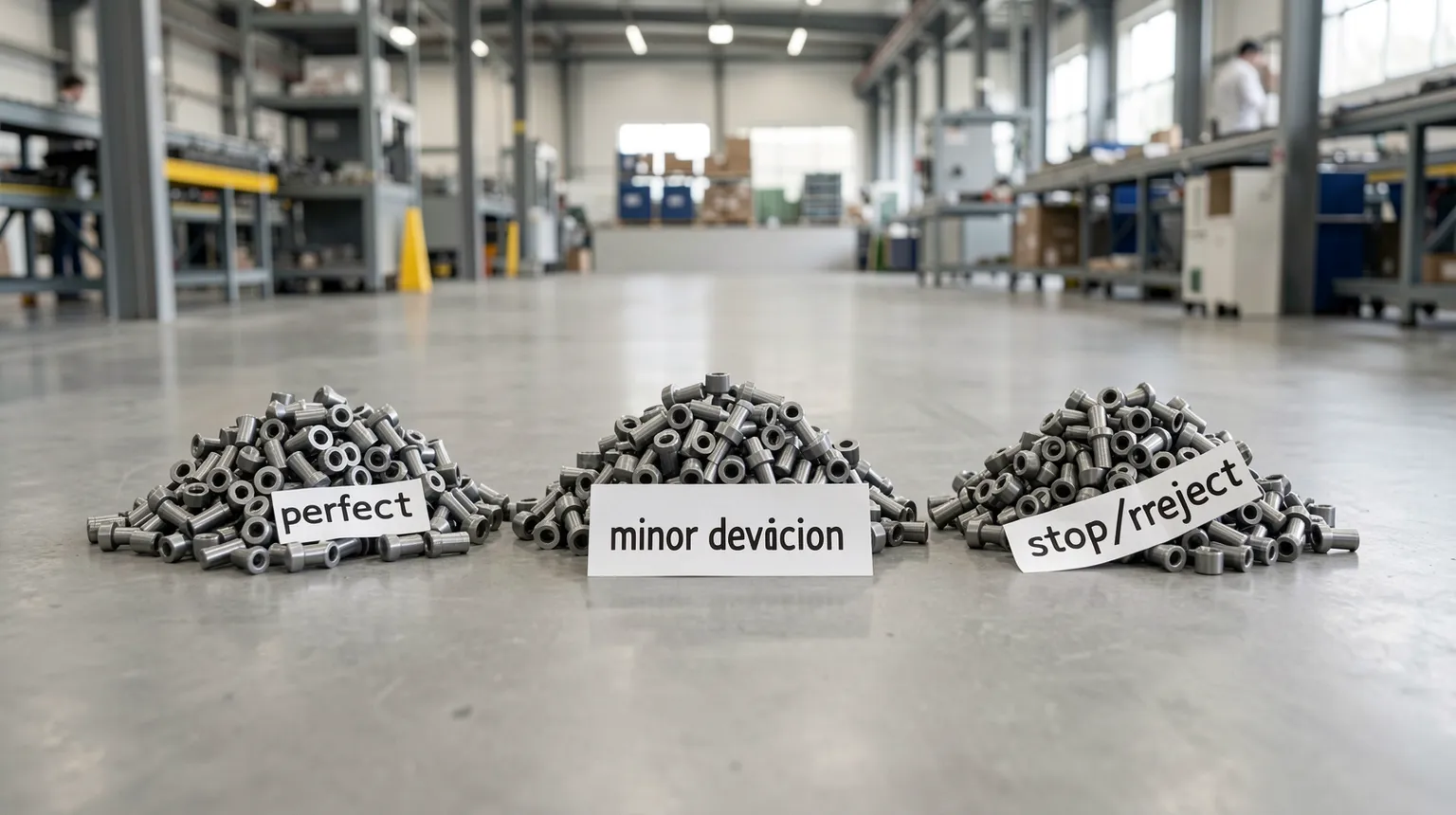
When people talk about "toil," they often think of minor inconveniences. In a manufacturing environment, internal toil is a silent tax on your most valuable resources: time and attention. It isn't just the few minutes spent typing an email; it is the cumulative weight of those moments across an entire organization.
The costs of The Exception Paralysis manifest in three primary ways:
- Delayed Physical Production: When a procurement exception isn't resolved in minutes, it becomes a "line stop" event. A part that is sitting on a dock because the paperwork doesn't match prevents an assembly from moving forward. This ripples through the schedule, forcing overtime or causing missed delivery dates to customers.
- The Erosion of Cognitive Capacity: Your best people—the ones who should be looking at ways to improve yield or optimize layouts—are instead spending their morning "triaging" invoices. When a high-value engineer spends 30% of their day doing manual data entry, that is 30% of your innovation potential being incinerated by friction.
- The Feedback Loop of Frustration: Toil breeds resentment. When operators and procurement teams are constantly fighting the system rather than using it, they begin to view "the process" as an obstacle to be bypassed rather than a tool to be mastered. This leads to more workarounds, which creates more complexity, which generates even more toil.
Moving from 'Triage' to 'Autonomous Resolution': The 3-Phase Operating System
To break this cycle, we have to move away from "triage"—where humans simply react to problems as they appear—toward Autonomous Resolution. This doesn't mean removing the human entirely; it means using technology (specifically Agentic AI) to handle the heavy lifting of diagnosis and resolution within your existing boundaries.
Think of this as a three-phase operating system for procurement exceptions:
1. Detection (The Signal)
Instead of waiting for an invoice to sit in a "pending" folder for three days, the system must proactively flag discrepancies the moment they enter the environment. We need clear triggers—price variance over X%, SKU mismatch, or missing documentation—that alert the system immediately.
2. Diagnosis (The Logic)
This is where Agentic AI excels compared to old-school "if/then" automation. The system should look at the exception and ask: "Why did this happen?" It checks historical data. Did this supplier always send this substitute? Is there a standing agreement for this price variance? It looks for the reason behind the deviation, not just the fact that one exists.
3. Resolution (The Action)
Once diagnosed, the system proposes or executes a resolution based on pre-defined logic. If it's a known, low-risk variation, the system can auto-approve and update the records. If it’s high-risk, it doesn't just "stop" the process; it presents the human leader with a clear summary: "I found this discrepancy because of [Reason X]. I recommend [Action Y] based on our current contract. Do you approve?"
This moves the human from being a "data entry clerk" to a "decision maker." You are no longer digging for information; you are simply validating the system's logic.
Practical Takeaways: Questions to Ask Your IT and Supply Chain Teams

If you want to start reducing toil this week, stop asking your teams how they can "fix" the current spreadsheet. Instead, ask them questions that force a confrontation with the underlying process fragmentation.
Use these questions during your next leadership meeting or Gemba walk:
- Mapping the Deviation: "Can we list the top five recurring procurement exceptions from the last six months? What is the specific logic—the 'rule'—that determines how we solve each one?"
- Identifying the Bottleneck: "When a purchase order doesn't match an invoice, exactly how many people have to touch that data before it gets approved? Where does the information sit still for more than an hour?"
- Defining Escalation Limits: "What is our threshold for 'automatic' resolution? At what dollar amount or risk level must a human intervene, and why do we have those specific limits?"
- Data Visibility Audit: "Do we have the data available in our core system to tell us why a supplier sent a substitute part, or are we still relying on phone calls to find that out?"
The goal isn't to build a perfect system overnight. The goal is to identify where you are currently using human willpower to bridge gaps in your process and begin defining the rules so that those gaps can be closed by technology instead of tired people.
Download and Share This Issue
Call to Action
What is the single most time-consuming 'exception' process in your plant today? Share a quick description below and tag us @kaizen6sigma if you’d like to be featured. Happy diagnosing!
Newsletter replies and questions: [email protected]
Follow updates on X.com: @kaizen6sigma
References
Manufacturing Digital: How Fragment Automates Procurement For Flex & CNX (Source Article)