The Promise vs. The Plumbing: Why Demos Lie
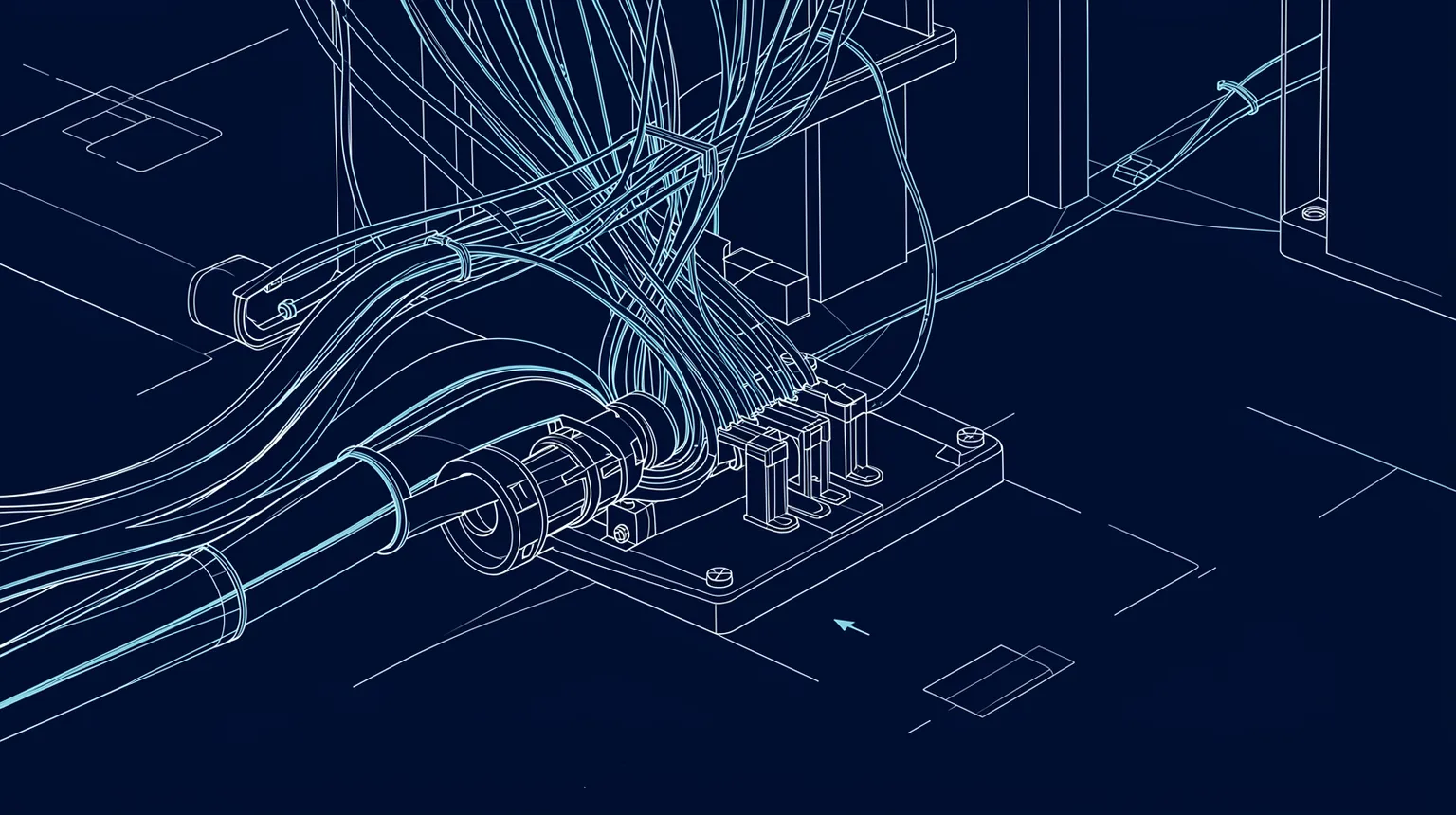
I have spent enough time on manufacturing floors to know that a demo and a production line are two entirely different species. When you see a "successful" AI pilot in a clean, controlled environment with perfect lighting and curated data sets, it is easy to believe the hard work is done. You think, “If we can just plug this into our facility, the gains will follow.”
That is where most industrial AI initiatives go to die.
A demo is not an operational reality; it is a sanitized laboratory experiment. In a lab, the sensors are calibrated every hour, the network never drops for more than a millisecond, and the data being fed into the model is "clean." On your floor, however, things are different. The sensor on the heavy press might be vibrating itself to death. The Wi-Fi signal in the back corner of the warehouse might fluctuate depending on how many pallets are stacked nearby. And most importantly, the human operators—the ones who actually keep the line moving—will find any way to work around a system that feels like an obstacle rather than a tool.
We have to stop mistaking a successful pilot for a scalable capability. A pilot proves that the math works in a vacuum; it does not prove that the infrastructure can support the weight of daily production. If you haven't addressed the plumbing—the raw, gritty reality of data flow, hardware durability, and process stability—your AI is just a high-tech toy waiting for its first day on the job to fail.
The Prototype Paradox (And How It Costs You)
I want to name this failure: The Prototype Paradox. This is the belief that an advanced algorithm can solve a physical infrastructure problem.
When leadership sees a flashy dashboard showing "predicted maintenance" or "automated quality sorting," they often assume the heavy lifting of operational improvement has been completed by software. They think the AI is doing the work for them. In reality, the AI is simply highlighting the cracks in your existing foundation. If your data collection is inconsistent, your predictive model will be wrong every time. If your floor layout makes it impossible for a robot to move efficiently without hitting a pallet, no amount of "smart" software will fix that physical bottleneck.
The cost of this paradox is two-fold: wasted capital and lost trust. You spend hundreds of thousands on an algorithm that fails to deliver because the underlying process was never standardized. More importantly, you lose the trust of your floor operators. When a tool promised to make their jobs easier ends up being another thing they have to "babysit" or work around, they will stop looking for improvements and start looking for ways to bypass the technology entirely.
| The Comfortable Rationalization | The Underlying Reality |
|---|---|
| "The algorithm is sophisticated enough to handle our data." | The input data is noisy, inconsistent, and lacks a standard source of truth. |
| "We just need more 'smart' sensors on the line." | We haven't addressed the fact that current sensors aren't calibrated or maintained correctly. |
| "The pilot was successful; we are ready to scale." | The pilot succeeded because it avoided the very complexities (vibration, heat, human variability) that define our daily production. |
| "AI will automate the problem away." | AI can only optimize a process that is already stable and repeatable. |
Why Scale Is Hard: Three Operational Bottlenecks
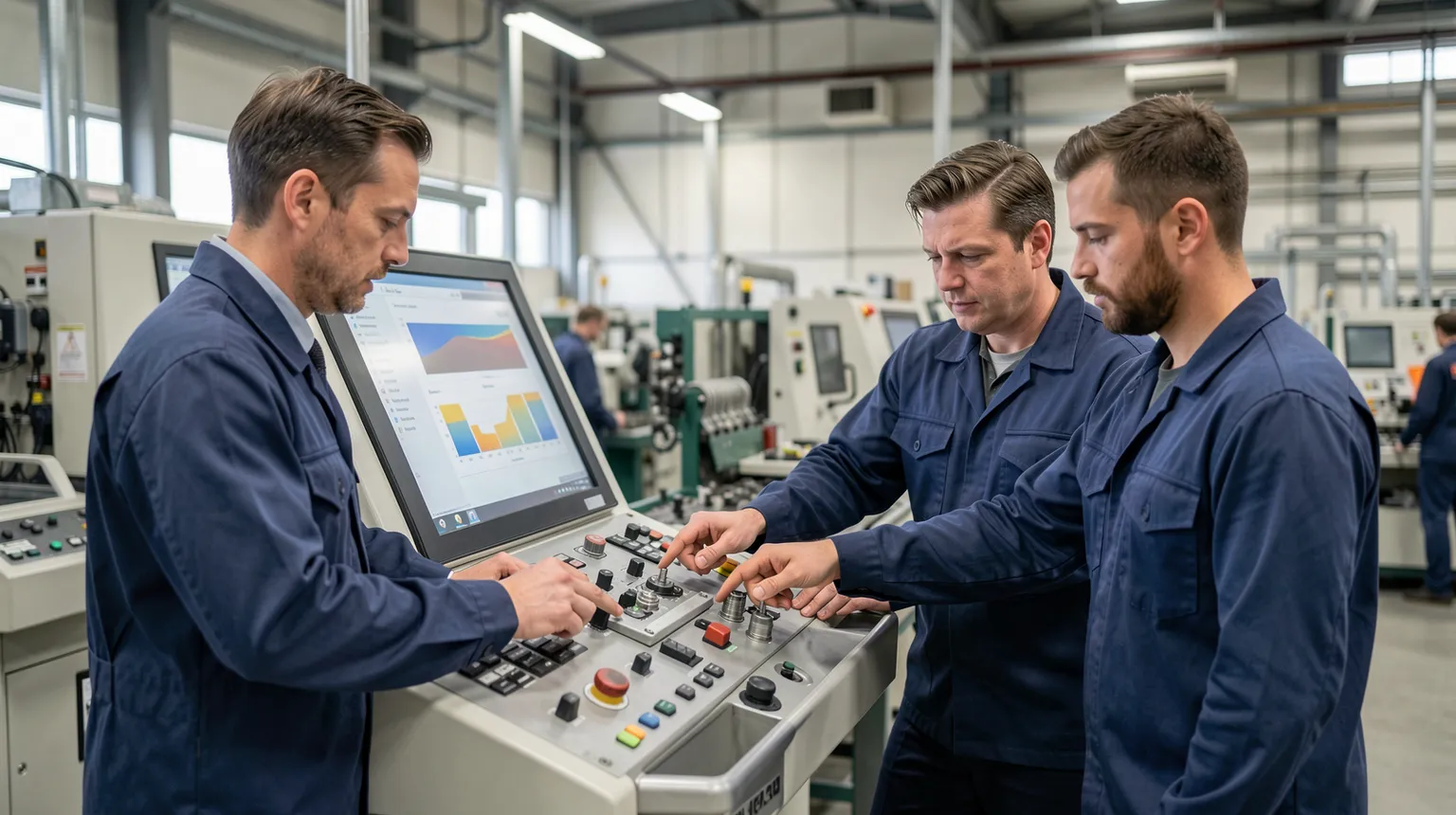
Scaling an AI solution from one machine to an entire plant isn't just about copying and pasting code. It’s about overcoming three specific operational bottlenecks that most "tech-first" teams overlook until it's too late.
1. Signal Noise and Data Integrity
On the shop floor, data is rarely "clean." A sensor on a high-heat oven might drift over time due to thermal expansion. If your AI model isn't built to account for this mechanical drift—or if you don't have a rigorous Gage R&R process for your digital inputs—the output will degrade. You cannot build reliable intelligence on top of unreliable signals.
2. Edge Fragility and Connectivity
In many plants, the "last mile" of connectivity is the weakest link. A pilot might work because it’s running on a hardwired connection in an office suite. But when you move that same system to a high-interference zone near large motors or shielded areas, the latency spikes. If your AI requires real-time feedback but your network can't guarantee sub-millisecond response times at the edge, the line will stop holding the gains made during testing.
3. The Human Workaround
This is the most overlooked bottleneck of all. If an AI system makes a worker’s job harder—if it requires them to log data in three places or wait for a "permission" from a screen that isn't updating fast enough—they will find a workaround. They might start taping over a sensor, skipping a step in the software, or reverting to a manual "cheat sheet." These workarounds are not just minor inconveniences; they are systemic failures of integration that eventually render your expensive AI useless.
The Path to Industrial Maturity: Building a Scalable AI Foundation
To move past the prototype stage, you must stop treating AI as an add-on and start treating it as an industrial utility, like electricity or compressed air. It requires a foundation of infrastructure first, then software second.
I recommend this four-step framework for moving toward true industrial maturity:
- Standardize the Inputs: Before you buy another algorithm, audit your data collection points. Are they standardized? Is there a clear "owner" for each sensor's calibration? You must ensure that the data being fed into any model is consistent across every shift and every machine.
- Stabilize the Physical Environment: Address the "plumbing." This means upgrading the network infrastructure to handle edge computing, ensuring sensors are mounted in ways that resist vibration and heat, and creating a maintenance schedule for the digital components of your line just as you do for your mechanical ones.
- Anchor into Standard Work: AI should never be an isolated step in a process. It must be embedded into the existing standard work instructions. If an operator's job description doesn't change to include how they interact with the new system, it won't stick. The "human-in-the-loop" must have a clear, documented role that makes sense for their daily tasks.
- Scale through Modular Design: Don’t try to build one giant AI that runs the whole factory. Build modular components—one for predictive maintenance on a specific press, another for quality sorting on a specific cell. This allows you to troubleshoot failures in isolation without crashing the entire "system."
Three Things To Audit Before You Buy The Next Algorithm
Before you sign the next contract or authorize the next pilot, walk the line with your team and ask these three questions. If you can't answer them clearly, you aren't ready to scale.
1. What is our "Source of Truth" for this data?
If two different machines report the same metric differently because they use different sensor brands or calibration scales, an AI will struggle to find a pattern. You need a single, verified standard for every piece of data the algorithm intends to consume.
2. How does this system behave when the network drops?
A pilot usually works in a "perfect" connection state. A production line doesn't. You must know exactly what happens when the Wi-Fi blips or the local server lags. Does the machine fail-safe? Does it revert to manual control smoothly, or does it cause an emergency stop that clears the entire buffer?
3. What is the "Workaround Risk" for our operators?
Sit down with the person who will actually be using this tool on a Tuesday at 2:00 AM during a production crunch. Ask them: "What is the first thing you’re going to do when this system slows you down?" If their answer involves bypassing the software or ignoring the data, your infrastructure isn't ready for that algorithm yet. You have to fix the process friction before you can solve the output with AI.
Download and Share This Issue
Next Issue Preview
Next up: We tackle 'The Illusion of Digital Ownership'—the taboo that makes teams treat process data like a commodity they can simply buy and store away from the people making the work.
Call to Action
What is the single biggest data bottleneck you encounter on your Gemba walk this week? Share your insights with us at [email protected], or send it to a colleague who needs an honest diagnosis.
Newsletter replies and questions: [email protected]
Follow updates on X.com: @kaizen6sigma
References
N/A (Conceptual Diagnosis); ManufacturingDive Article on AI Scale Challenges