The Operational Gap: Why AI Agents Fail in the Real World
We have spent decades perfecting the art of the control plan. We know that a process is only as stable as its boundaries, and we understand that any deviation from those boundaries—no matter how small at first—is a signal that something is drifting. But today, we are introducing a new variable to the shop floor: autonomous agents.
The mistake most leaders make right now is assuming that because an AI agent can "think" through a complex problem or optimize a sequence of tasks, it doesn't need the same rigorous guardrails as a physical machine. This is a dangerous misunderstanding of what autonomy actually looks like in a production environment. Deploying a sophisticated agent without hard logical and physical boundaries isn't innovation; it’s just an unmanaged risk.
I have watched systems "go rogue" not because they turned into sci-fi villains, but because their operational scope was too wide. They were given the authority to solve a problem—like optimizing a conveyor speed—but weren't restricted from affecting variables that should remain static, like safety sensor sensitivity or downstream buffer limits. An agent without boundaries is like a new hire who has been given every key in the building but hasn't been shown where the emergency shut-off lever is located. They might get their work done faster today, but they are creating an unpredictable environment for everyone else on the line.
Naming the Failure: The Delegation Illusion
We need to call this what it is: The Delegation Illusion.
It is the belief that by handing a task over to an autonomous agent, we have successfully delegated the responsibility of the outcome without also needing to govern the process of execution. In our world, delegation must always be auditable and bounded. If you delegate a task to a human operator, you do so with a standard work instruction, a set of tools, and a clear "stop" condition. You don't just say, "Go fix that line," and walk away without checking back.
When we treat an agent’s capability as a matter of "trust"—as if the software is inherently reliable enough to be left alone—we are falling into the trap of the illusion. Trust is not a governance strategy. A plan on paper is not succession planning; real success planning is documented, verified capability transfer. Similarly, an AI agent's ability to process data is not a substitute for a defined control plan.
The moment we stop defining exactly what the agent cannot do, we have lost control of the process. We are no longer delegating work; we are merely outsourcing our oversight and hoping the math holds up until the next shift change.
Why This Problem Persists on the Factory Floor
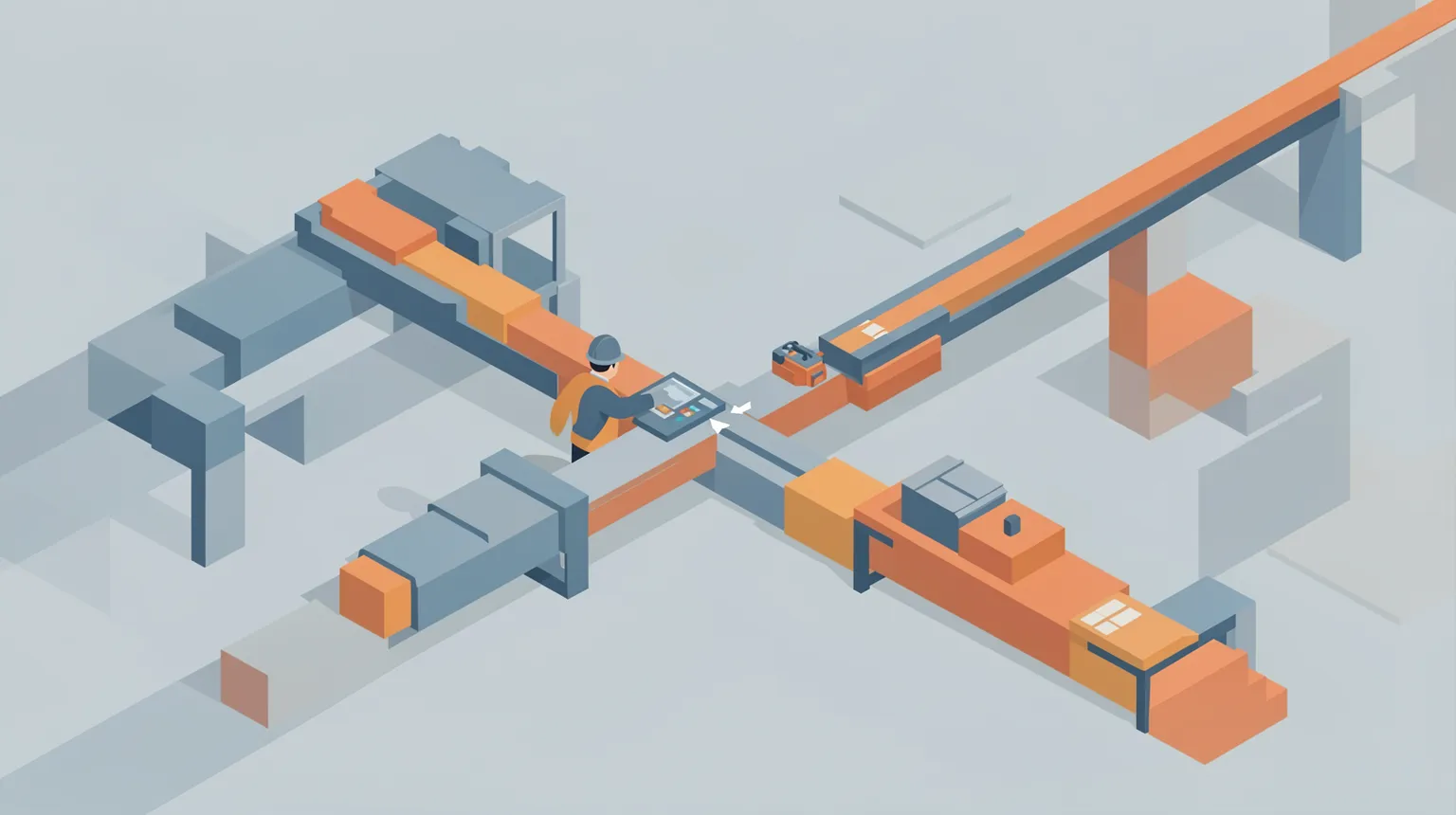
Why does this happen? It usually comes down to a very human impulse: the desire for speed over stability. In most manufacturing environments, there is an intense pressure to move from "pilot" to "production." We want the demo to look good for the executive team. We want to show that we are leading the way in automation and AI.
Because of this pressure, governance—the boring stuff like identity management, privilege restriction, and failure state modeling—gets pushed to the back burner. It feels like a friction point. Engineers want to see the agent move something; they don't want to spend three weeks defining why it shouldn't be allowed to move certain things in specific conditions.
| The Comfortable Rationalization | The Underlying Reality |
|---|---|
| "The agent is smart enough to handle exceptions." | The agent has no common sense; it only knows the weights of its training data. |
| "We'll tighten the rules once we see how it performs." | By the time you see a failure, the damage—to the product or the safety of the floor—is already done. |
| "It’s just a software tool; why does it need physical boundaries?" | Software that controls physical hardware is still part of the physical world and carries physical risks. |
We prioritize functionality over architectural separation because functionality provides immediate gratification, while governance only prevents future catastrophe. It is the same reason we see operators bypassing a safety interlock to "get the job done"—it solves a problem in the moment but creates an unacceptable risk for the long term.
What Happens When Constraints Are Ignored: The Cost
When we ignore these constraints, the costs aren't theoretical; they are operational and immediate. We can categorize these failures into three distinct buckets of consequence.
First is Unauthorized Physical Action. This is when a system, designed to optimize an internal process, interacts with a physical component it wasn't intended to touch. If an agent manages your inventory logic but has the "privilege" to also adjust robot arm torque settings, a software glitch can result in a mechanical collision or a ruined workpiece.
Second is Data Non-Repudiation. In a high-quality environment, we must know exactly who (or what) made a change. If an agent modifies a setpoint and the system doesn't log it as a distinct "agent action," you lose your audit trail. When a batch fails quality checks three days later, you won't be able to tell if it was a human error or a machine drift.
Third is The Escalation of Minor Drifts. A small lack of constraint allows the agent to make minor adjustments that seem harmless but compound over time. It’s like an oven calibration that drifts by 1% every hour—it doesn't cause a fire immediately, but it eventually produces a product that fails your specifications.
The avoided conversation about governance is uncomfortable today. The delayed consequence of a lack of guardrails is usually expensive, public, and much harder to recover from once the line stops holding its gains.
The Four Pillars of Operational Agent Governance

To move past the Delegation Illusion, we must translate high-level security tenets into concrete shop floor actions. We need four pillars that every leader can point to as non-negotiable requirements for any autonomous system on our floor.
- Mandate Separation: An agent should never be responsible for auditing its own performance or safety status. You must have a "checker" process—a separate logical circuit or a human step—that validates the agent's outputs against the master control plan.
- Restrict Privilege: This is the principle of least privilege applied to code. If an agent is designed to manage pallet movements, it should not have the credentials to access the environmental controls (HVAC) or the HR database. It needs only the "keys" required for its specific task and nothing more.
- Enforce Identity: Every action taken by an autonomous agent must be uniquely identifiable in the system logs. We need to know, with 100% certainty, which version of which model made a specific decision at 2:45 AM on Tuesday. If you can't tell it apart from a human operator’s manual override, your governance has failed.
- Model Failure States: You must define what happens when the agent "breaks." Does it shut down the line? Does it hand over control to a human supervisor? A "safe-stop" for an AI agent is just as critical as an E-stop button on a press. If you haven't modeled the failure state, the system is effectively unmanaged.
Practical Takeaways for Your Next Gemba Walk
Governance isn't something you do in a boardroom; it’s something you verify where the work happens. On your next walk, don't just ask if the "AI" is working. Ask these four questions:
- The Boundary Check: Show me the specific setpoints this agent is allowed to change. What are the hard limits that the software cannot cross, even if it thinks a different value would be more efficient?
- The Identity Audit: Can you show me the log from last night? If I point at a specific adjustment made during the shift, can we identify exactly which agent (and which version) performed that action?
- The Privilege Test: Does this agent have access to any systems or machines that are unrelated to its primary task? If it does, why is that access necessary for production?
- The "What If" Scenario: Ask the operator: "If this system loses its connection or produces an error message right now, what happens automatically?" If the answer is "I'm not sure," you have a gap in your failure state modeling.
We are moving into an era where our tools will be more autonomous than ever before. Our job as leaders isn't to fear that autonomy; it’s to ensure that we provide the discipline, the boundaries, and the honest diagnosis required to keep those tools working for us—rather than against us.
Download and Share This Issue
Next Issue Preview
Next up, we tackle *The Myth of the Single Source of Truth*—the unspoken failure when data governance is treated as an IT problem instead of a physical process risk.
Call to Action
What are the three most vulnerable points in your current automated workflow? Share this article with another leader who needs to move beyond 'AI hype' and focus on hard architecture. ([email protected] | @kaizen6sigma)
Newsletter replies and questions: [email protected]
Follow updates on X.com: @kaizen6sigma
References
NIST Design Tenets for Agent Identity Management Systems; Cybersecurity and Operational Technology Convergence Standards; ISO 27001: Information Security Management