Issue Summary: The Limits of Prediction
There is a lot of noise right now about how Artificial Intelligence—specifically deep learning and large-scale predictive models—will "solve" our supply chain headaches. And in many cases, that’s not entirely wrong. If you want an algorithm to spot a defect on a moving line or predict a spike in demand based on three years of historical data, current AI is excellent at it. It excels at pattern recognition.
However, we are reaching a point where "prediction" hits a wall when it meets the messy reality of global logistics and manufacturing. Prediction tells you what is likely to happen based on what has happened before. But supply chains don't just operate in a vacuum of past data; they operate in a world of physical constraints, sudden equipment failures, and shifting port priorities.
When we try to use standard AI to solve complex scheduling—where every decision impacts five other variables simultaneously—the math starts to break down. We are moving from an era where "better prediction" was the goal to an era where "hard optimization" is the requirement. If your strategy relies solely on a machine's ability to guess what happens next, you aren't building a resilient system; you’re just building a more sophisticated way to be surprised when things go wrong.
The Optimization Plateau: Why Today's Models Get Stuck

We need to call this out clearly: The Prediction Trap.
Many leaders assume that if they feed enough data into a "smart" system, the system will eventually find the perfect path for every part in their inventory. This is not how the math works for complex systems. In operations terms, we are dealing with NP-hard problems—problems where the number of possible combinations is so vast that even the fastest computers cannot calculate every outcome in a reasonable timeframe when variables interact unpredictably.
When you have to move 500 components through three different hubs using twelve different carriers, each with its own schedule and risk profile, you aren't just looking for a "likely" path. You are trying to solve for the best possible state among millions of failing ones. Current AI models often get stuck because they are designed to find the most probable outcome based on historical patterns (correlation), not the mathematically optimal solution within a set of hard constraints.
When the model hits this "Optimization Plateau," it stops being an intelligent assistant and starts becoming a blind spot. It gives you a plan that works perfectly until a single truck breaks down or a dock is closed for four hours, at which point the system has no internal logic to reroute—because it wasn't programmed to calculate those specific permutations in real-time.
The Difference Between Correlation and True Optimization
It is vital to distinguish between what we want these systems to do and what they are actually built to do today.
AI is not a master of logic; it is a master of correlation. It looks at the past and says, "Usually, when X happens, Y follows." This is useful for inventory planning or maintenance scheduling based on cycles. However, true optimization is different. Optimization asks: "Given that Dock A is closed, Truck B has an empty bed, and Part C is melting in the sun, what is the mathematically best way to move everything right now?"
The difference between these two isn't just a matter of degree; it’s a shift in fundamental philosophy. One relies on history; the other relies on constraints.
| The Management Narrative | The Operational Reality |
|---|---|
| "The AI will predict our supply chain disruptions." | The AI identifies patterns based on past data. |
| "The system will find the best route for every part." | The system finds the most likely path, not the optimal one. |
| "We need better algorithms to manage complexity." | We need better constraint modeling to handle reality. |
When we mistake correlation for optimization, we end up with a plan that looks great on a dashboard but falls apart the moment a physical variable changes. A prediction is a guess based on the past; an optimization is a calculation based on the present.
What Happens When the Variables Go Off-Script?
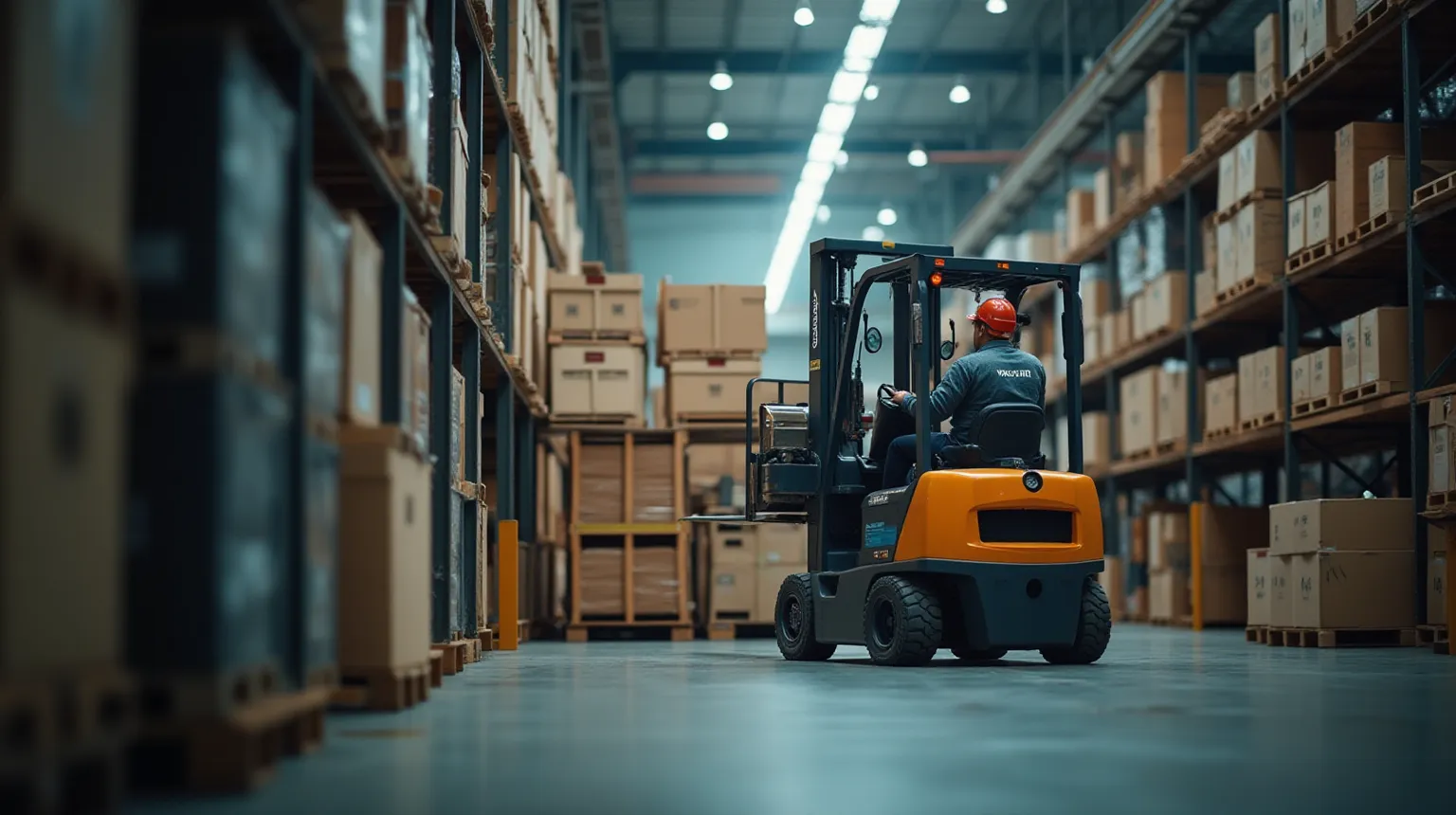
The cost of mistaking a "smart" prediction for true optimization becomes clear when things go wrong—and in manufacturing, they always do.
When you rely on a system that only understands correlation, it cannot handle "Black Swan" events or even common "Gray" events like a sudden labor shortage at a specific warehouse. Because the model doesn't understand the underlying physics of your operation—the fact that a forklift can only be in one place at a time or that a certain chemical must stay within a temperature range—it cannot automatically pivot when its primary plan fails.
When the variables go off-script, the "smart" system often produces a hallucination of a solution. It might suggest a route that is mathematically logical but physically impossible because it doesn't "know" about the gate being locked or the driver’s hours expiring.
The result is The Fragility Gap. This is the space between a manageable delay and a systemic collapse. If your team has to spend four hours on a conference call trying to figure out how to reroute parts because the AI's "prediction" didn't account for a broken truck, you have a failure of optimization. You aren't dealing with an unpredictable event; you are dealing with a system that wasn't built to handle the variables it was supposed to manage.
Preparing for the Next Computational Leap (The Three Pillars)
We don't need to wait for "quantum" computers to arrive in our warehouses to start fixing this. We can begin by changing how we model our operations today. If you want to move past the optimization plateau, you must shift your focus from predicting what will happen to mapping the constraints that define what is possible.
To prepare for a more resilient future, we should build around these three pillars:
- Hard Constraint Mapping: Instead of asking "What's likely to happen?", start by defining exactly what cannot happen. Map out your physical bottlenecks—the specific machines, docks, and transit routes that have no flexibility. This is the foundation for any real optimization.
- Buffer Management over Prediction: Since we know perfectly predicting every variable is impossible, use buffer zones as a deliberate strategy. Instead of trying to "optimize" a lead time down to the minute using AI, build in physical buffers (safety stock, multi-source options) at the specific points where your data shows the highest variance.
- Hybrid Decision Logic: Design your processes so that humans and machines have clear roles. Use AI for what it's good at—identifying patterns and flagging anomalies. But keep "exception handling" in human hands. If a route is blocked, the system should flag it immediately to a floor lead who knows the local geography and can make a manual override call.
Taking Action This Week

You don't need a new software contract or a data science degree to start addressing this today. You just need to look at your "failure points" with more honesty. Here is how you can begin:
- Identify the 'Hard' Bottlenecks: Walk the line and your supply chain map. Identify three specific points where, if they fail, the whole system stops (e.g., a single-source component, a primary shipping port, or a critical piece of aging machinery).
- Build Manual "Red Folder" Plans: For those three high-risk areas, do not rely on an algorithm to tell you what to do when they fail. Create a physical, non-digital contingency plan. If the port closes, who is the secondary carrier? What is the backup warehouse? Write it down and put it in a folder that your team can access without logging into a system.
- Audit Your "Smart" Tools: Look at the reports you get from your current planning software. Ask yourself: "If this data point changed by 20% tomorrow, does the system have an automatic workaround, or will it just show me a red light?" If it's just a red light, that is where your human leadership needs to step in with a pre-planned manual response.
Don't wait for the "perfect" algorithm to solve your complexity. Build a system that can survive the reality of the shop floor.
Download and Share This Issue
Call to Action
What is the single most unpredictable variable that currently dictates your scheduling cycle? Share what you are modeling for next quarter's greatest disruption, and invite a colleague who needs this hard truth to join the conversation.
Newsletter replies and questions: [email protected]
Follow updates on X.com: @kaizen_6sigma
References
Thescxchange.com: University of Arkansas quantum computing initiative.