
Issue Summary: The promise of autonomy vs. the reality of process drift
We’ve all seen the videos. A sleek, humanoid robot or a high-speed mobile platform navigates a warehouse with eerie precision. It looks like the future of manufacturing has arrived. But I want to talk about what happens when that robot leaves the polished floor of a tech demo and enters the high-stakes environment of a semiconductor fabrication plant.
The problem isn't that the robots aren't "smart" enough; it’s that they are being treated as isolated tools rather than integrated components of a dynamic process system. When we bring advanced mobile platforms into critical areas, we often see a rapid slide from "miracle tech" to "operational liability." The robotics move well in a vacuum, but they fail to account for the way a fab actually breathes—the subtle drifts in floor conditions, the unexpected presence of maintenance crews, and the uncompromising requirements of particulate control.
The core issue is that we are deploying these machines as if the fab were a static staging ground. In reality, the fab is an evolving ecosystem where "close enough" results in contamination or yield loss. If your robotics strategy doesn't account for how the machine interacts with the human-led processes around it, you aren’t automating; you’re just introducing a new variable into an already complex equation. We need to move past the awe of what the robot can do and start diagnosing exactly what it must do reliably every single time, under stress, for months on end.
The Operational Over-Promise: Why Atlas isn't just an impressive video trick
In my years on the floor, I’ve seen a recurring pattern that I call The Demo Trap. It happens when leadership falls in love with a capability because it looks good in a quarterly presentation, without ever asking how that capability survives a Tuesday at 3:00 AM.
A robot performing a complex maneuver in a controlled test bay is not "embedded capability." It is a novelty deployment. There is a massive difference between the two. Novelty deployment is about proving that a technology can function under perfect conditions. Embedded capability is about proving that the technology will function when a sensor gets coated in dust, when a floor tile is slightly uneven, or when an operator has to step into its path to clear a jam.
We need to negate this common misconception: A robot moving an object is not automation. Automation is repeatable, verifiable performance under stress. If the machine requires a "special" setup every time it runs—if you have to tweak a coordinate here or clear a path there manually—then you haven't automated the task; you’ve just outsourced the frustration to a different person on the floor. We must stop rewarding vendors for showing us what their machines can do in a lab and start holding them accountable for how those machines behave when they are the least-attended part of your production line.
The Environment Gap: Where generalized robotics fail in specialized fabs
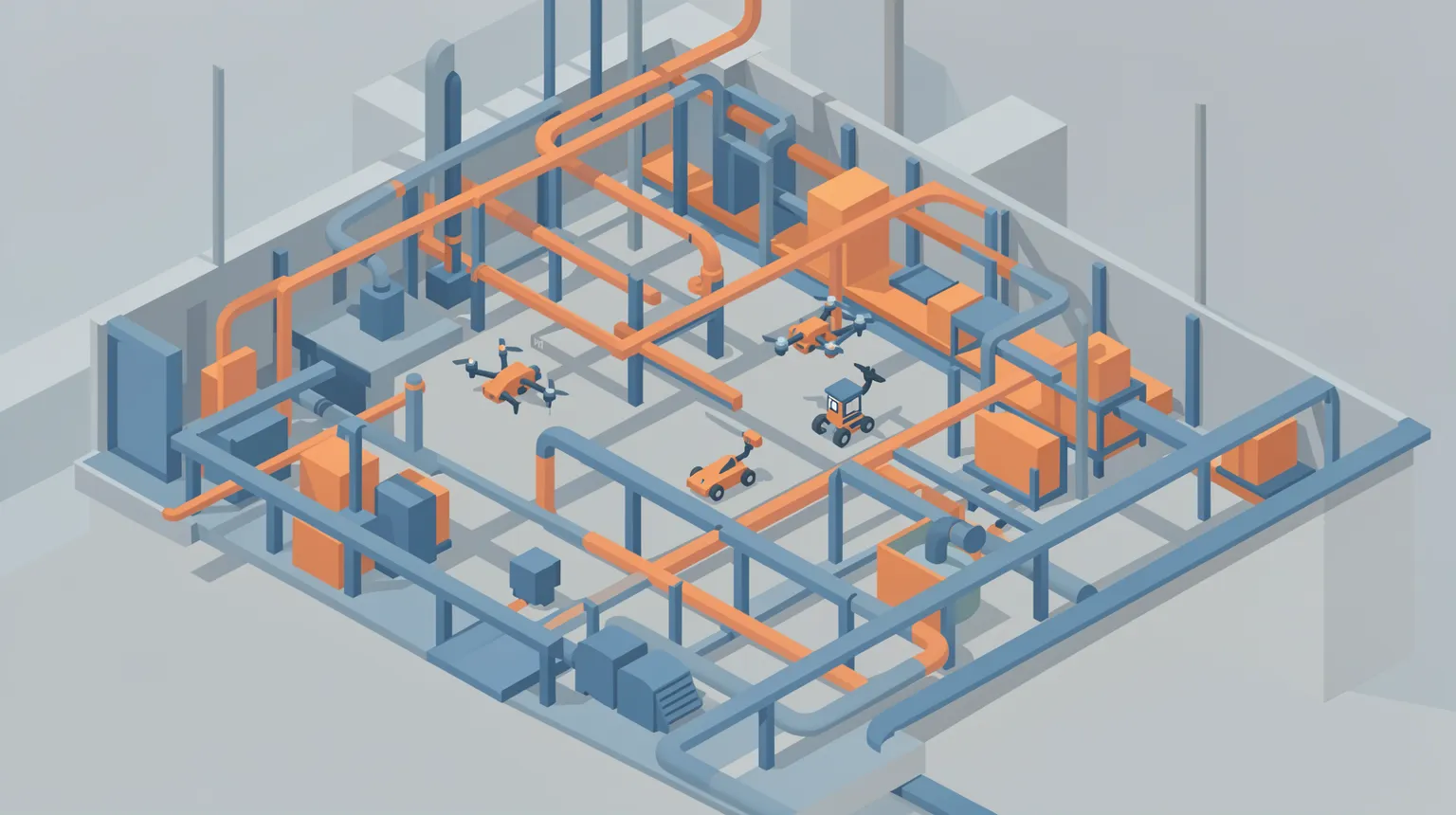
Most robotics companies build for "general" environments—warehouses with wide aisles, flat concrete, and predictable obstacles. A semiconductor fab is not a general environment; it is one of the most demanding operational settings on earth.
When you take a mobile platform designed for a distribution center and put it into a cleanroom, you run into immediate friction. The unique constraints are often overlooked in the sales cycle:
- Particulate Control: A robot that moves with "smooth" motion might still create enough micro-vibration to disturb laminar flow or shed particulates from its joints.
- Delicate Tooling Interfaces: In a fab, we aren't just moving heavy boxes; we are often interacting with sensitive equipment where the torque and precision of the handoff must be absolute. A "generalized" gripper doesn't account for the fragility of a wafer carrier.
- Unexpected Interventions: The floor is rarely empty. Maintenance teams, technicians performing spot checks, and unexpected spills mean the robot’s pathing software has to deal with human unpredictability in real-time without compromising safety protocols or process integrity.
I've watched projects stall because the "smart" robot couldn't handle a simple change—a new pallet rack moved three feet to the left, or a technician parked a cart in its usual spot. If the system can’t adapt to these minor floor realities without human intervention, it isn't an operational success; it’s a high-maintenance headache that eventually gets turned off and left to gather dust.
What it costs when automation is treated like an IT project
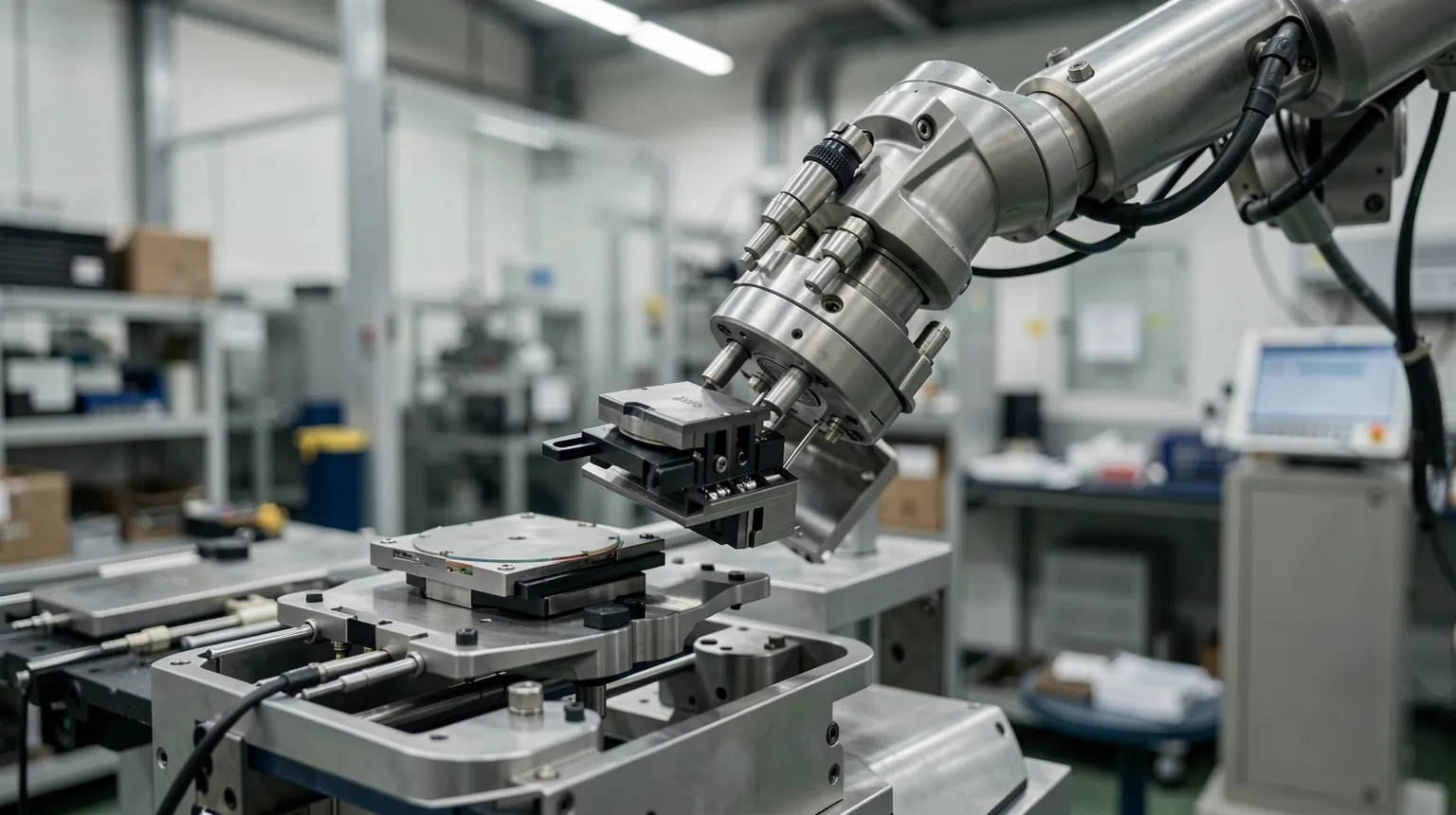
The biggest mistake I see leaders make is treating robotics as an IT rollout rather than a manufacturing integration. When you treat it like an IT project, you focus on the "go-live" date and the software interface. You ignore the physical reality of the process. This mindset creates a massive gap between the expected ROI and the actual floor reality.
When this gap exists, the costs aren't just found in the CapEx write-off for the robot itself. The real costs are much more expensive:
- Contamination Risk: A robot that isn't properly integrated into cleanroom protocols can become a source of yield loss—the ultimate "silent" cost in semiconductor manufacturing.
- Process Downtime: If a mobile platform loses its "way" or requires frequent recalibration, the line stops. Every minute of downtime is a compounding loss that ripples through the entire supply chain.
- The Escalation Cost: We often avoid the hard conversation with a vendor because we want to keep the project moving. The avoided conversation is uncomfortable today; the delayed consequence—a production halt or a batch of ruined wafers—is public, expensive, and much harder to recover from.
| Comfortable Rationalization | Underlying Reality |
|---|---|
| "The robot works perfectly in our tests." | The robot hasn't been tested against 24/7 floor variability. |
| "We just need to train the operators better." | The system design is inherently too complex for consistent human oversight. |
| "It’s a minor calibration issue." | The process drift indicates a fundamental failure in the control plan. |
| "The vendor will fix it in the next update." | You are paying for a prototype, not an industrial tool. |
Three Pillars for Operationalizing Advanced Robotics
To move from a "cool demo" to a functioning piece of your operating system, you need to move through three specific pillars of integration. If you can't check these three boxes, the robot isn't ready for the fab floor.
1. Task Decomposition
You cannot simply give a robot a "goal." You must break the task down into discrete, verifiable movements and states. This means identifying every single point where a move could fail—the handoff point, the turn radius, the docking sequence. If you can't describe the movement in three plain sentences of operational steps, it’s too complex to be reliable.
2. Constraint Mapping
This is about defining what the robot cannot do. In a fab, constraints are everything. You must map out the physical "no-go" zones, the maximum allowable vibration speeds, and the particulate thresholds. A robot that ignores these constraints because it was designed for an open warehouse will eventually fail your quality audit or, worse, compromise the cleanroom environment.
3. The Verification Loop
How do you know the robot is still doing its job correctly six months from now? You need a "heartbeat" for every automated action. This isn't just checking if it moved from Point A to Point B; it’s verifying that it did so within the required tolerance, at the correct speed, and without triggering any safety overrides. If you don't have a way to audit the robot's performance automatically, you are flying blind.
Practical Takes: The next three questions to ask your robotics vendor

The next time a vendor shows you a video of their "autonomous" platform, stop looking at the screen and start asking these three questions. They will tell you immediately if they understand manufacturing reality or if they are just selling you a toy.
"Can you show me the failure logs from a machine that has been running in a high-traffic environment for more than 90 days?"
- Why: You want to see how often it "gets confused" and what the recovery protocol is. If they don't have these logs, they haven't run it long enough in a real world.
"How does the system handle 'non-standard' obstacles without requiring a manual override?"
- Why: A robot that stops every time a human walks by isn't productive; it’s an obstacle itself. You need to know how its pathing logic handles dynamic, unpredictable floor changes.
"What is the specific procedure for recalibrating your sensors when they are exposed to [specific fab contaminant/condition]?"
- Why: This forces them to move from "it's autonomous" to "here is our maintenance plan." If their answer is "we don't expect that to happen," they haven't thought about your floor.
Download and Share This Issue
Call to Action
Where are you seeing automation promises break down due to environmental factors? Share your war stories with us at [email protected], and ask a colleague to read this if they think their current automated process is too 'simple' for AI.
Newsletter replies and questions: [email protected]
Follow updates on X.com: @kaizen6sigma
References
Boston Dynamics’ Atlas humanoid set for first semiconductor factory tests in 2027 (via interestingengineering.com)