Issue Summary
In most manufacturing and high-tech environments, there is a recurring friction point where great engineering meets slow governance. You have an R&D team that has successfully built something—a new sensor, a specialized laser system, or an automated sorting mechanism—that works perfectly on a laboratory bench. But when it comes time to actually put that tech into production and scale it across the floor, the process grinds to a halt. The "governance" meant to protect the organization ends up acting as a brake rather than a steering wheel.
The problem isn't a lack of effort; it’s an over-engineered approach to risk mitigation that assumes every new technology must pass through the same exhaustive gauntlet as a legacy product. This creates a massive gap between scientific breakthrough and deployable capability. My thesis is simple: operational rigor—the actual ability to run, maintain, and sustain a process on the floor—must dictate how we procure and field technology. We need to stop treating "readiness" as a completed stack of paperwork and start treating it as a demonstrated capability in a live environment. If you can’t prove it works under operational stress, the paperwork is just an illusion of progress.
The Bureaucratic Lag: Why R&D Outpaces Acquisition
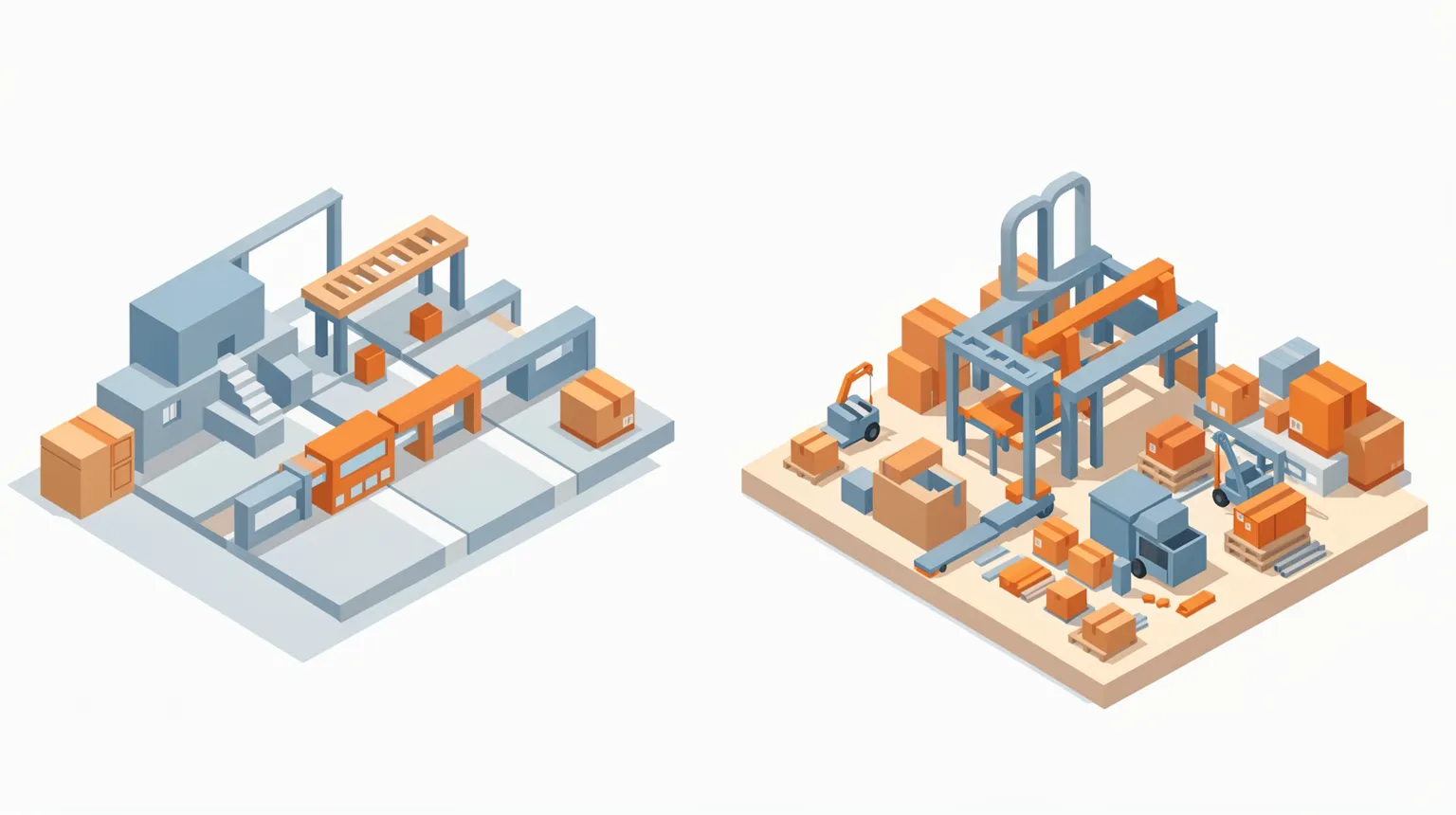
I have watched this happen dozens of times on the shop floor. A team spends two years perfecting a prototype—it hits every spec, and the data looks beautiful in a slide deck. Then it hits the "Acquisition" phase, and suddenly, it’s stuck in a loop for another eighteen months. Why? Because our governance models are designed to mitigate risk by adding layers of administrative oversight, rather than by solving the actual operational hurdles of deployment.
We treat every new piece of tech like a permanent fixture before we even know if it can survive a double shift on line four. We demand full compliance with safety standards, procurement protocols, and integration specs for a device that hasn't even been stress-tested in our specific environment yet. This is the Paperwork Fortress. It’s when an organization builds walls to keep out risk, but ends up trapping its own progress inside those walls.
In reality, R&D moves at the speed of innovation—it’s a sprint. Acquisition and procurement move at the speed of "don't get sued" or "don't break the budget." When that gap becomes too wide, the technology becomes obsolete before it ever reaches the hands of an operator. We are essentially trying to run a marathon while the ground is moving under our feet because we spent all our energy building a fence instead of a road.
Why Does the Process Drag? Confusing Paperwork for Capability
The most frustrating part of this lag isn't that people are lazy; it’s that they believe their own rationalizations. In many organizations, "compliance" becomes a substitute for "competence." If you have checked every box on a governance form, there is a psychological comfort in believing the project is "ready," even if the machine hasn't actually been calibrated or the operator doesn't know how to troubleshoot it when it throws an error code at 3:00 AM.
We mistake bureaucratic adherence for actual operational readiness. It feels like progress because we are moving papers from one desk to another, but on the floor, nothing has changed. We have created a culture where "done" means "approved," not "functional."
| The Comfortable Rationalization | The Underlying Reality |
|---|---|
| "We need to be thorough to ensure safety and minimize risk." | "We are afraid of being the person who signs off on a failure that makes headlines." |
| "The governance process ensures we follow best practices." | "The process is our shield; if it fails, we can say we followed the rules." |
| "We are waiting for the final procurement approval to start testing." | "We haven't actually figured out how this integrates with our existing line flow yet." |
| "This is a standard procedure for new technology deployment." | "We are applying 20-year-old logic to a technology that moves at light speed." |
What is the Real Cost of Waiting?

When we let the Paperwork Fortress dictate our pace, the cost isn't just found in a line item on a budget sheet. The real costs are often invisible until they become catastrophic.
First, there is Technological Obsolescence. In fields like AI-driven manufacturing or advanced materials, waiting eighteen months for "governance approval" means that by the time you get your green light, a competitor has already fielded a superior version of your tech. You aren't just late; you are starting from behind.
Second, there is Opportunity Loss. Every month a prototype sits in a warehouse because it’s missing one specific "governance signature" is a month where that technology isn't improving yield, reducing waste, or lowering costs. That is lost production capacity that can never be recovered.
Finally, there is the Erosion of Momentum. When your best engineers and operators see their hard work stalled by red tape, they stop pushing for innovation. They learn to build "safe" projects—projects that won't trigger a governance headache. This kills the culture of continuous improvement because the path of least resistance becomes the only path people are willing to take.
The Operational Shoots-Off: A Framework for Accelerated Validation
To break this cycle, we need to move from a "Gatekeeper" model to an "Operational Shoot-Off" model. We must prioritize high-stakes pilots that trigger immediate commitment and scale based on real-world performance, not just administrative milestones. This is how you field critical tech before the paperwork catches up with reality.
The Four Steps of the Operational Shoot-Off
- Define the Minimum Viable Capability (MVC): Stop trying to get 100% of the features approved at once. Identify the single most important operational outcome—for example, "can this machine maintain a first-pass yield of 98% during a sustained run?" Focus all governance and testing on that one metric first.
- Isolate the Critical Risk Path: Don't let every minor administrative hurdle stop the project. Identify the three things that could actually shut down the plant or hurt people (e.g., high-voltage safety, structural integrity). Solve those aggressively and move everything else to a "post-deployment" list.
- Execute a Time-Boxed Pilot: Run a live pilot on a non-critical line with a hard end date—say, 30 days. During this time, you aren't looking for perfection; you are looking for the "failure points." You want to see where the process drifts and where the operator struggles.
- Trigger an Automatic Scale Decision: At the end of the pilot, there is no "more study" phase. Based on pre-defined success/failure criteria (e.g., uptime, output consistency), you either move to full production or you kill the project. This forces a decision and prevents the "limbo" state that kills most projects.
Three Things You Must Do This Week

If you want to start shortening the distance between your lab's wins and your floor's results, start here:
- Audit Your Current Pilots: Look at every new technology project currently in your pipeline. Ask yourself: "Is this stuck because of a technical hurdle or a paperwork hurdle?" If it’s just paperwork, identify which specific form or signature is the bottleneck and schedule a meeting with that person to define an "accelerated path" for prototypes.
- Define Your MVC: For your next project proposal, demand that the team defines the Minimum Viable Capability. What is the one thing this tech must do perfectly before we care about anything else? Write it down and make it the only metric for the first phase of testing.
- Set a "Kill Date": Every pilot program should have an expiration date. If you haven't reached your primary success criteria by that date, the project is automatically moved to a "re-evaluate" status or scrapped. This prevents projects from dragging on and consuming resources without producing results.
Final Wrap-up

Acquisition and governance are not the enemies of progress; they are intended to be the guardrails for it. But when those guardrails become a cage, you lose your ability to compete. The goal isn't to bypass safety or skip steps—it’s to ensure that our rigor is focused on what actually matters: making sure the machine works, the operator is safe, and the product meets the standard.
We need to stop asking "Is this project approved?" and start asking "Can we run this tomorrow?" If you can't answer the second question with a clear yes or no, your governance process isn't protecting your organization—it’s paralyzing it. Let’s get back to the floor.
Download and Share This Issue
Call to Action
What processes or technologies are currently stalled by bureaucracy in your department? Share your biggest governance headache with us—and share this newsletter with another leader who needs to cut through the red tape!
Newsletter replies and questions: [email protected]
Follow updates on X.com: @kaizen6sigma
References
Interesting Engineering: US Military Prepares Seven Laser Weapons Counter-Drones; The role of performance metrics in complex systems deployment.