
What is the operational bottleneck?
I’ve spent enough time walking production lines to know that most automation projects start with a success story. You find a task—maybe a high-volume palletizing operation or a repetitive welding point—and you automate it perfectly. It works beautifully as long as the inputs never change and the environment stays static. But then, reality hits. A new product variant comes down the line. The sequence of operations shifts by three steps because of a supply chain hiccup. Or maybe a pallet is slightly crooked, just enough to throw off a sensor that was calibrated for "perfect" conditions.
The bottleneck isn't usually the speed of the robot; it’s the fragility of the automation logic itself. We have spent decades perfecting high-volume, standardized tasks where every millimeter is accounted for. But our manufacturing reality is increasingly messy. We are moving toward a world where product variety is higher and process sequences are less predictable. When your automation can only handle "Scenario A," but the floor requires "Scenario B" through "Scenario Z," that robot becomes an expensive paperweight.
The real problem isn't that we lack enough robots; it’s that our current approach to automation assumes a level of environmental stability that simply doesn't exist on a modern, agile shop floor. We are trying to force-fit a rigid, predictable past onto a fluid, unpredictable future. When the process drifts even slightly from the "gold standard" used during commissioning, the system breaks because it lacks the cognitive ability to adapt to unstructured inputs.
The Hard-Coded Trap: Why our robots are too specialized
I call this The Rigid Script Trap. It is the belief that if we just write enough lines of code, we can account for every possible variable in a physical environment.
In traditional automation, when you want a robot to handle a new part variation, an engineer has to sit down and rewrite the logic. You spend hundreds of hours defining coordinates, tolerances, and "if-then" statements for a specific movement. It is high-precision work, but it’s brittle. If the part arrives two inches to the left or the lighting changes by 10%, the script fails because it wasn't told how to handle that specific deviation. The robot isn't "thinking"; it's following a map of a city that has changed since the map was printed.
The shift we are seeing now is moving away from this exhaustive, hard-coded programming toward a model where robots learn through demonstration. Instead of thousands of lines of code for every new SKU, we are looking at systems that can observe a human operator perform a task three or five times and "understand" the goal—not just the exact coordinates.
Automation is not about replicating a fixed motion; it is about achieving a desired outcome in a variable environment. When we stay trapped in hard-coded logic, we aren't building an adaptable floor; we are building a museum of static processes that can’t survive the first day of real production pressure.
The Misconception: Thinking 'Automated' means 'Perfectly Defined.'
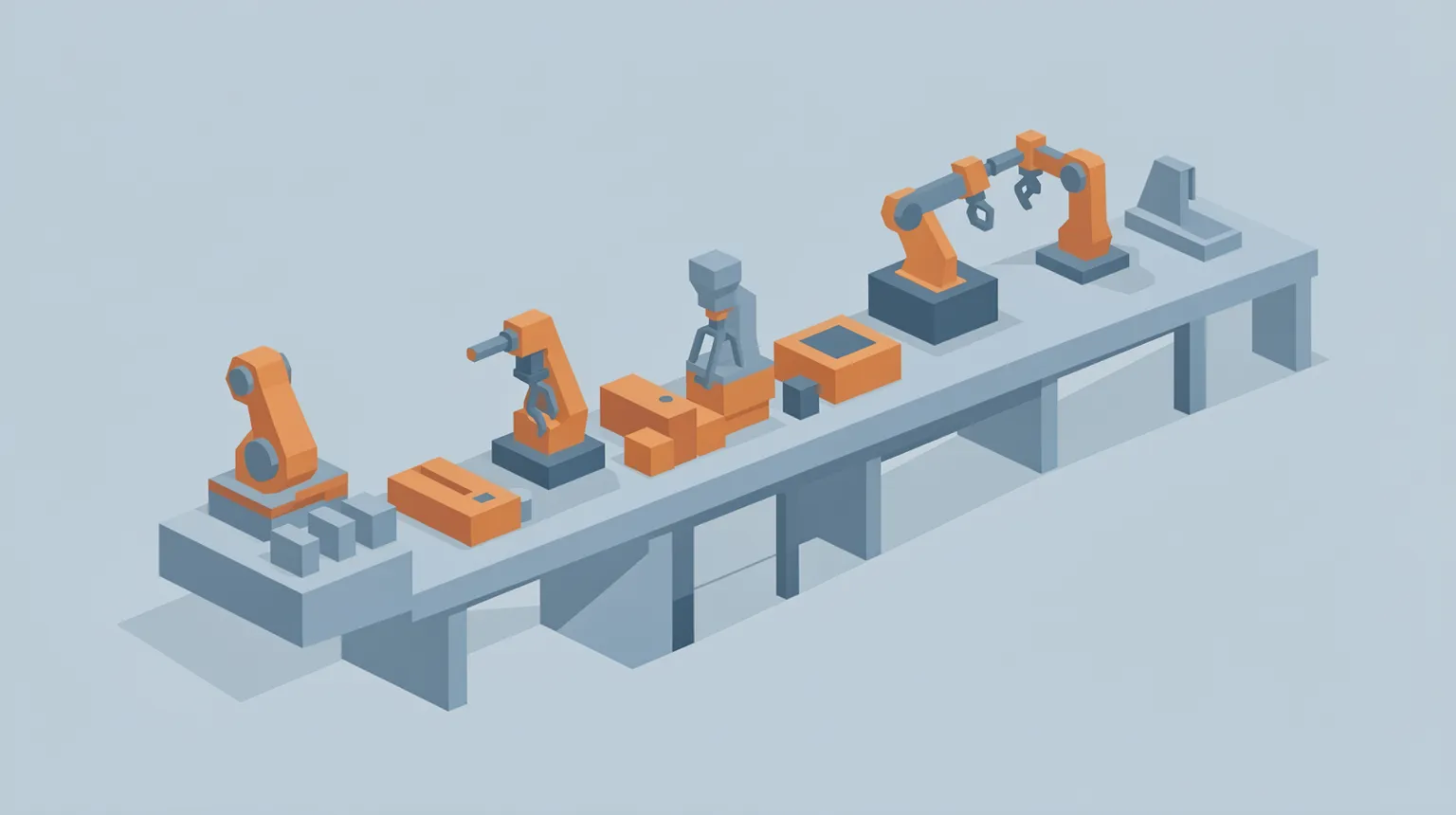
There is a pervasive myth on many plant floors: We have to perfect the process before we can automate it. Leaders often spend months—sometimes years—trying to eliminate every ounce of variability in a manual task, hoping that once the "human" version is perfectly consistent, they can hand it off to a machine.
This is an expensive way to fail. If you wait for 100% process stability before automation, you are fighting against the inherent entropy of physical work. The goal shouldn't be to eliminate all variation before the robot touches the part; the goal should be to give the robot the capability to handle the variation that will exist regardless of how much "Lean" you apply.
| The Comfortable Rationalization | The Underlying Reality |
|---|---|
| "We need a perfectly standardized process before we can automate this cell." | "The goal is an automation system capable of navigating and correcting for the inevitable variations in our current workflow." |
| "If it's not 100% consistent, the robot will crash or fail." | "We need to capture enough data points from human 'exceptions' so the robot knows how to recover when things aren't perfect." |
| "Automation is for high-volume, static tasks only." | "Modern automation must be a tool for cross-domain capability—handling different parts and different paths with minimal reconfiguration." |
What does this inflexibility cost you?
When your automation is stuck in the Rigid Script Trap, the costs aren't just theoretical; they show up on your P&L every single shift.
First, there is the cost of lost opportunity. You have a high-margin order for a custom run, but because retooling and reprogramming the existing cells would take three weeks, you turn it down or outsource it. You lose the ability to pivot quickly in a volatile market because your "fixed" automation acts as an anchor rather than an engine.
Second is the cost of downtime. When a robot hits a snag it wasn't programmed to understand, the line stops. The engineers have to be called in to troubleshoot, analyze the error code, and tweak the script. This isn't just "maintenance"; it’s a failure of the system design to account for reality.
Finally, there is the cost of human frustration. You end up with "hybrid" cells where humans are constantly stepping in to do the things the robot can't handle because the programming was too rigid. This creates safety risks and puts your best people in the role of "babysitting" a machine that should be doing the heavy lifting.
The delayed consequence of ignoring this is an organization that becomes less agile over time—an operation that can do one thing perfectly but cannot adapt to do anything else profitably.
The Shift from Programming Logic to Data Capture Protocol
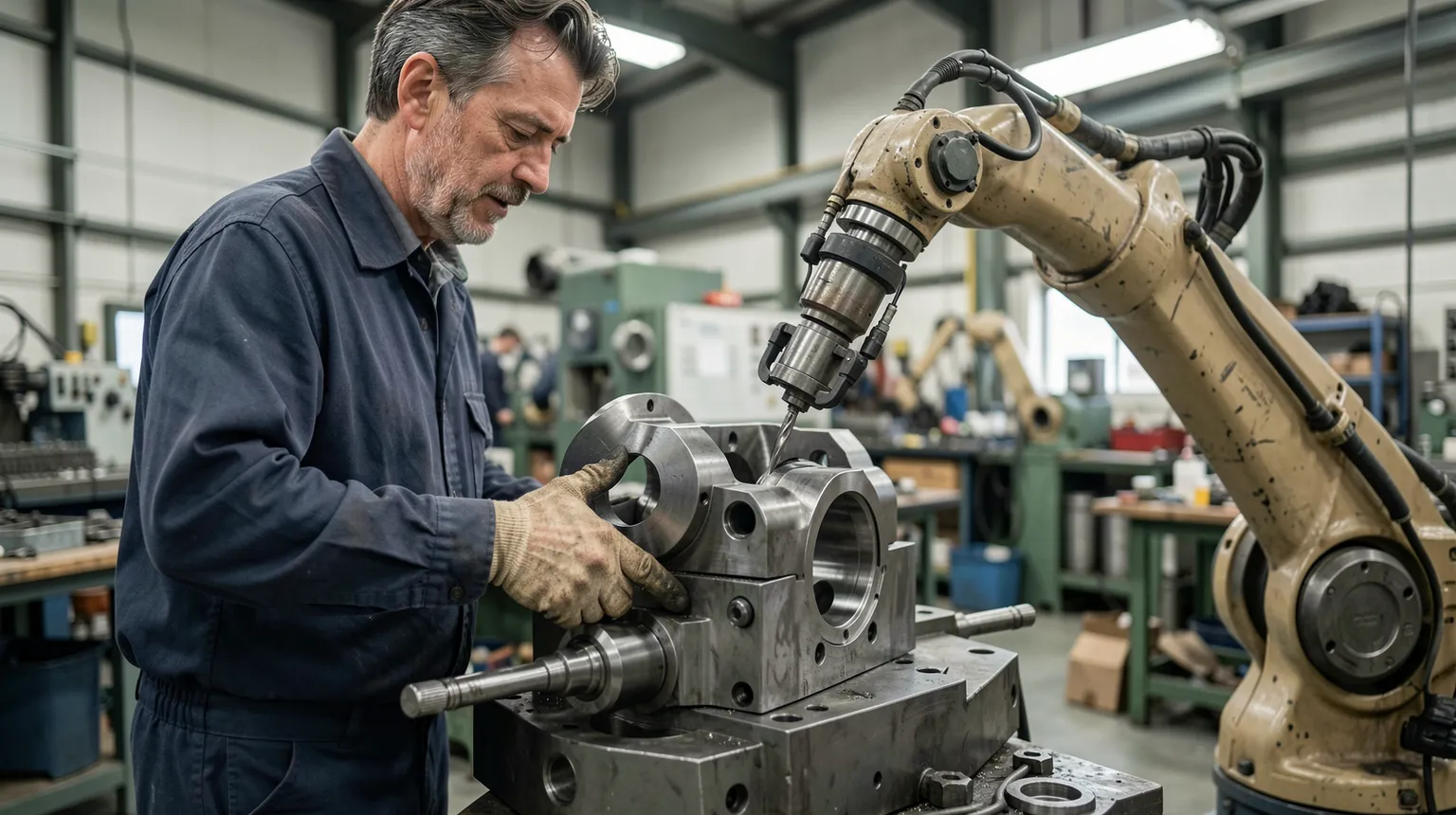
To move past these limitations, we have to change how we think about "teaching" a machine. We need to stop thinking like programmers and start thinking like instructors. This requires moving toward a Data Capture Protocol. Instead of defining every movement, you are capturing the intent behind the movements.
Here is the four-step framework for operational leaders to transition your floor's capability:
1. Identify Variability Sources
Don’t look at what the process does correctly; look at where it deviates. Walk the line and identify every time an operator has to "adjust," "nudge," or "correct" a part. These are your unstructured data points. Map these out—are they caused by material inconsistencies, human fatigue, or upstream errors?
2. Capture via Minimal Demonstration (The 'Five-Shot Method)
Move toward systems that use "few-shot" learning. Instead of writing code for a new task, have an experienced operator perform the task five times while the system captures the data. The goal is to provide enough examples for the AI model to recognize the "goal state"—the successful completion of the task—rather than just repeating a pre-set path.
3. Validate Cross-Domain Capability
Before you go live, test the robot's ability to handle tasks it wasn't specifically taught. If it can pick up Part A and then successfully transition to picking up Part B (which has different dimensions or weight) without a manual override, your system is beginning to develop "cross-domain" physical capability.
4. Build a Human Oversight Loop
Automation in an unstructured environment still requires human intelligence. Your goal isn't to remove the human; it’s to move them from "performing the task" to "supervising the logic." Create a clear escalation path where, if the system encounters a situation outside its learned parameters, it flags for a human rather than simply stopping or making an incorrect move.
Practical Steps: Starting your adaptability audit tomorrow
You don't need to overhaul your entire robotics fleet overnight. You start by identifying where the current "Rigid Script Trap" is causing the most friction today.
Your Action Plan for this week:
- Conduct a 'Friction Walk': Spend one hour on each major automated cell. Don't look at the cycle time; look for the moments of human intervention. Every time an operator has to "fix" what the robot did, mark it as a failure of adaptability.
- Identify Low-Hanging Fruit: Look for processes that have high variation but moderate complexity (e.g., sorting non-uniform components or kitting parts with different geometries). These are the perfect candidates for moving from hard-coded scripts to data capture protocols.
- Audit Your 'Retooling' Time: Calculate how many man-hours were spent last month on "reprogramming" existing robots for new products versus actually running production. If your reprogramming time is climbing, you have a scalability problem that code won't fix—you need a different approach to skill transfer.
- Define the 'Goal State': For your next automation project, stop asking engineers "How will it move?" and start asking them "What is the success criteria for this task?" Focus on the outcome (e.g., "The part must be seated firmly in the jig") rather than the path to get there.
Download and Share This Issue
Call to Action
What single process in your plant currently requires human dexterity that you believe automation can never achieve? Share your thoughts with us at [email protected] or share this issue if operational rigidity keeps you up at night.
Newsletter replies and questions: [email protected]
Follow updates on X.com: @kaizen6sigma
References
NVIDIA’s GR00T 2 transfers human skills to robots with just five task demonstrations (via interestingengineering.com)