The myth of the invisible link
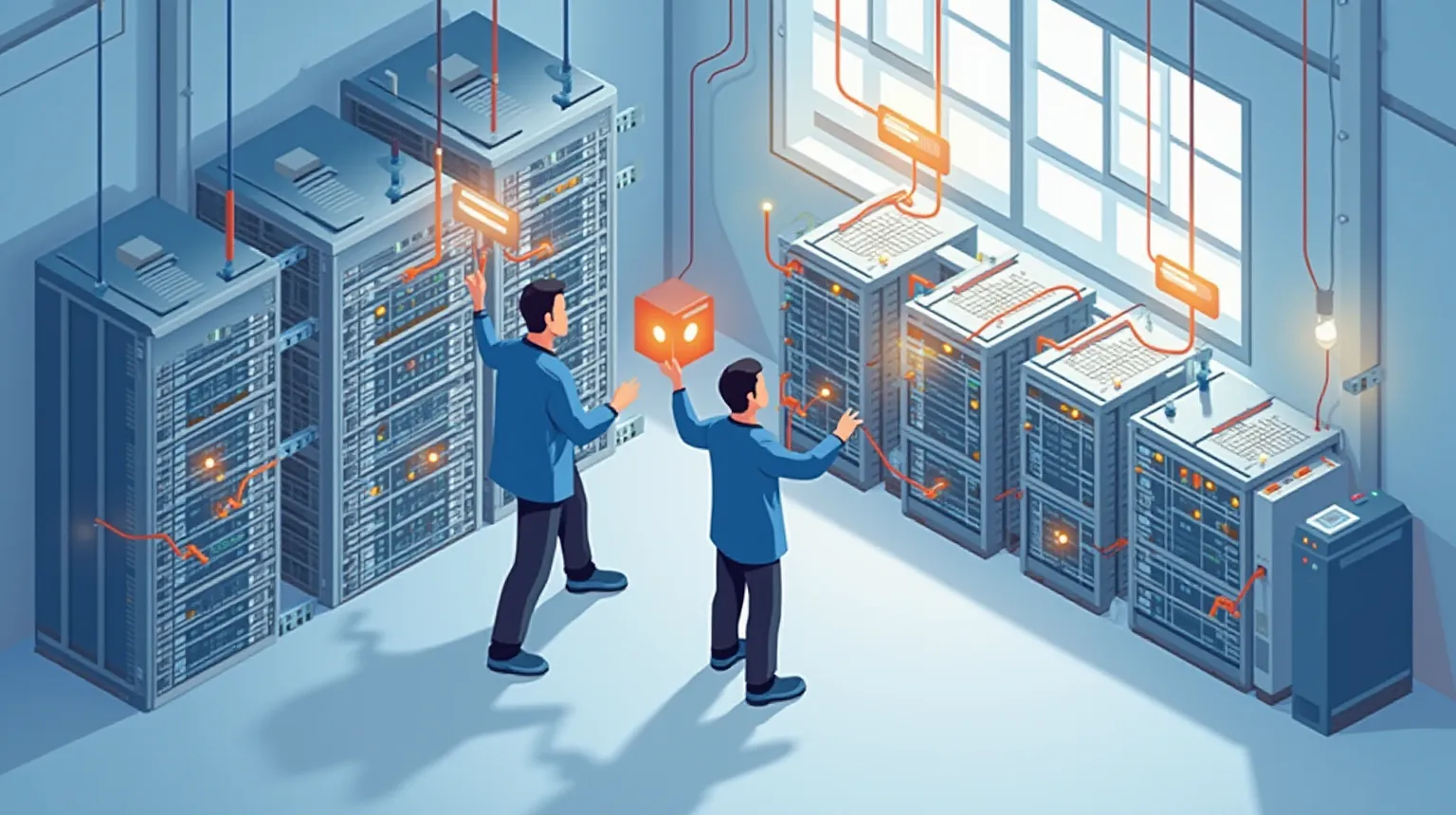
There is a common trap in modern manufacturing and high-tech operations where we mistake capability for readiness. In the world of remote systems, it’s easy to fall into the belief that because you have built a sophisticated technical bridge—like a satellite link allowing someone at Point A to control something at Point B—the "hard part" is over.
We see this often: an organization invests heavily in new hardware or connectivity and assumes that the technology itself will carry the burden of operational success. It isn't.
A high-tech link is not a substitute for standard work. You can have the most advanced satellite network on earth, but if the operator at either end doesn’t know exactly what to do when a packet drops or a signal flickers, you don't have a functioning system; you have an expensive toy that will fail under pressure.
In my experience, "innovation" is often used as a shroud for neglected process design. We assume the technology provides the reliability, but in reality, it’s only the medium. If the underlying processes—the handoffs, the error-handling protocols, and the standard work—aren't rock solid, then the more advanced your tech becomes, the faster your failures will scale. A signal that is "always on" doesn't matter if the human response to a minor glitch is "wait and see" instead of an immediate, practiced maneuver.
Naming it: The Operational Maturity Void

We need to call this what it is: The Operational Maturity Void. This is the gap between having a capability (the technical ability to perform a task) and possessing the maturity to execute that task consistently in a non-perfect environment.
When we rely on "invisible" links, we often ignore the fact that the infrastructure supporting those links is still subject to physical reality. In a controlled lab or during a scheduled test, everything works because you are watching it closely. But when things get messy—when there's interference, hardware fatigue, or environmental stress—the lack of a robust operational framework becomes glaringly obvious.
To understand how this manifests on the floor, look at the difference between what management hears and what the operator experiences:
| The Comforting Rationalization | The Underlying Reality |
|---|---|
| "The satellite link provides constant connectivity." | A connection is only useful if there is a manual for when it drops. |
| "We have the capability to operate remotely." | Capability without standard work is just an unmanaged risk. |
| "The technology handles the complexity for us." | Technology reveals the gaps in our training and procedures. |
| "It works every time during testing." | Testing happens in a vacuum; operations happen in the mud. |
Why does this operational void persist?

This gap persists because it is easier to buy a solution than it is to build a culture of discipline. It is much faster for an organization to sign off on a procurement order for new technology than it is to sit down with a team and spend weeks refining the "boring" parts: the checklists, the fail-safe procedures, and the redundant communication loops.
Leaders often mistake investment in tools for progress in capability. They see a pilot program succeed and think the problem is solved because they saw the machine move. But success during a trial isn't the same as reliability in production.
The organization focuses on "the new" because it offers high visibility and immediate gratification. Refining an SOP or enforcing strict adherence to standard work provides less of a dopamine hit, but it is what actually prevents a system from drifting into failure. We allow the void to persist because we choose the shortcut: we hope that the brilliance of the engineering will compensate for the lack of rigor in our management.
What are the real costs of relying on 'advanced' but un-operationalized systems?

When you bridge an operational gap with a "shiny" technology instead of a solid process, the cost doesn't disappear; it just gets deferred until it becomes much more expensive to pay. When the system fails in the field—not during a scheduled test, but during a live operation—the consequences are immediate and heavy:
- The Delayed Decision Cycle: Instead of reacting instantly to a signal drop, the team stops to figure out what happened. That pause is where safety margins evaporate and production goals slip.
- The Escalation Spiral: Because there isn't a clear "if-then" protocol for minor technical hiccups, every small glitch becomes an emergency that requires management intervention, pulling everyone away from their primary tasks.
- Eroded Trust in the System: When operators have to constantly "babysit" a system because it lacks reliable standard work, they stop trusting the tools. They begin to find workarounds—the kind of shortcuts that eventually lead to safety incidents or equipment damage.
The cost isn't just a lost piece of hardware; it’s the loss of confidence in your ability to control what you’ve built.
The Five Pillars of Operationalizing Advanced Systems
To bridge the gap, we must move from "having" technology to "operating" systems. We do this by focusing on these five pillars:
- Stress-Tested Validation: You don't test until it works; you test until it fails in a way that is predictable and manageable. This means intentionally inducing signal drops or hardware failures during training to ensure the team knows exactly how to react when things go sideways.
- Granular Documentation: If an action isn’t written down, it doesn't exist as part of the system. Every step—from how to switch to a backup link to how many seconds are allowed for a response before escalating—must be documented in a way that anyone on shift can follow.
- Defined Role Clarity: In an automated or remote environment, roles must be razor-sharp. Who is responsible for the hardware? Who monitors the telemetry? Who makes the call to abort? If two people think they are in charge of the same "off" switch, you have a looming failure.
- Robust Error Recovery (The 'If-Then' Map): You need a clear logic path for every known risk. If signal drops below X level, then initiate procedure Y. This removes the need for high-level decision-making in moments of high stress; it becomes an execution of already decided rules.
- Layered Process Audits: We must audit the process, not just the output. Don't just check if the drone flew today; check if the operator followed the checklist during a period of low signal. You are looking for "drift"—the slow erosion of standards that happens when everything seems to be working fine on the surface.
Practical Takeaways for Tomorrow's Gemba Walk
You don’t have to wait for the next big project to start fixing these gaps. Start with what you can see and touch today:
- Conduct a "What-If" Drill: During your walk, pick one piece of equipment or one software link. Ask the operator: "If this specific component fails right now, what is the very first thing you do?" If they have to think about it for more than three seconds, you need a clearer standard work instruction.
- Audit the "Workarounds": Look for any taped-up notes, unofficial cheat sheets, or lingering habits that bypass the official process. These are symptoms of an inadequate system where the formal instructions were too hard to follow in real-time.
- Identify a Single Point of Failure: Find one area where you rely on "good luck" or "someone's expertise" rather than a repeatable process. Flag it for documentation.
- Verify Training Reality: Ask the team how many times they have practiced an emergency shutdown in the last month. If the answer is zero, your training is currently theoretical; it’s time to move it into practice.
Download and Share This Issue
Call to Action
What is the most fragile operational link in your organization today? Share your diagnosis with us at [email protected].
Newsletter replies and questions: [email protected]
Follow updates on X.com: @kaizen_6sigma
References
US aircraft carrier establishes 2,100-mile satellite control link with MQ-25A drone (Source: Interesting Engineering)