
The problem: Data overload leads not to clarity, but paralysis.
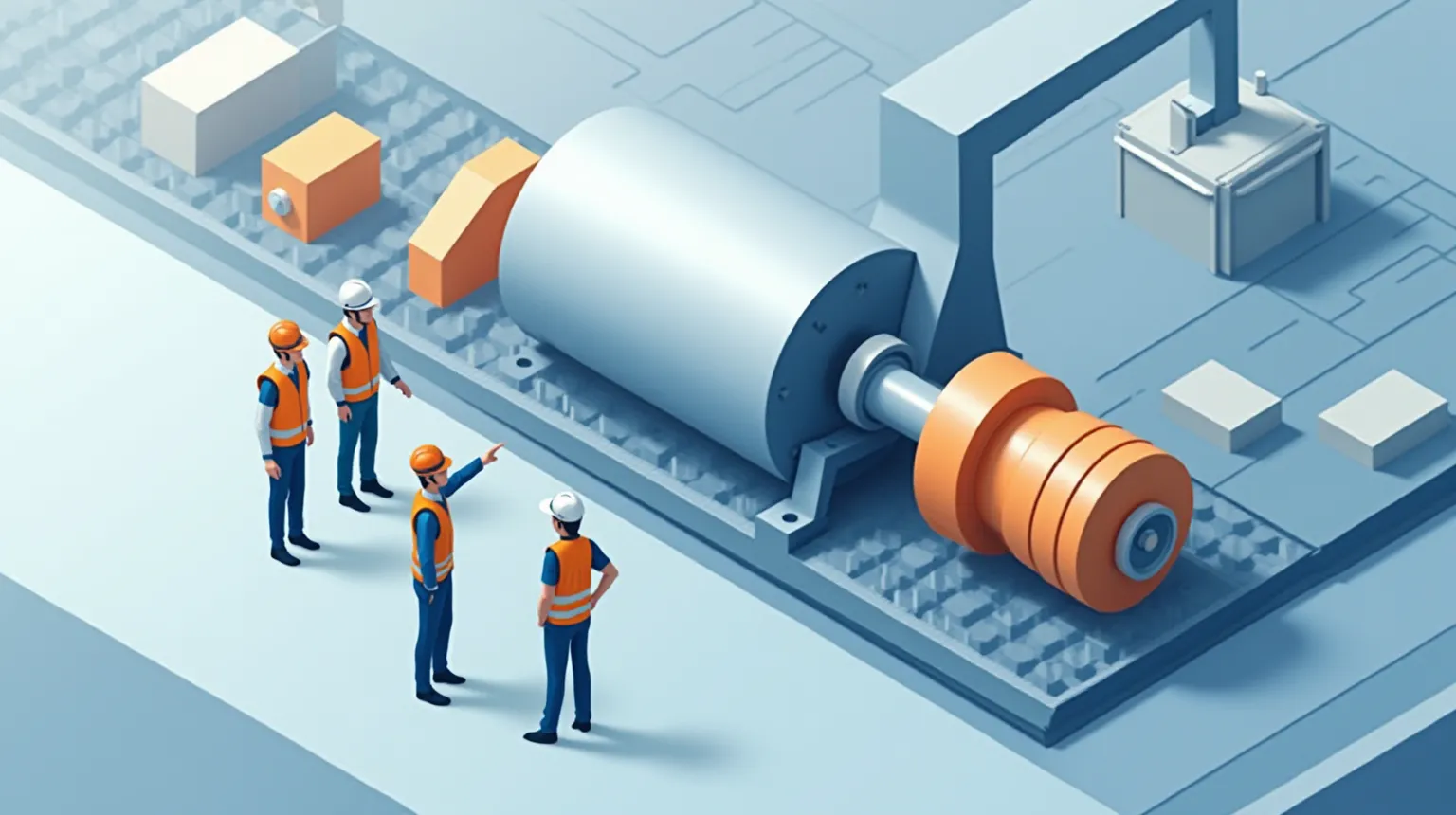
I have spent enough time walking production floors to know the difference between an operator who is empowered and one who is simply being monitored by a high-tech dashboard.
In many modern plants, we are falling into what I call the "Visibility Trap." Management invests heavily in sensors, IoT connectivity, and real-time data feeds. They want to see every vibration, every temperature spike, and every cycle time variance as it happens. On paper, this is progress. In practice, it often creates a paralyzing amount of noise.
When you have a screen that shows everything happening on the line at all times—but no clear instruction on what to do when one of those things goes wrong—you haven't actually improved your operations. You’ve just moved the problem from the floor into the digital realm. The data is there, but the decision-making remains stuck. An operator sees a red light and waits for a supervisor; the supervisor sees an alert on their phone and calls a meeting to discuss it with a manager. By the time the "data" has been processed through enough layers of human hesitation, the production line has already lost hours of uptime.
Data is not a decision-making tool unless it is coupled with authority. If your team spends more time analyzing why something happened than they do making the call to fix it on the spot, you don't have "visibility." You have an expensive way of documenting failure in real-time.
Naming the failure: The Myth of Total Visibility
We need to be clear about what we are actually seeing when these systems fail. We must distinguish between information and agency.
Having a map is not the same as knowing how to drive.
The "Myth of Total Visibility" is the belief that if you can see a problem on a screen, it has been solved or at least identified for solution. This isn't true. Knowing what happened is only the first step; knowing how to react and who has the authority to act is what actually moves the needle.
I’ve seen managers sit in offices staring at "God View" dashboards, watching a line go down three bays away. They see the problem perfectly clearly on their monitors. Yet, they wait for an escalation protocol to kick in because they haven't defined who owns that specific exception.
A data point is not a decision.
When we mistake visibility for control, we create a culture of "wait and see." We assume that because the system flagged the issue, someone eventually will deal with it. But on the shop floor, "eventually" usually means after the shift ends or after the scrap pile has already been weighed. Visibility without an assigned owner is just a spectator sport.
Why this problem persists (The Data Fixation)
Why do we keep building these massive data architectures if they don't seem to solve the underlying issues? It’s often because it is much easier to buy a piece of software than it is to have a difficult conversation about who has the power to stop the line or change a process.
Organizations fall into "Data Fixation" because it provides a sense of progress without requiring an immediate overhaul of organizational structure. We choose the comfort of a new dashboard over the hard work of defining decision rights.
| The Comfort_of_the_Dashboard | The Reality_on_the_Floor |
|---|---|
| "We need more data to understand why this keeps happening." | "We have enough data; we lack a clear instruction on how to act when it happens." |
| "The system will alert us automatically so we can react faster." | "A notification is just an alarm. Without a playbook, the operator still doesn't know what to do." |
| "Visibility allows for better management from afar." | "Remote visibility often leads to delayed decisions because no one on-site has the authority to override the standard." |
We tell ourselves that more data will clarify the path forward. In reality, we are often just trying to use a high-tech tool to mask an old problem: a lack of clear ownership and defined procedures for when things go wrong.
What it costs: Decision latency in real-time
In manufacturing, time is the only currency that matters. When decision-making becomes a "process" involving multiple layers of communication because the system didn't tell anyone who was in charge, you pay a heavy price.
This cost manifests in three specific ways:
- Lost Production: Every minute an operator waits for a supervisor to confirm a "fix" is a minute of scrap or downtime.
- Escalation Fatigue: When problems are only solved after they become visible enough to cause a crisis, the resulting "firefighting" creates unnecessary stress and erodes trust between shifts.
- The Erosion of Autonomy: When operators realize that their input is ignored until it becomes a data point on a manager's screen, they stop trying to solve problems locally and start just doing the bare minimum required by the SOP.
A decision that arrives too late is no better than no decision at all; in fact, it’s often worse because it usually comes with an apology for why it took so long. We cannot afford to wait for a "data-driven" consensus when a physical reality on the floor requires an immediate, practical response.
The fix: Three pillars for operational discipline (Ownership, Playbook, Loop)

To move past the visibility trap, we have to stop trying to make the data smarter and start making our processes more disciplined. We do this by anchoring every piece of "visible" information to one of three pillars.
1. Ownership
Every critical metric on your dashboard must have a single name attached to it—not a department, but a person or a specific role. If a sensor triggers an alert about a temperature deviation in the curing oven, there must be a designated owner who is responsible for that specific piece of equipment at all times. This isn't about blaming people; it’s about ensuring that when the "red light" flashes, there is no ambiguity about whose job it is to make the call.
2. Playbook
We must replace "judgment calls" with pre-defined playbooks for known exceptions. A playbook is a simple, physical instruction set: If X happens, do Y. This shouldn't be hidden in a manual; it should be visible at the point of work. If an operator sees a deviation, they shouldn't have to wonder what to do—the decision has already been made by leadership and codified into the process. They just need to follow the script.
3. Loop
Once a correction is made using a playbook, that action must feed back into our continuous improvement cycle. The "Loop" ensures that we aren't just fixing the same problem every day with a manual workaround. If an exception happens three times in a month, the loop requires us to update the standard work or the machine settings so the deviation doesn't happen at all. This is where "Data" finally becomes useful—it tells us when it’s time to change the system, not just react to its failures.
Practical takeaways for your next Gemba walk
The goal of our next few walks isn't to look at more screens; it’s to find where the humans are waiting for permission. Look for these three things:
- Identify "Decision Dead Zones": Walk to a piece of equipment and ask the operator, "If this specific gauge goes out of range right now, what is your very next move?" If their answer involves calling someone else or waiting for an instruction from a supervisor who isn't present, you’ve found a dead zone.
- Audit the Playbooks: Look at the instructions posted near machines. Are they clear and actionable? Or are they vague enough that the operator has to "use their best judgment"? Replace "judgment" with specific actions for common deviations.
- Locate the Paper Trail: If you find an operator using a "workaround"—a piece of paper taped to a machine, a handwritten note in a logbook—it means your current process isn't working for them. Don't just tell them to follow the official SOP; take that workaround and incorporate it into the formal playbook.
Stop trying to build a better map. Start giving your people the authority and the instructions they need to drive the car.
Download and Share This Issue
Call to Action
What single piece of paper or documented procedure do you suspect your team relies on more than the control tower? Share your diagnosis with a colleague at [email protected].
Newsletter replies and questions: [email protected]
Follow updates on X.com: @kaizen_6sigma