Issue Summary: Capability vs. Consistency
In most manufacturing environments, we have become addicted to the "green checkmark." We see a Cpk value that meets the customer’s specification, and we move on to the next task. It feels like a victory—a piece of paper confirming that our process is capable. But here is the hard truth: a high Cpk is often just a snapshot of luck. It tells you what happened during those specific samples, but it doesn't tell you if your process can hold that line for the next thousand parts, or even the next shift.
The problem we face today isn't a lack of capability; it’s a lack of verifiable consistency over time. We are seeing an increasing gap between "potential" and "performance." A process might be capable of hitting the target under perfect conditions—which is what Cpk measures in many ways—but if that process drifts, fluctuates, or degrades every few hours due to tool wear, thermal expansion, or operator variance, then your "capability" is an illusion.
The thesis here is simple: we must shift our operational governance from seeking a single statistical snapshot to demanding long-term process performance (Ppk) and stability. We need to move away from the comfort of "passing the test" toward the discipline of proving that the process stays within those bounds consistently, day in and day out. If you can’t prove it stays stable over time, your Cpk doesn't matter—the parts will eventually fail, the customer will find out, and the cost of that failure will be yours to bear.
The Stability Illusion: Why Cpk Lies to You
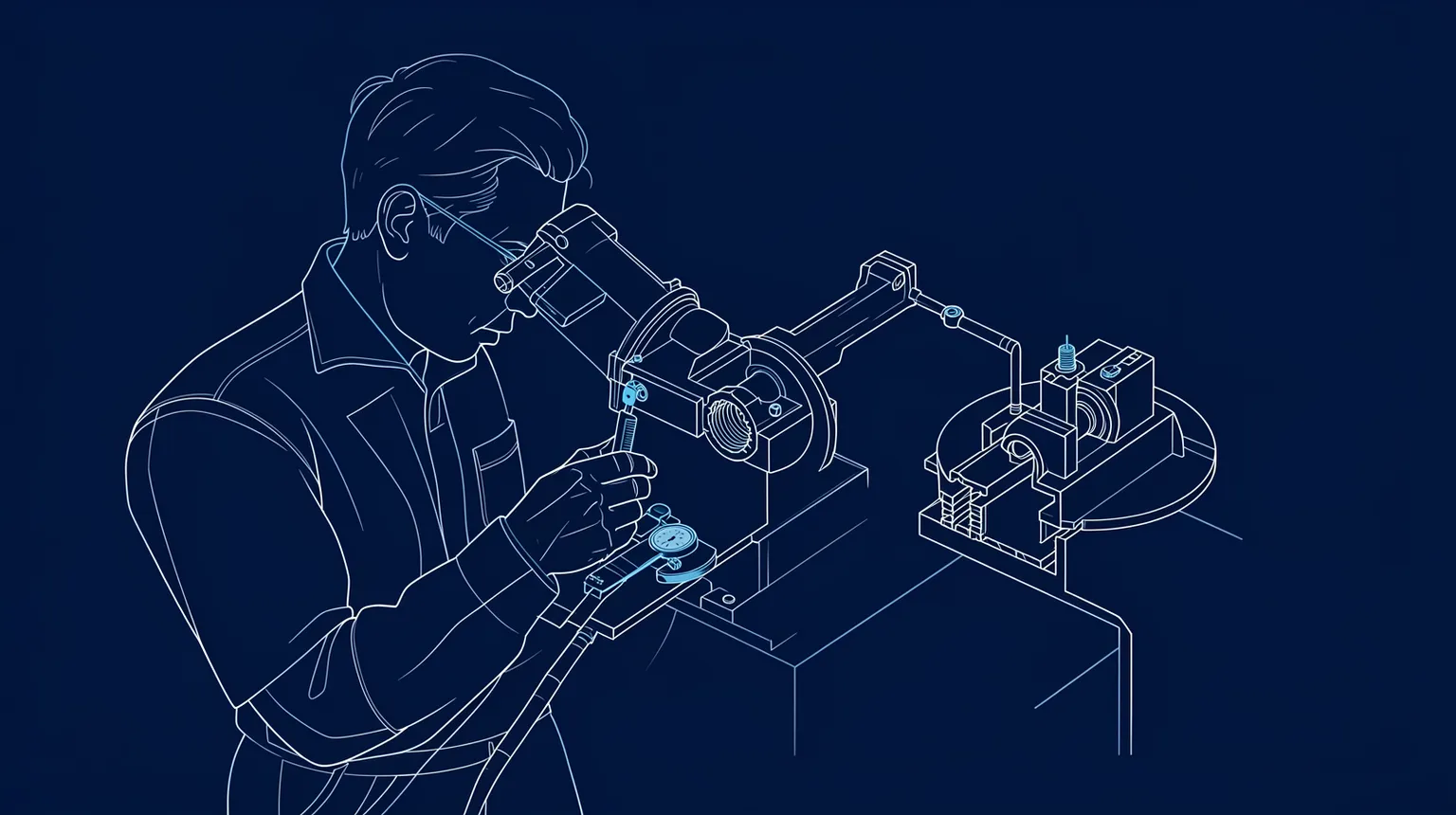
I have sat on many shop floors where a line was producing "perfect" numbers on Monday morning, only for the yield to crater by Wednesday afternoon. In those moments, the engineers would look at their charts in confusion. They had run the capability study; they had the high Cpk to prove it. What they hadn't accounted for was the reality of the floor: a fixture that wasn't being recalibrated correctly, an oven temperature drifting three degrees every hour, or a shift change where "standard work" became "how we’ve always done it."
We need to stop treating Cpk as a certificate of health. A high Cpk is not proof of process stability; it is merely evidence that the measurement was taken at a favorable moment.
I call this The Snapshot Mirage. It is the belief that because a process can produce a good part, it will continue to do so indefinitely without intervention. When we rely solely on Cpk, we are essentially taking a photo of a runner and assuming they will maintain that exact pace for a marathon. The photo shows speed; it doesn't show endurance.
In my experience, the "Snapshot Mirage" allows us to ignore the slow rot of process drift. We see a number that satisfies the auditor, so we stop looking at the machine. But the machine is still drifting. The tool is still wearing down. The operator is still taking shortcuts to hit their hourly targets. When you rely on the snapshot, you aren't managing a process; you are managing a spreadsheet. Real quality management requires us to look past the single data point and demand evidence of sustained performance.
Why We Accept Process Drift (And How It Works)
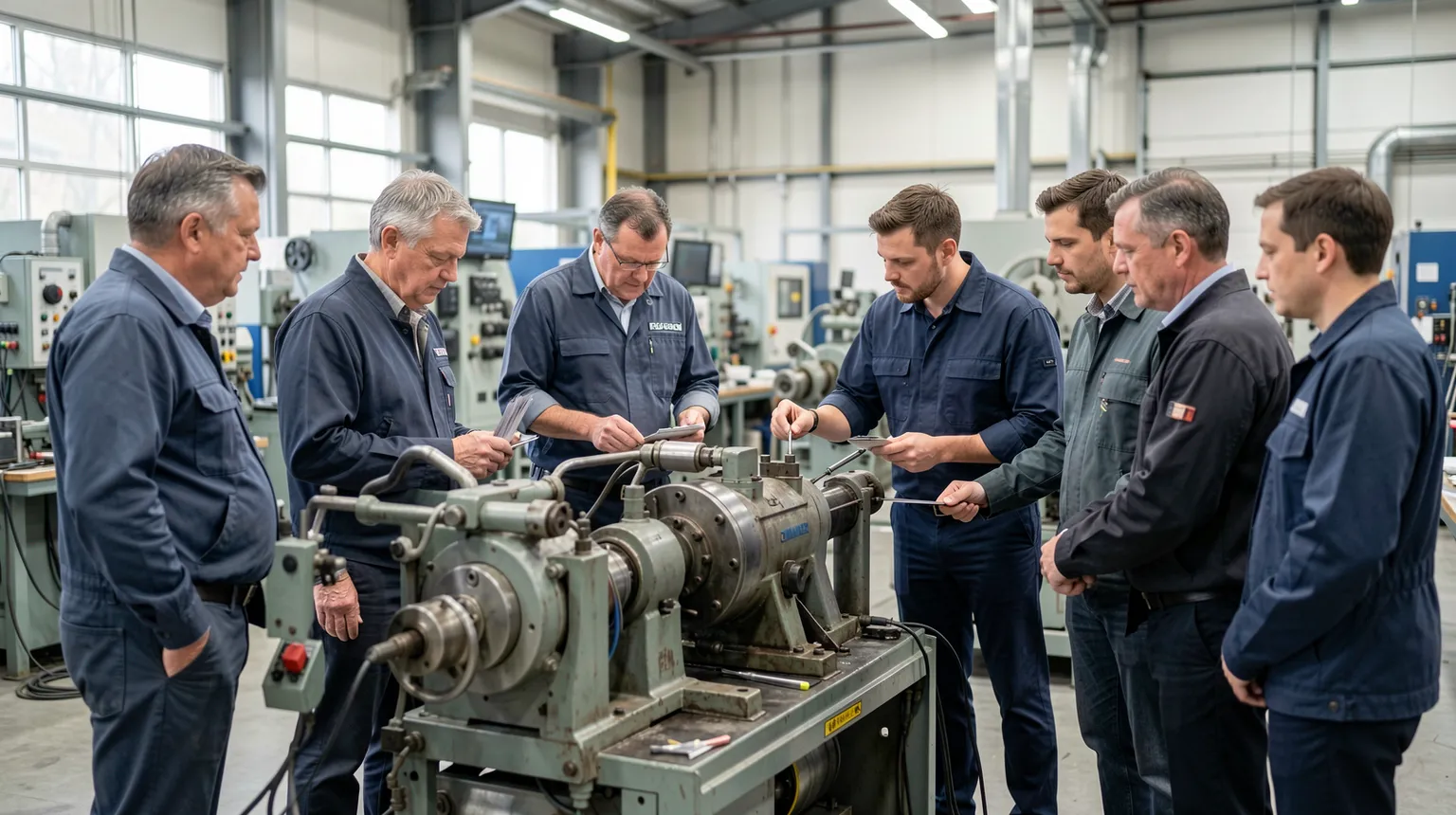
Why do we let this happen? It’s rarely because people are trying to cheat the system. Most of the time, it's because "convenient compliance" is much easier than "operational truth." It is psychologically easier to celebrate a successful capability study than it is to do the hard work of identifying why a process drifts every 400 cycles. We choose the path of least resistance because the snapshot gives us a sense of completion that a continuous audit never does.
To understand how this works, we have to look at the rationalizations we use to justify staying in the "Snapshot Mirage."
| The Comfortable Rationalization | The Underlying Reality |
|---|---|
| "The Cpk is over 1.33; the process is validated and 'good'." | You measured a moment in time, not the continuous behavior of the line. |
| "We have a control plan to catch issues if they arise." | The control plan is reactive; it only tells you that the drift has already happened. |
| "The operator is highly skilled and knows how to adjust the machine." | Human skill is not a substitute for a stable, repeatable process governed by standard work. |
| "We'll address the minor fluctuations during the next scheduled maintenance." | Minor fluctuations are the leading indicators of major failures; ignoring them invites catastrophe. |
When we accept these rationalizations, we create an environment where drift becomes invisible until it becomes a crisis. We trade long-term stability for short-term peace of mind.
What Happens When Stability Fails
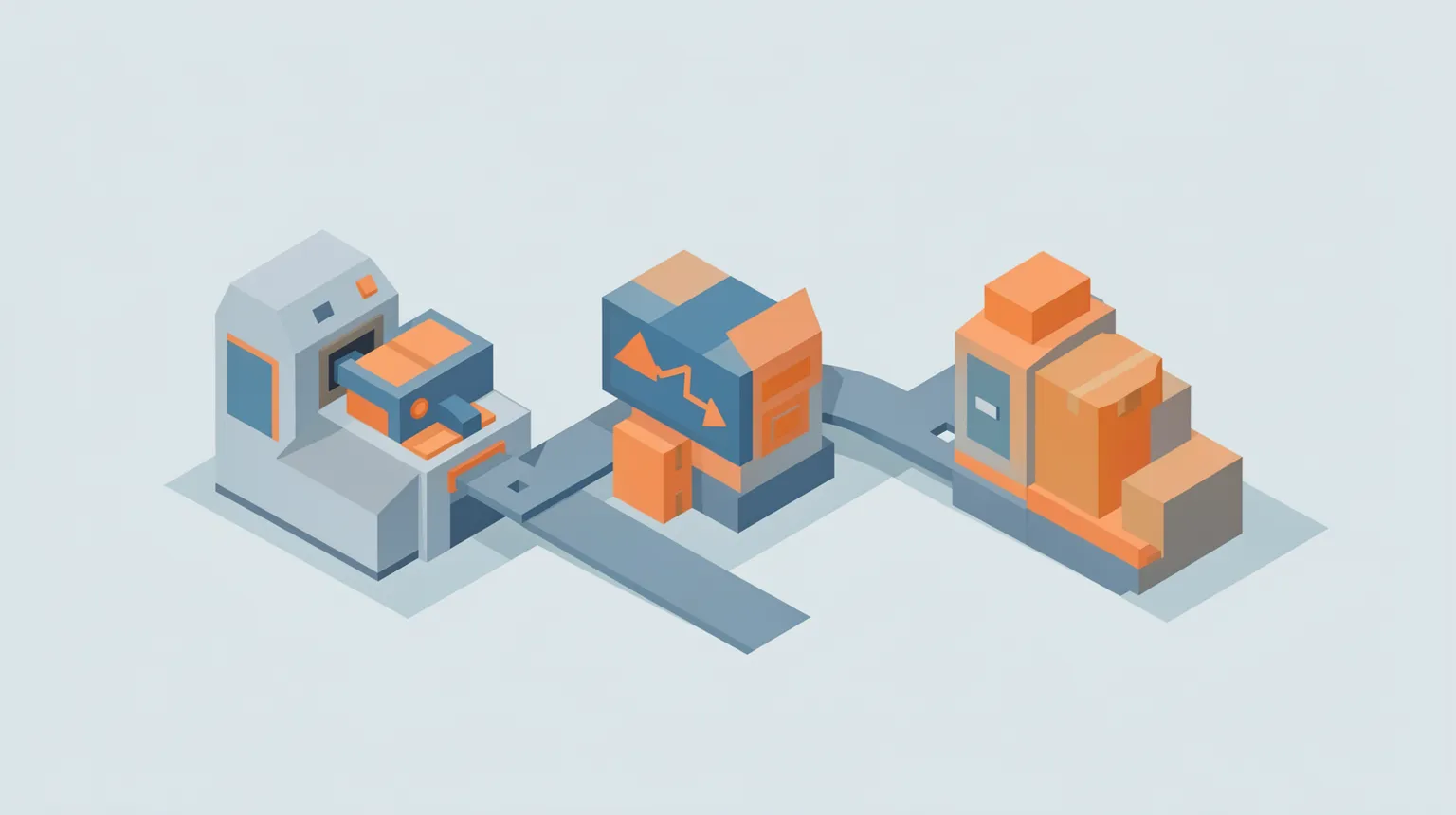
The stakes of relying on a "Snapshot Mirage" are high, and they go far beyond just throwing away some scrap metal. When a process is capable but not stable, the failures aren't always immediate—they are cumulative. They manifest as subtle shifts in quality that eventually erode the most valuable asset a manufacturer has: trust.
When stability fails, you don't just lose a part; you lose your standing in the market. Here is what that actually looks like on the floor and in the boardroom:
- The Erosion of Trust: Once a customer sees a trend of "near-misses" or inconsistent dimensions, they stop trusting your data. They begin to demand more frequent audits, more rigorous testing, and higher costs for every shipment.
- The Hidden Cost of Rework: If the process drifts but stays within spec (just barely), you may not see it as a "failure," but you are likely burning extra material or energy to stay in that narrow window. You are operating at the edge of your capability, leaving zero room for error.
- The Safety and Liability Risk: In industries like aerospace or medical devices, a lack of stability isn't just an operational headache—it’s a legal and safety liability. A process that "drifts" is a process that eventually produces a part that fails in the field.
- Loss of Momentum: When you have to stop the line for an emergency "firefight" because a process went out of control, you lose your production schedule, your morale drops, and your team loses focus on continuous improvement.
The Operational Governance Framework: Four Tests of True Capability
If Cpk is about potential, Ppk (Process Performance Index) is about reality. To move from the Snapshot Mirage to true operational governance, we must implement a framework that demands evidence of sustained performance. We need to stop asking "Can this process do it?" and start asking "Does this process actually do it consistently over time?"
Here are the four tests for proving true capability:
1. The Historical Variance Test
Don't just look at the last 50 parts. Look at the last 5,000. We must analyze the variance of the process over a period that exceeds the typical maintenance cycle or tool life. If you want to prove stability, your data set must be large enough to capture the "slow" drifts—the ones caused by thermal changes in the building or gradual wear on a cutting edge.
2. The Control Plan Integrity Test
A control plan is only as good as its reaction triggers. We need to verify that the limits on the floor are actually tied to the process's actual performance (Ppk), not just the theoretical limits of the machine. If your "Upper Control Limit" is so wide that it allows for significant drift before an alarm sounds, then your control plan isn't governing anything; it’s just watching the disaster happen in slow motion.
3. The Layered Audit Frequency
Stability cannot be proven from a remote office. It must be verified through layered process audits (LPAs) that occur at different intervals and by different people. We need to see that standard work is being followed consistently across all shifts. If the "night shift" has a different way of calibrating the torque wrench than the "day shift," your process isn't stable—it’s just variable based on who is standing in front of it.
4. The Reaction Speed Metric
True capability governance is measured by how fast you catch and correct a drift. We need to track the time between the first sign of variance (the "drift") and the corrective action taken. A stable process isn't one that never moves; it’s one where we have the systems in place to identify, stop, and correct movement before it results in non-conforming parts.
Practical Takeaways: The Next 72 Hours Checklist

You don't need a month-long consulting project to start shifting your focus from snapshots to stability. You can begin this week with these four actions:
- Audit Your Current Cpk Reports: Pick three of your most critical processes. Look at the dates of those capability studies. If they were done more than six months ago, flag them for a "Performance Review" (Ppk) rather than just accepting the old certificate.
- Review Control Plan Limits: Walk the line with an engineer and an operator. Compare the limits on their paperwork to what is actually happening on the machine. Are the limits wide enough that they allow for "acceptable drift"? If so, tighten the internal control limits to catch variance before it hits the customer's spec.
- Identify the "Drift" Sources: Ask your operators: "What makes this machine move out of alignment over a shift?" Don't accept "it just does." Get specific—is it heat? Is it vibration? Is it a specific tool? Document these variables as part of your standard work.
- Schedule a Ppk Review: Schedule a meeting with your quality team for next week. The goal isn't to talk about Cpk; the goal is to define what "sustained performance" looks like for your top three products and how you will measure it over the next 30 days.
Download and Share This Issue
Call to Action
When was the last time you truly audited your control plans against real-world drift? If this shift in standards changed how you approach process validation, share it with a colleague and tag us at @kaizen6sigma.
Newsletter replies and questions: [email protected]
Follow updates on X.com: @kaizen6sigma
References
AIAG/VDA Standards Updates; Statistical Process Control Principles (SPC); Process Capability Indexing (Cpk vs. Ppk)