
Transportation is often treated as a necessary expense after planning, sourcing, and inventory decisions are made. In reality, logistics performance determines whether the supply chain can convert good plans into dependable customer delivery. Poor transportation management hides cost in accessorials, claims, expedites, manual freight audits, mode mismatches, inbound supplier-prepaid freight, weak carrier leverage, and missing visibility.
Guide 6 turns transportation into a managed operating system. It covers the total freight cost iceberg, shipment mode selection, inbound logistics control, strategic freight RFPs, transportation management systems, international trade and Incoterms, transportation KPIs, and the Meridian Industrial Components logistics transformation roadmap.
Visual Summary
The logistics transformation roadmap summarizes the six-part path: analyze the freight cost iceberg, match shipment mode, control inbound logistics, execute a strategic freight RFP, implement a TMS backbone, and manage international trade and KPIs.
Jump to Guide Sections
Introduction: Logistics Converts Supply Chain Strategy Into Delivery
Logistics is where supply chain strategy becomes visible to customers. Demand planning may produce a good forecast, procurement may select capable suppliers, inventory may be placed correctly, and SRM may improve supplier performance; but if transportation is unmanaged, the customer still experiences late deliveries, damaged shipments, avoidable expediting, poor communication, and hidden cost.
Transportation excellence is not just cheaper freight. It is the balanced management of cost, speed, reliability, damage prevention, visibility, flexibility, and risk. The best logistics systems make the economical path the default path and reserve premium freight for true exceptions.
Step 1: Analyze the Total Freight Cost Iceberg
Quoted freight rates are only the visible tip of transportation cost. The larger cost opportunity is often below the surface: accessorial charges, detention, dimensional weight penalties, damage claims, invoice errors, packaging failures, expedite premiums, internal logistics labor, and missed consolidation opportunities.
| Cost Component | What It Includes | Improvement Lever |
|---|---|---|
| Base Freight Rates | Line haul rate, fuel surcharge, minimum charge, lane pricing, mode pricing. | Competitive bid, carrier consolidation, contract compliance, lane normalization. |
| Accessorial Charges | Detention, liftgate, residential, reclassification, reweigh, inside delivery, limited access, appointment fees. | Root-cause accessorials by shipper, carrier, lane, customer, and packaging condition. |
| Claims for Damaged Goods | Product damage, packaging failure, handling damage, concealed damage, returns. | Packaging standards, carrier handling analysis, claims ratio review, corrective action. |
| Internal Logistics Labor | Manual tendering, invoice review, tracking calls, exception chasing, shipment rework. | TMS automation, standard work, carrier portal use, exception-based management. |
| Expedite and Premium Freight | Air freight, hot shot, same-day courier, emergency LTL, expedited parcel. | Track by root cause: planning failure, supplier miss, inventory error, customer change, quality hold. |
| Invoice Leakage | Incorrect rates, duplicate invoices, wrong accessorials, fuel surcharge errors, contract mismatch. | Automated freight audit and pay; audit every invoice for leakage. |
Step 2: Match Mode to Shipment Profile
Mode selection is one of the fastest ways to reduce freight cost without harming service. The wrong mode turns routine demand into premium cost: parcel used for shipments that should be consolidated, LTL used where truckload makes sense, truckload used where rail intermodal is viable, or air freight used because planning was late.
| Mode | Best Fit | Strength | Watchout |
|---|---|---|---|
| Parcel | Small shipments under 150 lb, high address density, small-order fulfillment. | Speed, tracking, residential reach, low handling burden for small shipments. | Dimensional weight, surcharges, fragmented shipments, avoidable split orders. |
| LTL | 150-5,000 lb shipments that do not fill a trailer. | Cost-effective for mid-size freight, regional/national networks, broad coverage. | Damage risk, accessorials, classification errors, longer transit variability. |
| Truckload | 5,000+ lb or full 53-foot trailer shipments, high-volume lanes. | Direct control, lower damage, faster point-to-point movement, capacity leverage. | Underutilized trailers waste cost; spot-market exposure creates volatility. |
| Rail Intermodal | Long domestic lanes over roughly 750-1,000 miles where transit flexibility exists. | Often 10-40% lower cost than long-haul truckload, lower emissions. | Longer transit, ramp availability, planning discipline, drayage coordination. |
| Air / Hot Shot | True emergencies, critical downtime protection, customer rescue. | Speed and service recovery. | Should remain rare; chronic use signals planning, inventory, supplier, or scheduling failure. |

Mode Selection Decision Questions
- What is the actual weight, cube, handling requirement, value, and delivery promise?
- Can shipments be consolidated by customer, region, supplier, lane, or ship day?
- Is the shipment urgent because the customer changed demand or because the system failed earlier?
- Does rail intermodal fit long-haul domestic lanes where service windows allow it?
- Is premium freight below 3% of transportation spend, and are all premium moves root-caused?
Step 3: Gain Control of Inbound Logistics
Supplier-prepaid freight often looks convenient because the transportation charge is hidden inside the purchase price. That convenience removes visibility and leverage. The buying organization cannot consolidate lanes, negotiate carrier rates, monitor carrier performance, or see the real logistics cost by supplier and part family.
| Inbound Model | What Happens | Impact |
|---|---|---|
| Supplier-Prepaid | Supplier selects and pays carrier, then embeds freight in product price or surcharge. | Low buyer visibility; fragmented rates; limited consolidation; hidden margin and accessorials. |
| Buyer-Collect | Buyer controls carrier selection, routing, tendering rules, and freight payment. | Aggregated volume, better leverage, clearer lane data, improved cost control and visibility. |
| Routing Guide | Formal instructions define carrier, service, mode, contact, packaging, and exception rules by lane and weight break. | Prevents supplier choice drift and makes the cost-optimized carrier the default. |
Step 4: Execute a Strategic Freight RFP
A strong freight RFP is not a rate-shopping exercise using a spreadsheet of rough lane estimates. It is a structured sourcing event based on normalized shipment history, service requirements, accessorial rules, capacity expectations, claims performance, technology capability, and resilience needs.
| RFP Step | Purpose | Output |
|---|---|---|
| Gather 12-24 months of lane data | Normalize volume, weight, cube, origin, destination, service, and seasonality. | Clean bid file by lane, mode, frequency, and accessorial exposure. |
| Define service requirements | Clarify pickup windows, delivery expectations, tracking, claims, customer constraints, and equipment needs. | Carrier response requirements and measurable service levels. |
| Run multimodal bid | Compare parcel, LTL, truckload, intermodal, and regional carrier options where appropriate. | Optimized carrier mix by lane and service profile. |
| Evaluate total cost | Include accessorials, fuel, minimums, claims, service reliability, technology, and capacity. | Total landed transportation cost comparison. |
| Consolidate carrier base | Move toward 3-5 primary carriers per mode where practical. | Volume leverage, simpler management, better accountability. |
| Balance primary and backup carriers | Protect capacity and resilience without fragmenting volume. | Primary carrier share of roughly 60-70% and backup share of roughly 20-30% where lane risk warrants. |
Step 5: Implement a TMS Backbone
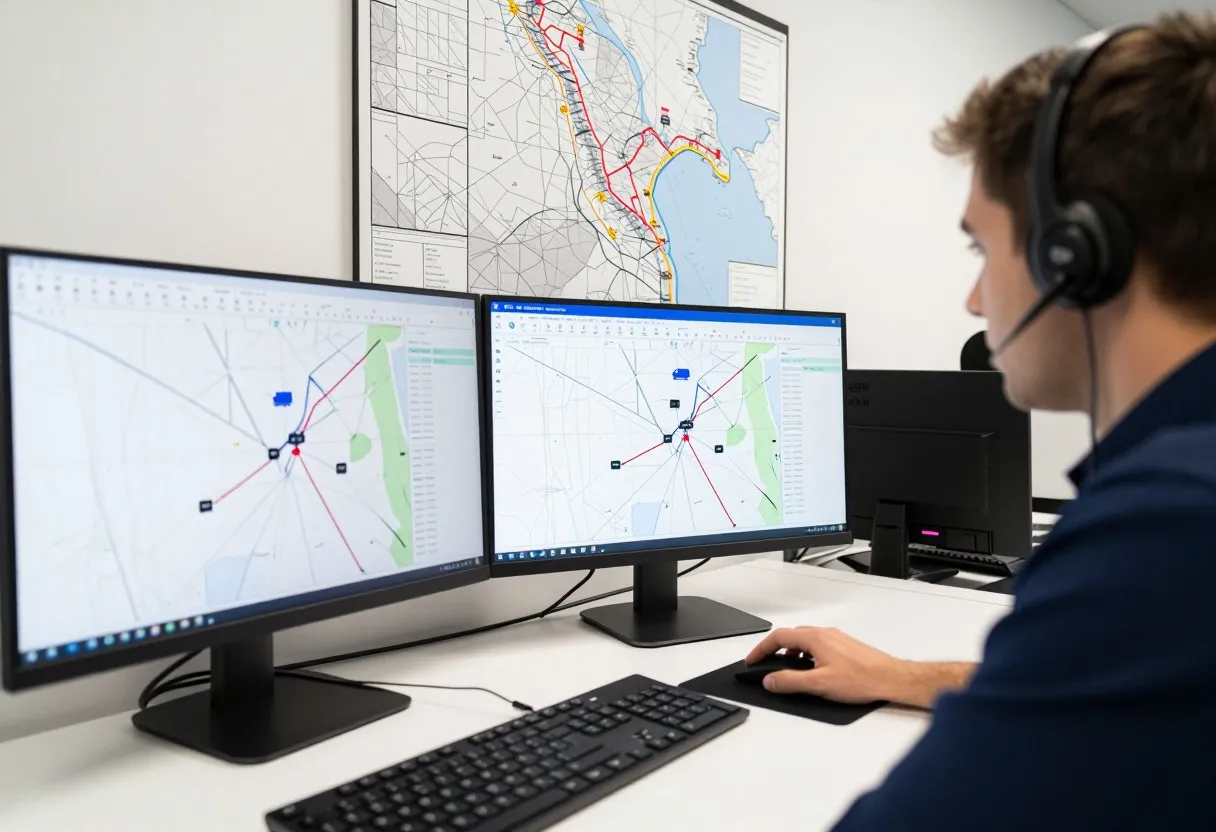
A transportation management system becomes the operating backbone for rates, tendering, shipment execution, visibility, freight audit, and performance reporting. The business case is strongest when the organization has meaningful freight spend, manual tendering, poor invoice audit discipline, limited shipment visibility, and frequent mode exceptions.
| TMS Capability | Value Created | Implementation Note |
|---|---|---|
| Rate Management | Uses contracted rates and rules at shipment planning time. | Keep rate tables current; stale rate data destroys trust. |
| Carrier Tendering | Automates tender sequence, acceptance, backup carrier logic, and shipment confirmation. | Define primary and backup routing rules by lane, mode, and service level. |
| ERP / WMS Integration | Connects order management, warehouse execution, and shipment records. | Eliminate manual rekeying and ensure shipment data begins upstream. |
| Real-Time Tracking | Improves customer communication and exception response. | Manage by exception; visibility without response rules is just display. |
| Freight Audit and Pay | Finds rate errors, duplicate invoices, accessorial issues, and contract mismatches. | Automated recovery and load optimization often fund TMS payback in 6-18 months. |
| Reporting and Analytics | Tracks spend, mode, carrier performance, claims, premium freight, accessorials, and service. | Build KPI ownership before dashboard design. |
Step 6: Master International Trade and KPIs
International logistics adds customs, documentation, trade compliance, duties, port risk, currency exposure, longer pipelines, and handoff complexity. Incoterms determine where seller responsibility ends and buyer responsibility begins, which affects control, visibility, risk transfer, landed cost, and claims handling.
| Topic | Management Focus | Practical Guidance |
|---|---|---|
| Buyer-Controlled Incoterms | Use terms such as EXW, FCA, or FGB/FOB where appropriate to control carrier selection and visibility. | Do not change terms without evaluating customs responsibility, insurance, handoff risk, and supplier capability. |
| Landed Cost | Include freight, duties, brokerage, taxes, insurance, handling, inventory carrying cost, and delay risk. | Evaluate sourcing decisions using landed cost, not purchase price alone. |
| Documentation | Commercial invoice, packing list, bill of lading, certificate of origin, classification, and compliance records. | Use standard document controls to prevent customs delays and penalties. |
| Pipeline Visibility | Track order, booking, departure, port arrival, customs clearance, drayage, and final receipt. | Measure the full path, not only ocean transit time. |
| Risk and Continuity | Port congestion, geopolitical shifts, capacity shortages, weather, strikes, and regulatory changes. | Build contingency lanes, alternate ports, and clear escalation triggers. |
Meridian Industrial Components Logistics Transformation
Meridian used the logistics roadmap after improving earlier supply chain foundations. The work shifted transportation from reactive shipment chasing to a managed network with cleaner data, stronger carrier leverage, better inbound control, and more disciplined premium freight use.
| Transformation Step | Meridian Action | Expected Impact |
|---|---|---|
| Freight cost analysis | Built a total freight cost view including accessorials, claims, premium freight, and invoice leakage. | Identified cost below the surface rather than negotiating only base rates. |
| Mode review | Analyzed parcel, LTL, truckload, intermodal, and premium freight by lane and shipment profile. | Reduced mode mismatch and chronic expediting. |
| Inbound conversion | Moved selected supplier-prepaid lanes toward buyer-collect routing control. | Captured inbound freight opportunity and improved visibility. |
| Strategic RFP | Used 12-24 months of lane data to consolidate carrier volume and define primary/backup coverage. | Improved rate leverage while protecting capacity resilience. |
| TMS backbone | Prepared ERP/WMS integration, rate management, tendering, tracking, and freight audit requirements. | Created the system of record for transportation execution and cost control. |
| KPI dashboard | Focused leaders on cost-to-revenue, OTD, claims, premium freight, accessorials, and invoice accuracy. | Moved logistics management from anecdote to data-driven improvement. |
Transportation KPIs
Logistics metrics should balance cost, service, damage, invoice accuracy, and exception control. A low freight rate is not a win if it creates late deliveries, high claims, customer penalties, or manual recovery work.
| KPI | Definition | Target / Signal |
|---|---|---|
| Freight Cost as % of Revenue | Total freight spend divided by revenue. | World-class target around 3.5% where industry economics support it. |
| On-Time Delivery | Shipments delivered on or before the committed customer dock date. | >98% is a common high-performance target. |
| Claims Ratio | Damage and loss claims as a percentage of freight charges or shipments. | <0.5% indicates strong carrier handling and packaging control. |
| Accessorial Spend % | Accessorial charges divided by total freight spend. | High values indicate poor planning, weak routing control, or preventable service conditions. |
| Premium Freight % | Air, expedite, hot shot, and emergency freight divided by total freight spend. | Should be low and root-caused; chronic use indicates upstream process failure. |
| Invoice Accuracy | Percentage of freight invoices matching contracted rates and shipment facts. | Track leakage by carrier, lane, accessorial type, and contract rule. |
| Carrier Acceptance Rate | Percentage of tenders accepted by primary or assigned carrier. | Low acceptance signals capacity, pricing, tender timing, or relationship issues. |
| Mode Compliance | Percentage of shipments using the planned mode and routing guide. | Low compliance means the logistics plan is not embedded in execution. |
Best Practices, Common Errors, and Tips
Transportation Excellence Principles
- Manage total freight cost, not quoted rates alone.
- Audit every invoice for rate leakage, duplicate billing, and invalid accessorials.
- Root-cause premium freight by upstream failure mode.
- Use shipment profile data to match parcel, LTL, truckload, intermodal, and air correctly.
- Convert high-opportunity inbound freight from supplier-prepaid to buyer-controlled where the business case supports it.
- Create a routing guide by lane, weight break, service level, and supplier/customer requirement.
- Bid freight with normalized lane data, not rough annual estimates.
- Balance carrier consolidation with resilience through primary and backup carrier coverage.
- Integrate TMS with ERP and WMS so execution data is not manually recreated.
- Use KPIs to improve logistics behavior, not just to report freight spend after the fact.
Common Failures
| Failure | Consequence | Countermeasure |
|---|---|---|
| Focusing only on base rates | Accessorials, claims, labor, and invoice errors remain hidden. | Build a total freight cost model and track cost below the surface. |
| Using premium freight without root cause | Expediting becomes a normal way to cover planning and execution gaps. | Require reason codes and monthly root-cause review. |
| Letting suppliers control inbound freight by default | Buyer loses volume leverage and freight visibility. | Identify lanes for buyer-collect conversion and issue supplier routing guides. |
| Running RFPs with poor lane data | Carrier bids are inaccurate and savings fail to materialize. | Clean 12-24 months of shipment history before bidding. |
| Buying TMS before process design | Software automates unclear routing rules and weak data. | Define rates, modes, tender rules, invoice audit, exception handling, and KPIs first. |