
Total Productive Maintenance (TPM) is Seiichi Nakajima's answer to a maintenance department stretched too thin: instead of technicians reacting to breakdowns full-time, TPM makes basic equipment care — cleaning, inspecting, lubricating, tightening — the operator's responsibility, freeing skilled maintenance hours for the preventive and predictive work only they can do. The name captures the intent: maintenance becomes total, involving every person who touches the equipment, not a department working in isolation.
TPM and OEE were developed together for a reason. OEE's Six Big Losses framework exists to make TPM's goal — eliminating equipment-related loss — measurable, which is why a TPM program without an OEE baseline is difficult to know is actually working.
Open the OEE Calculator and Loss Analyzer Read the SMED Guide
Why TPM Matters
Catches Problems Before They're Breakdowns
An operator who cleans and inspects a machine daily notices a loose bolt or an oil leak weeks before it becomes an unplanned stop.
Frees Skilled Hours for Skilled Work
Routine cleaning and lubrication done by operators means technicians spend their time on the diagnostic and repair work that actually needs their training.
Builds Equipment Ownership
Operators who maintain their own equipment develop a working knowledge of it that pure operation never builds.
Directly Improves OEE
Fewer breakdowns and less unplanned downtime raise the Availability factor — see the OEE Guide.
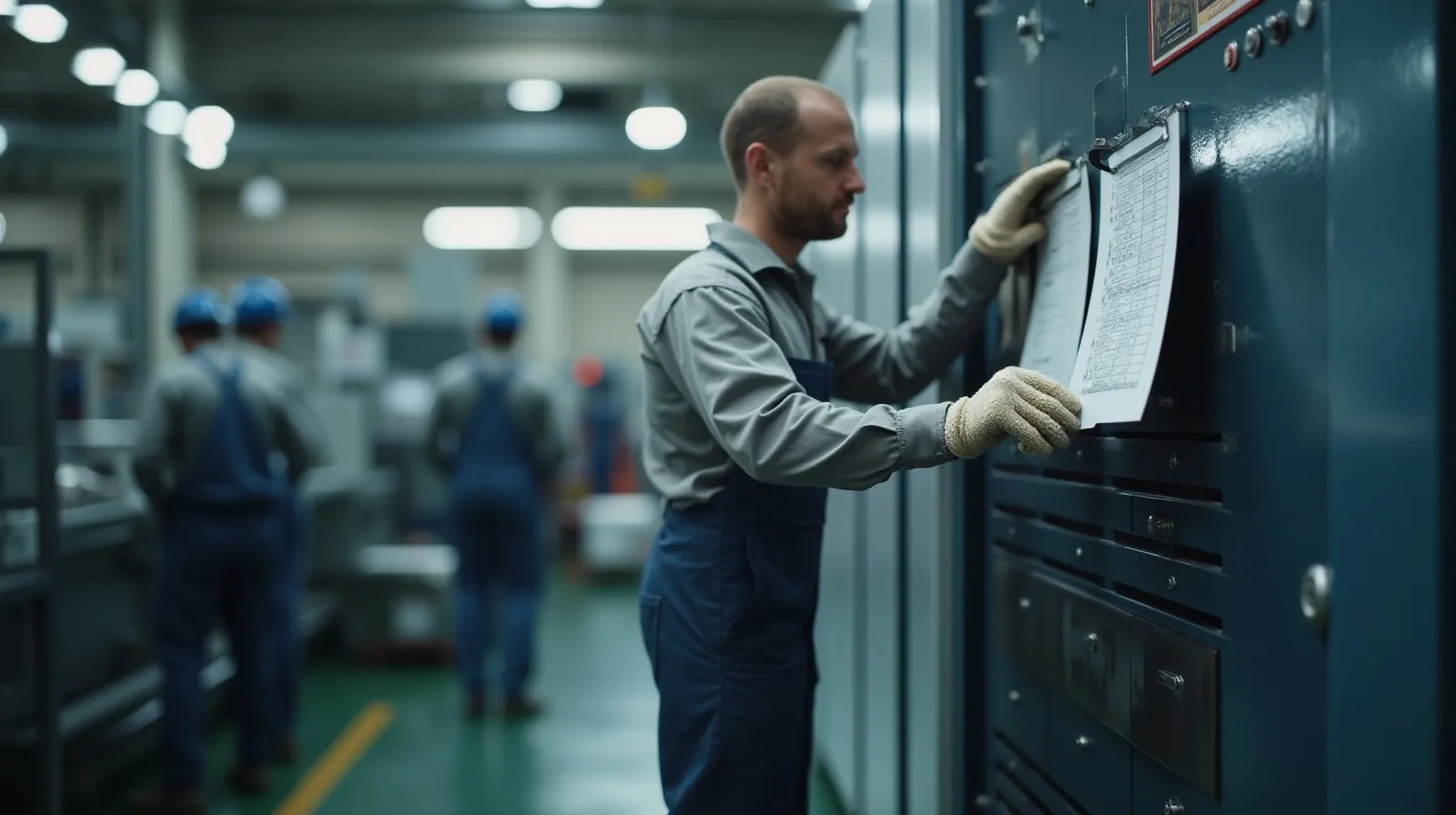
Core Terms
| Term | Meaning |
|---|---|
| Autonomous Maintenance | Routine cleaning, inspection, and lubrication performed by the equipment operator, not a maintenance technician. |
| Planned Maintenance | Scheduled maintenance work performed by technicians: preventive, predictive, and corrective. |
| Preventive Maintenance | Maintenance performed on a fixed calendar or usage interval, regardless of the equipment's actual condition. |
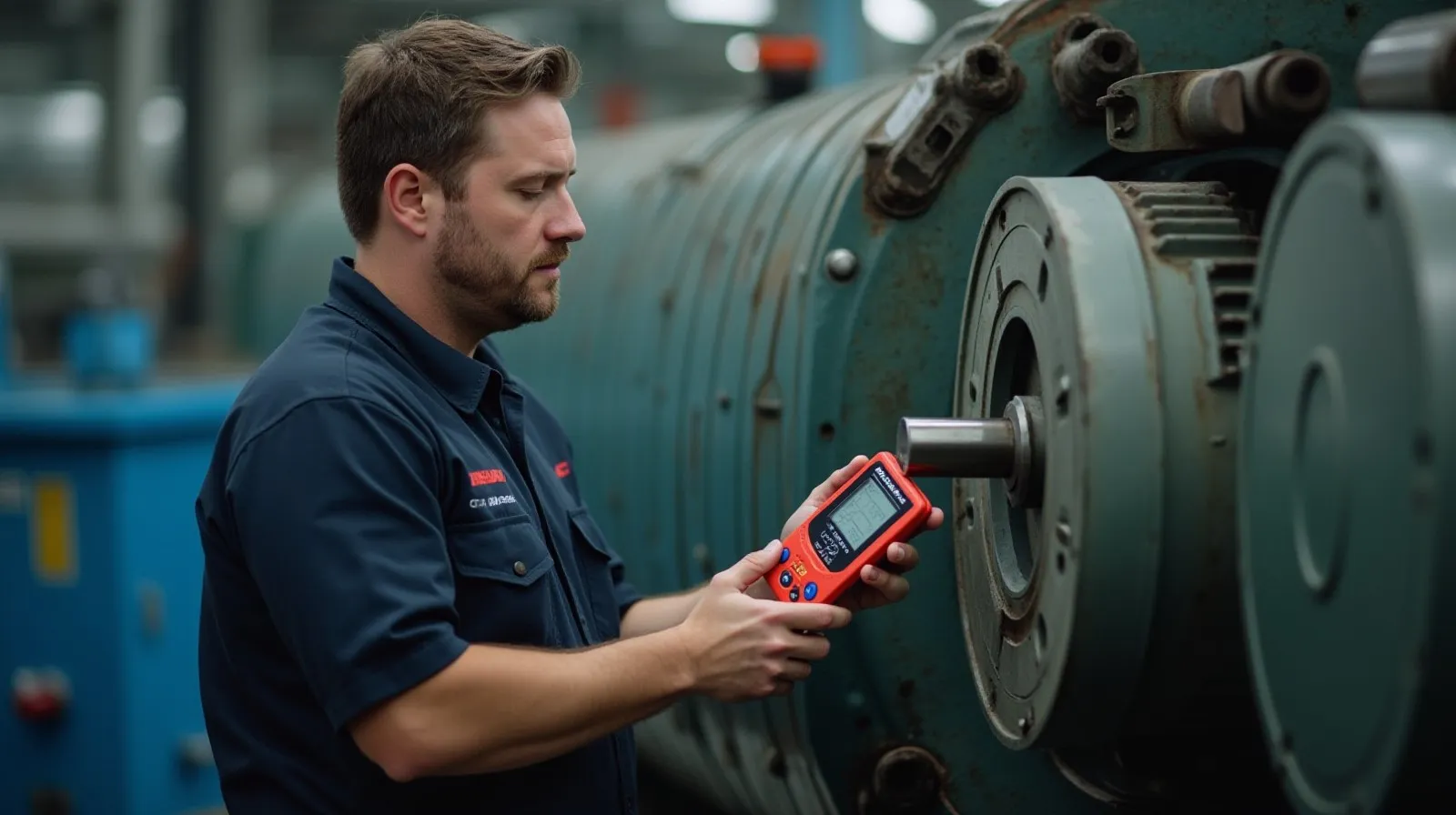
| Predictive Maintenance | Maintenance triggered by condition monitoring — vibration analysis, oil analysis, thermal imaging — rather than a fixed schedule. |
| Six Big Losses | The breakdown, setup, minor-stop, speed, startup-reject, and production-reject categories that TPM aims to eliminate; also the basis of OEE. |
| Restore-to-Baseline | Bringing a piece of equipment back to its original, as-designed condition before starting an autonomous maintenance program — skipping this step is a common cause of failed TPM rollouts. |
The Eight TPM Pillars
Nakajima organized TPM into eight supporting activities. Autonomous Maintenance and Planned Maintenance carry most of the day-to-day weight; the rest sustain and extend the program.
| Pillar | Focus |
|---|---|
| 1. Autonomous Maintenance | Operators take on cleaning, inspection, lubrication, and minor tightening. |
| 2. Planned Maintenance | Technicians run scheduled preventive and predictive maintenance based on failure data. |
| 3. Focused Improvement | Small cross-functional teams target a specific chronic loss using root-cause tools. |
| 4. Early Equipment Management | Maintainability and reliability lessons from existing equipment are fed into the design of new equipment. |
| 5. Quality Maintenance | Equipment conditions that could produce a defect are identified and controlled before the defect occurs. |
| 6. Training and Education | Operators and technicians are trained to the skill level their new TPM responsibilities require. |
| 7. Safety, Health, and Environment | A zero-accident goal is built into equipment and maintenance design, not treated separately. |
| 8. TPM in Administration | The waste-elimination mindset is applied to office and administrative support processes. |
The Seven Steps of Autonomous Maintenance
| Step | Activity |
|---|---|
| 1 | Initial cleaning — clean the equipment thoroughly, which is also the first inspection. |
| 2 | Eliminate contamination sources and hard-to-access areas found during cleaning. |
| 3 | Develop cleaning, inspection, and lubrication standards operators will actually follow. |
| 4 | Train operators in general inspection skills beyond their own equipment. |
| 5 | Operators perform autonomous inspection using the standards from Step 3. |
| 6 | Standardize workplace organization to support the new maintenance routine. |
| 7 | Operators manage their own equipment fully, contributing to continuous improvement. |
Step 1 is frequently skipped or rushed, but restoring equipment to a clean, as-designed baseline is what makes an abnormal condition — a new leak, an unusual vibration — visible to an operator during routine cleaning later on.
Planned Maintenance: Preventive vs. Predictive
As autonomous maintenance absorbs routine cleaning and inspection, the technician hours it frees up go toward planned maintenance — work that's scheduled rather than reactive. Planned maintenance splits into two approaches, and most mature programs use both.
| Approach | Trigger | Best For |
|---|---|---|
| Preventive | Fixed calendar or usage interval (every 500 hours, every 90 days) | Components with a known, predictable wear life. |
| Predictive | Condition monitoring — vibration, oil analysis, thermal imaging | Components whose failure timing varies and is expensive to guess wrong on. |
Self-Assessment Questions
Before calling autonomous maintenance "in place," a team should be able to answer yes to each of these:
- Was equipment restored to a clean, as-designed baseline before the program started?
- Do operators have a written cleaning and inspection standard they helped create?
- Can operators explain what an abnormal condition looks like on their specific equipment?
- Has technician time genuinely shifted toward planned and predictive work, not just grown alongside operator work?
- Is OEE being tracked as the measure of whether the program is actually reducing loss?
Common Mistakes
Skipping the Restore-to-Baseline Step
Starting autonomous maintenance on equipment that's already dirty or degraded means operators can't tell a new problem from the existing condition.
Treating It as Extra Work, Not Redesigned Work
TPM works when routine maintenance time is deliberately shifted from technicians to operators, not simply added to operators' existing workload.
Launching Without an OEE Baseline
Without a measured starting point, it's difficult to demonstrate the program is reducing the Six Big Losses it targets.
Under-Investing in Training
Operators need real inspection and basic-diagnosis skill, not just a checklist, to catch abnormal conditions reliably.
Quick Reference
Setup Checklist
- Restore equipment to its as-designed baseline before starting autonomous maintenance.
- Measure OEE before launch to establish a baseline.
- Build cleaning/inspection standards operators helped write.
- Train operators in basic inspection skill, not just checklist completion.
Using the Result
- Track breakdown frequency and OEE's Availability factor over time.
- Use Focused Improvement teams on the single largest chronic loss first.
- Reassess technician workload as autonomous maintenance absorbs routine tasks.
- Feed reliability lessons from current equipment into future equipment specs.
Sources and Further Reading
- Seiichi Nakajima, Introduction to TPM: Total Productive Maintenance.
- Seiichi Nakajima, TPM Development Program: Implementing Total Productive Maintenance.
- Japan Institute of Plant Maintenance (JIPM) TPM Award criteria.
- ASQ Certified Quality Engineer Body of Knowledge.